The Farm at Black Mountain College
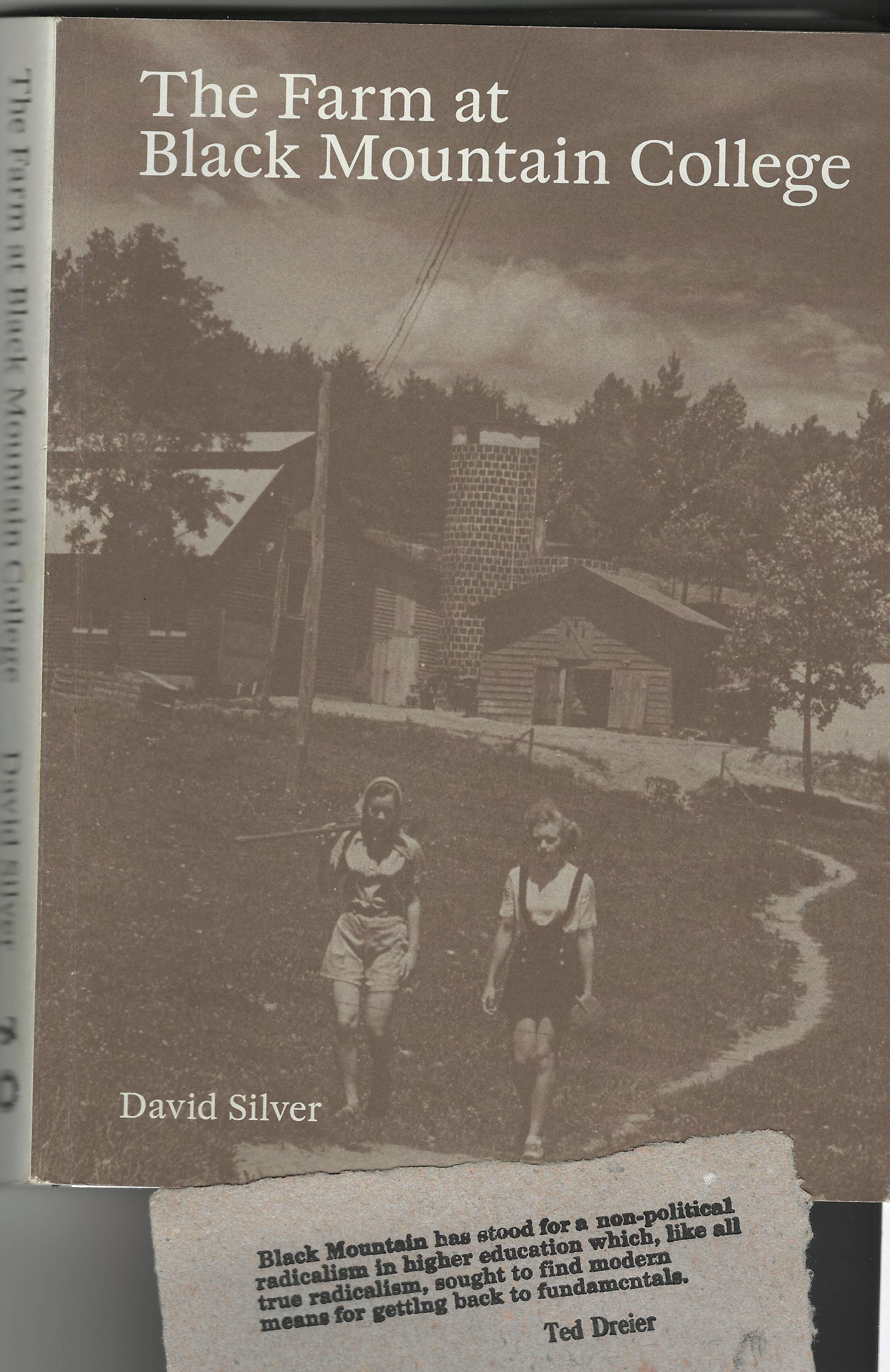
The Farm at Black Mountain College is a new book and the current exhibit (extended through March 15, 2025) at the Black Mountain College Museum + Art Center. Both were to be featured at the annual BMC Conference, cancelled by Helene, and the bookmark in the image above was to be my giveaway at that event. I have watched and learned from David Silver for the last ten years as he has researched and built this project. It has been a joy. David is a professor and chair of environmental studies at the University of San Francisco and has presented at the BMC conference each year about his work. The book and exhibit, closely tied, offer a comprehensive but alternative history of this iconic college, using the Farm as a lens to examine the nuts and bolts of BMC operations, the non-famous students and staff and their massive contributions, and how a sense of community and collaboration permeated the contentious but dedicated efforts to create a unique educational environment, succeeding in that to a level that reverberates in history.
Luck, money and student leadership and involvement all played roles in the genesis of BMC. Casual fans should be reminded that there were two BMC campuses, equally important. The Farm emerged very early in the college’s existence, and major work was done near the Blue Ridge Assembly site. Rooted partly in Dewey’s ideals of education and democracy, founder John Rice, and stalwart board member and fundraiser Ted Dreier saw manual labor as “a gateway to participation in a democratic society, with cooperation and community as vital by-products.” The faculty was expected to provide some farm work (with more or less grudging), but students took on the bulk and showed growing skills and perseverance. Norm Weston, an indifferent student, took on what became a staff position managing farm affairs, and without waiting for permission, obtained the Farm’s first chickens. Nat French, an inaugural student, salvaged dead chestnut trees to help build a pigpen, having already contributed the chicken coop, storage sheds, and coldframes for plant propagation. On the other hand Josef Albers himself. who hailed from a farm community in Westphalia, got involved with that pigpen and regularly came to work sessions.
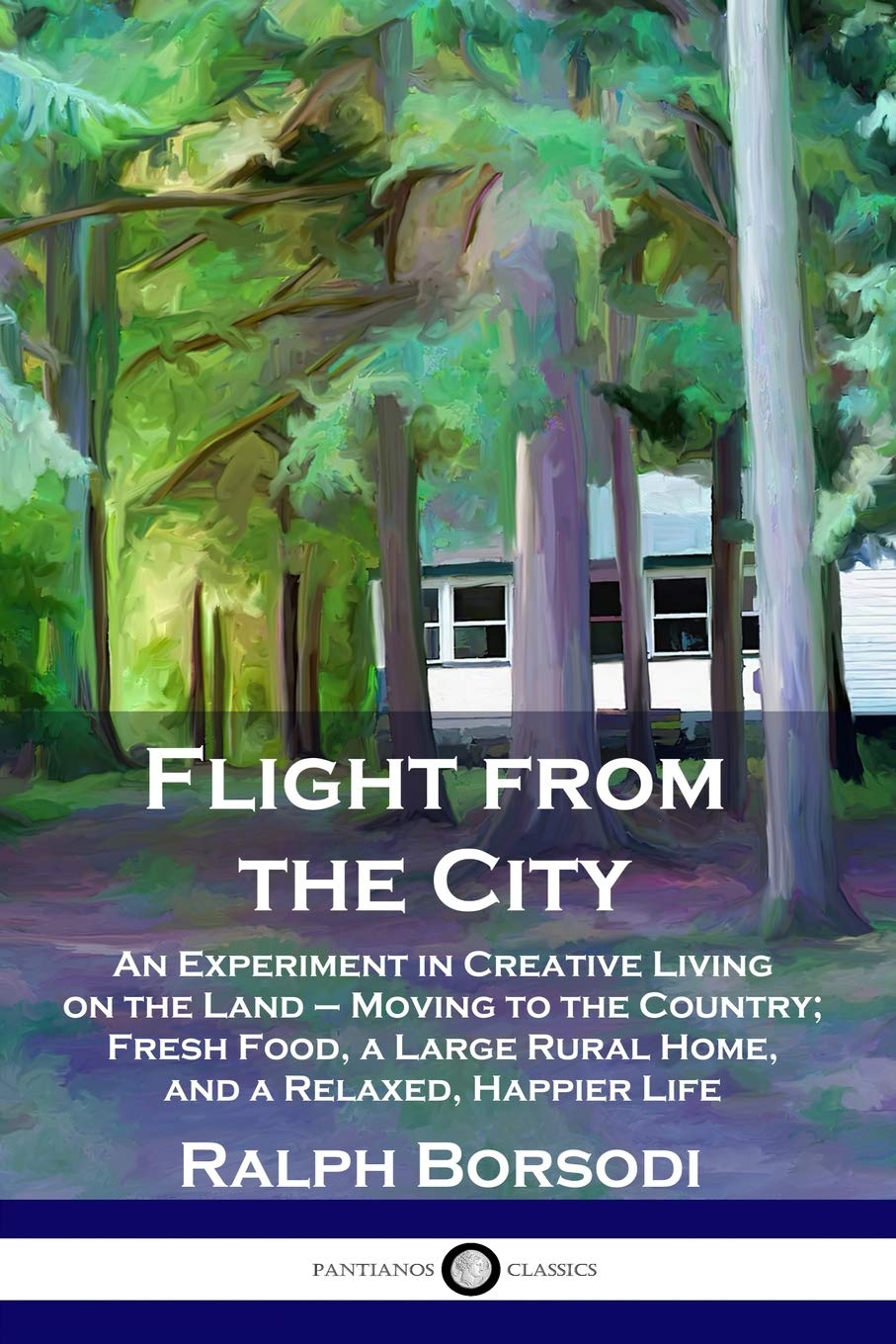
The Farm at BMC got a big head start from the book pictured above. Two weeks into the school’s existence, this book was shared with students by a faculty member and inspired many dreams and discussions relative to the Farm. Ted Dreier read it and expounded on it; Dave Bailey’s chicken coop was directly modeled on the one in the book, and during debates on whether to pursue the Farm, students were “waving a bible in the shape of Ralph Borsodi’s Flight from the City.” The paperback version belonging to the BMC museum is wrapped and on wall display in the show, so I purchased a reprint (as pictured above) to put in the library display next to David’s new book. Not just a how-to, I found surprising ideas within that addressed the way our food system has veered away from direct economic value toward transportation and advertising costs that dwarf the original value of the food.
The farm activities shifted to the new Lake Eden campus before the college itself did. Here, the Work Program begun for the Farm expanded to help create the architectural icon that is the Studies Building. Just up the hill, the barn and silos that were built by students create a magical present-day scene that has been the backdrop for many talks by David Silver at the BMC conference. One of his favorite themes is the relationship between BMC and the conservative mountain community around it. From his book: “It’s inaccurate to claim that BMC did not interact with the surrounding communities,” and the development of the Farm provided many of those interactions. These ranged from training at the nearby Swannanoa Test Farm, a research facility operated by the State of NC, to numerous friendly and extremely helpful visits to and equipment loans from The Farm School, which was founded by Presbyterian women to educate poor rural boys, and went on to become Warren Wilson College. Several local farmers served at various times as farm managers for the college, and provided a local perspective. From selling excess produce in Asheville markets to carrying sows to B.C. Brown and his boars to be impregnated, farm activities generated interaction with the community.
With the Farm as frame, Silver is able to describe other important aspects of BMC history that are not often addressed in studies of the famous artists that helped create its reputation. Jack and Rubye Lipsey operated the kitchen that fed the campus and both became important figures in BMC daily life. They represented the beginning of integration efforts that led to the admission of black students and the hiring of black staff and faculty. Woman were always an important part of BMC life, but during WWII most of the male students were gone, and Silver describes “When The College Was Female,” with Ati Gropius and Elsa Kahl taking charge of the growing dairy operation and Nancy West and Zoya Sandomirksy providing the student labor for construction of the silos. During this phase Molly Gregory, David Silver’s designated “BMC Farm MVP”, dominated affairs with her indefatigable efforts at building farm structures and and developing hands-on experiences for BMC students. Molly managed the Farm so well that by 1943 it produced most of the produce the community ate, plus enough to can hundreds of gallons for winter use.
For all his egalitarian approach, Silver does not leave out the more famous students who were integral to the agrarian accomplishments at BMC. Ruth Asawa traveled to Mexico while a student at BMC and learned to weave wire, which first led to wire egg baskets for Farm use, and then the wire sculptures for which she is world famous. Ruth came from a farming family, thrived at BMC and became expert at producing butter and buttermilk, driving the Farm’s double-clutch four-wheel-drive truck, and raising a roof for the new farm house. Her friend (and my own BMC favorite) Ray Johnson was also very active on the Farm. M.C. Richards, poet-turned-potter who developed the ceramics program, hosted students and treated them to a mean fresh blackberry pie.
This book ends with a detailed description of the physical and financial decline of the college after the departure of John Rice and especially that of Ted Dreier, whose contributions and financial connections were so crucial throughout his time there. The physical decline of the campus is paired in Silver’s description with despair, infighting, and parasitism, with students coming to attend with no intention of paying, the ransacking of the library, and the general decay of buildings and landscape. The book and one caption in the exhibit take a hilariously wicked jab at Charles Olson, the last college rector, who despised the Work Program, disdained his correspondence duties, and generally was a marvelous teacher of writing but a very poor rector. A sad and perhaps inevitable collapse led the college to close officially in 1957. The Farm was an essential component of its many successes, and David Silver documents the many very positive memories it brought to staff and students. As David Weinrib put it, “Instead of gym, we took Farm.”
The Farm at BMC – Atelier Press
Hunt Library Hosts Amazing BMC Educational Happening
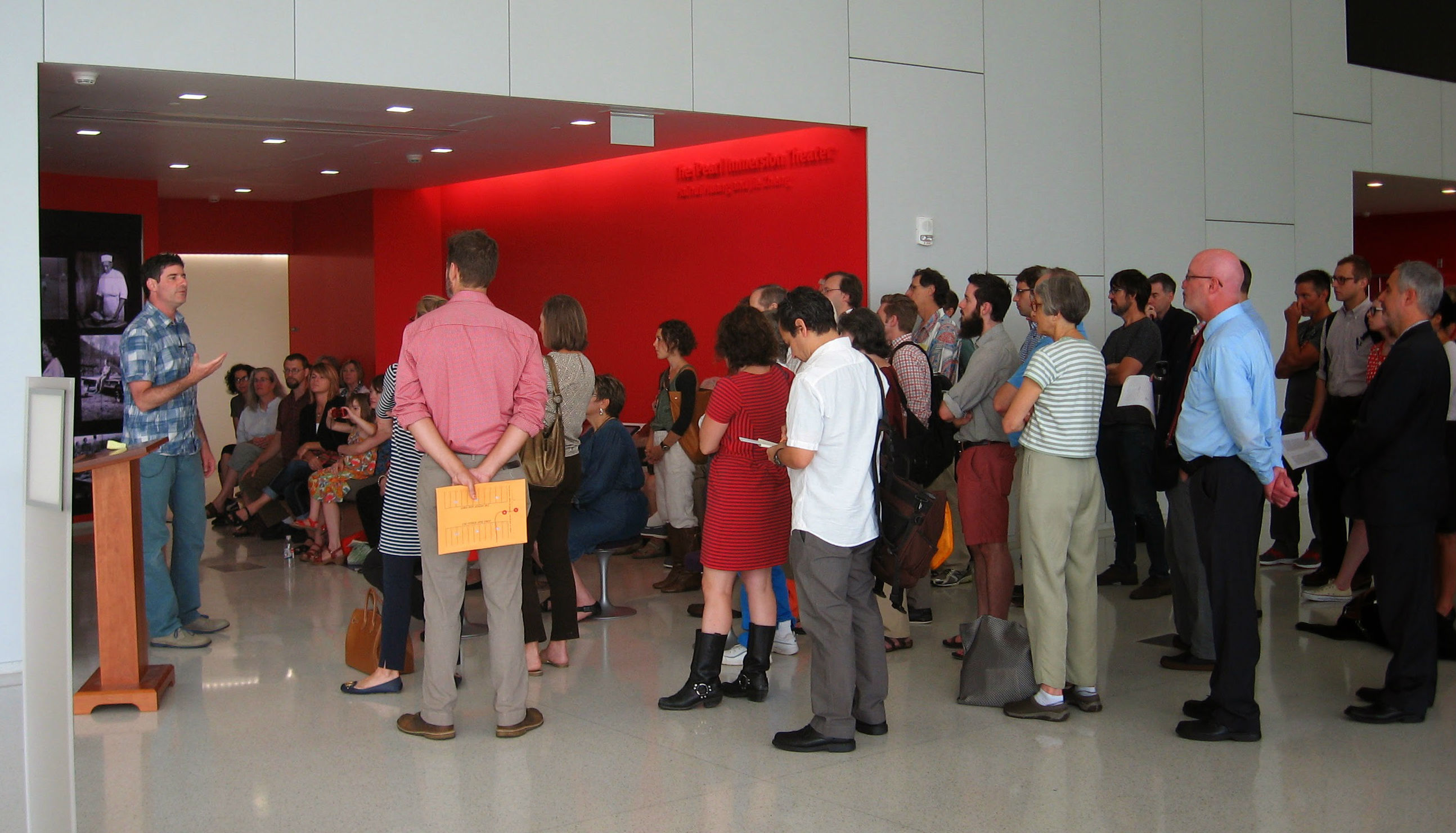
David Silver, a USF professor who studies media and urban agriculture, used NCSU’s Hunt Library and its magnificent IT and media resources to provide a unique and invaluable review of the farm at Black Mountain College, and how it invigorated the sense of community, the work ethic and the physical bodies of everyone on campus. Silver, who was featured in my last BMC post, has spent countless hours poring over the images and papers in the BMC archives at the NC Western Regional Archives in Asheville. He, with the help of numerous staff members and students at the Hunt Library, created a stunning array of images in four of the library’s presentation venues. The movement, the change of scale and David’s infectious energy all made for a highly stimulating “lecture” that transcended standard academic formats.
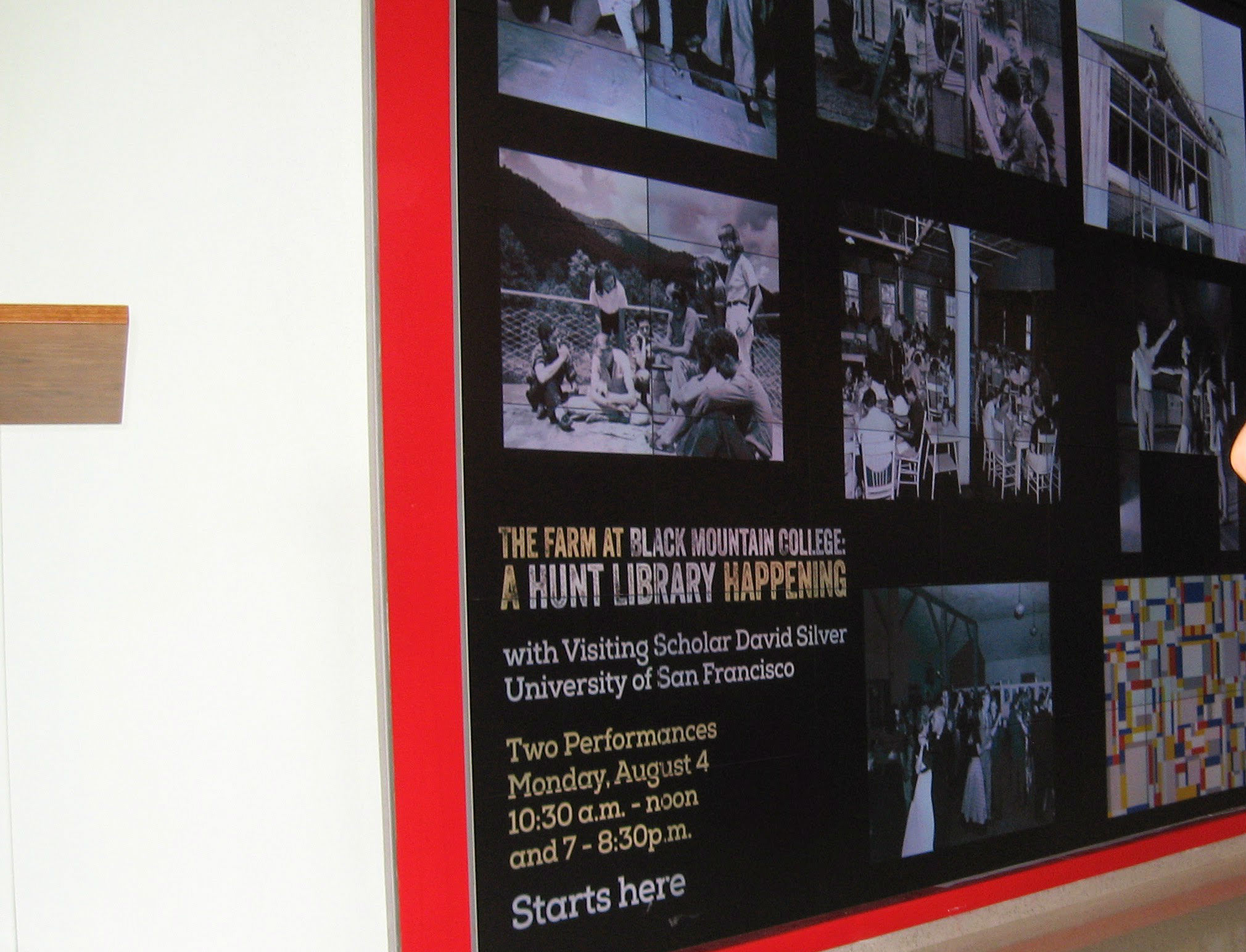
Black Mountain College began in the Depression in 1933 and lasted until 1956. For most of those years, farm activities, conducted primarily by students, provided substantial and sometimes crucial food for the college community. The farm also helped enact the progressive ideas of the founder, John Rice, who involved students in all decision-making processes about curriculum and campus life. During the war years, the predominately female population continued and developed the farm and also construction projects on the new Lake Eden campus. In the last years before closing, the end of the farm program led to some hungry times for the nearly destitute institution. Silver showed how the farm and the preparation of its food is a research thread that reveals issues ranging from racially progressive views to education as doing, from the empowering of female students to environmental conservation.
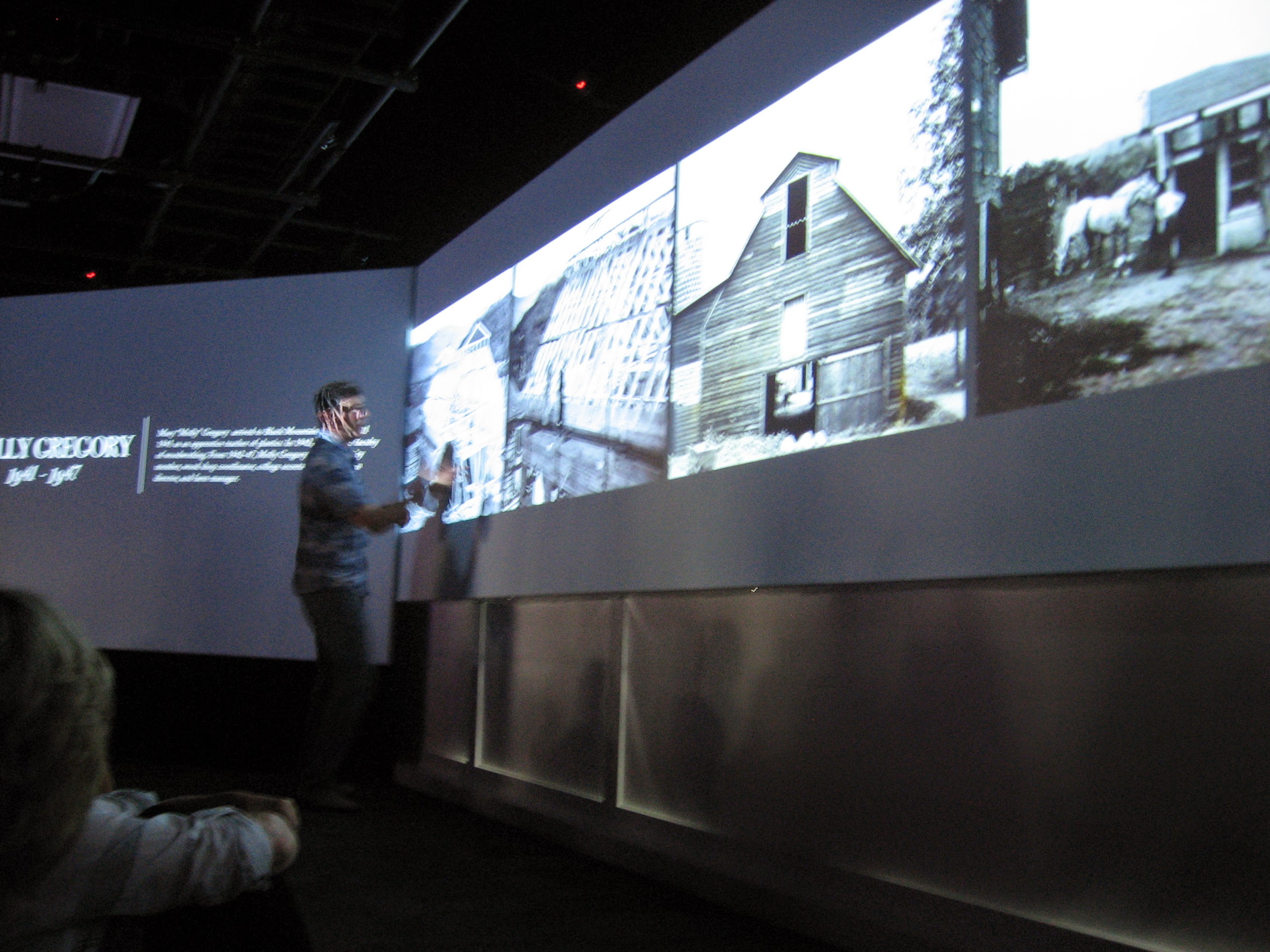
The trek through Hunt Library started in the lobby’s iPearl Immersion Theater and then moved to the classroom above, where we turned around to each wall as it illuminated with new images. The format fit David’s active style perfectly. The sense of landscape, the huge size of the student-built barn, the humor David found in so many images, all were enhanced by the settings.
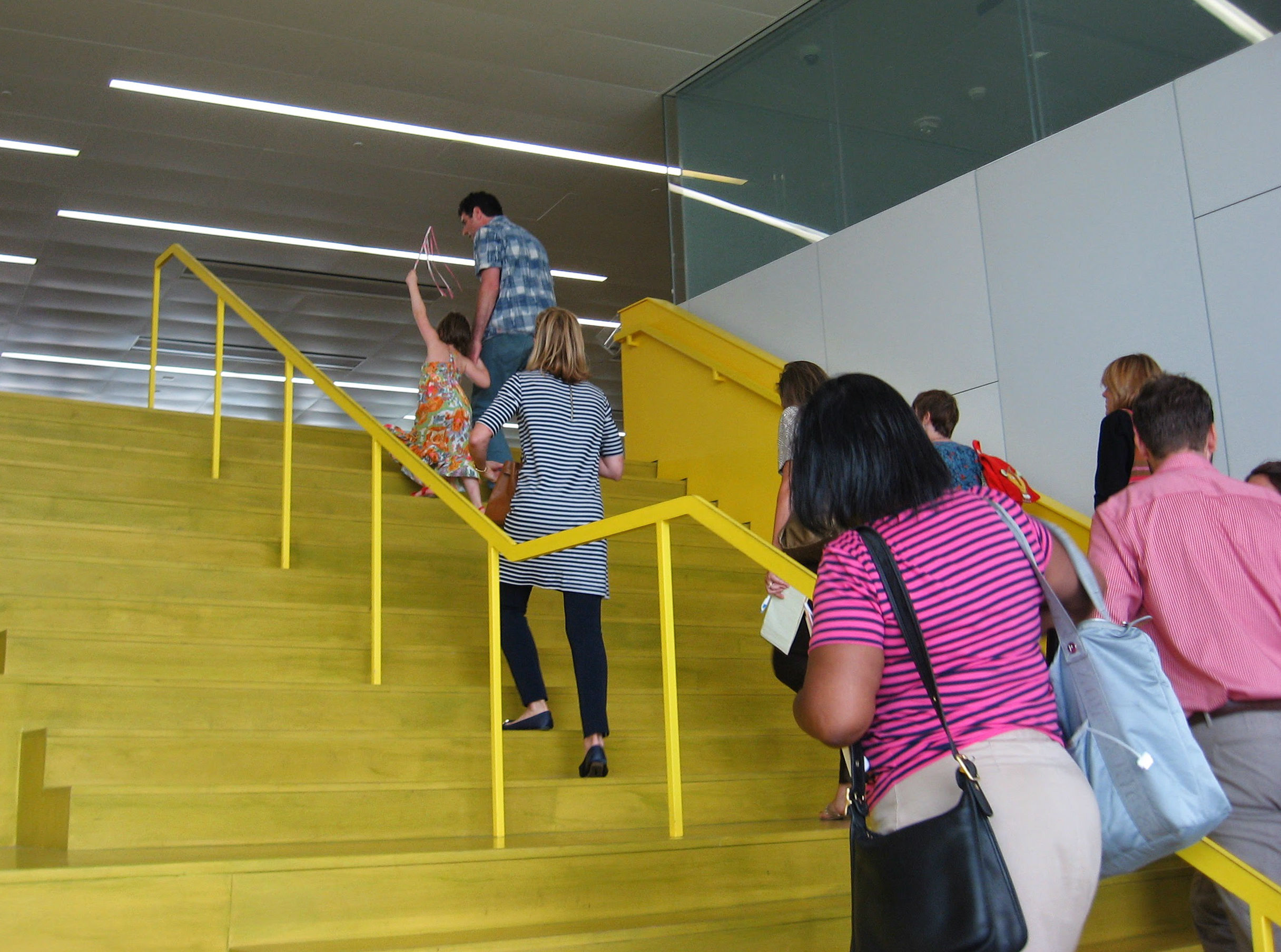
David’s 5 year old daughter Siena leads the large crowd upstairs for the next presentation
Professor Silver was generous in his praise for all the staff and students with whom we had worked at the Hunt Library. He also was effusive (as are all BMC scholars) about Heather South, archivist at the Western Regional Archives, who below watches David present.
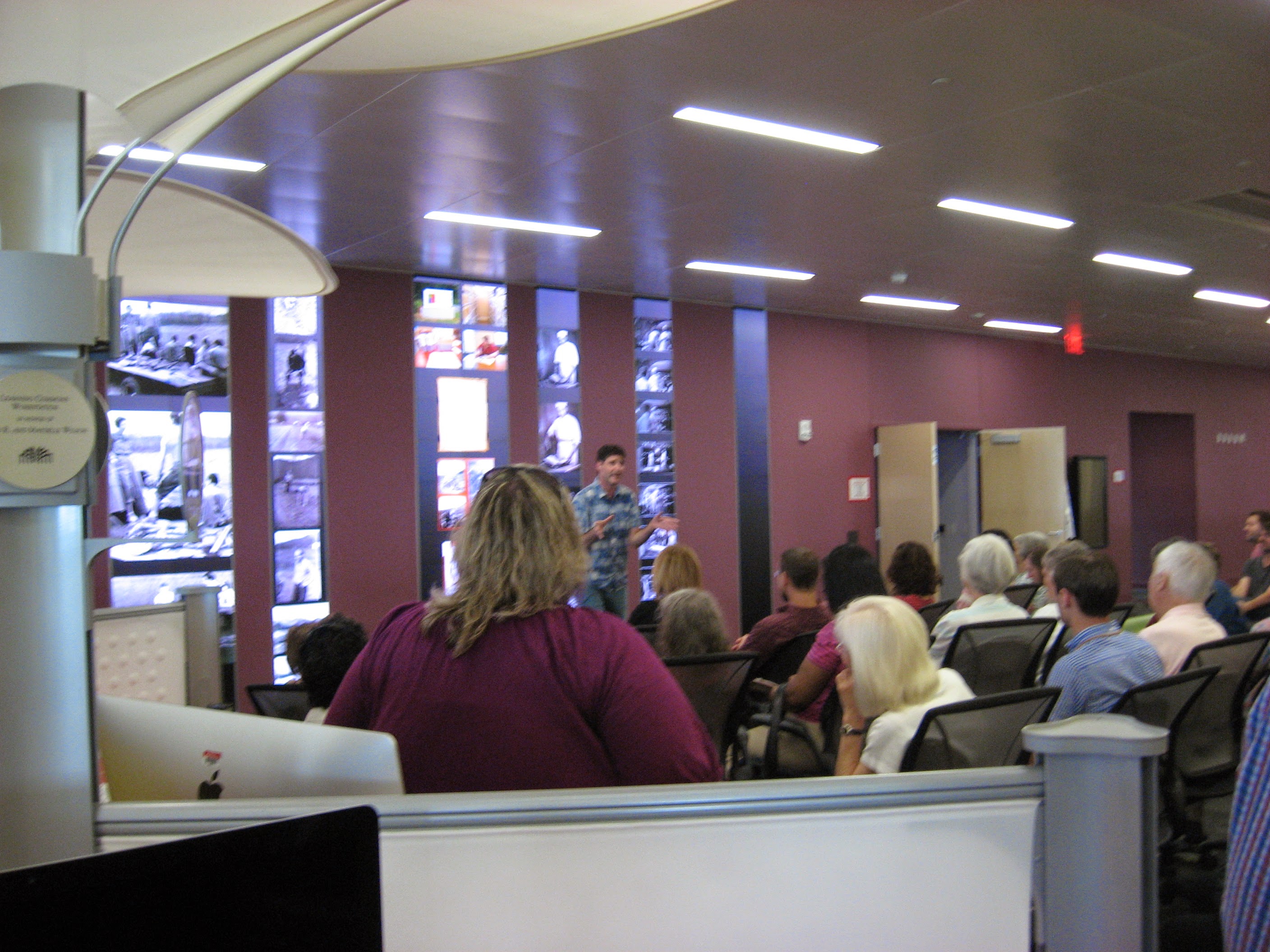
These columns of imagery, set in the curved wall of a large work area, formed my favorite venue. A few scattered students were around, the crowd was put at ease by the vast expanses, and people could move around and come and go as they wished. I won’t try to convey much of David’s BMC specifics. He has published much and will continue to lead us all to a better awareness of how the farm influenced the education experience at Black Mountain College.
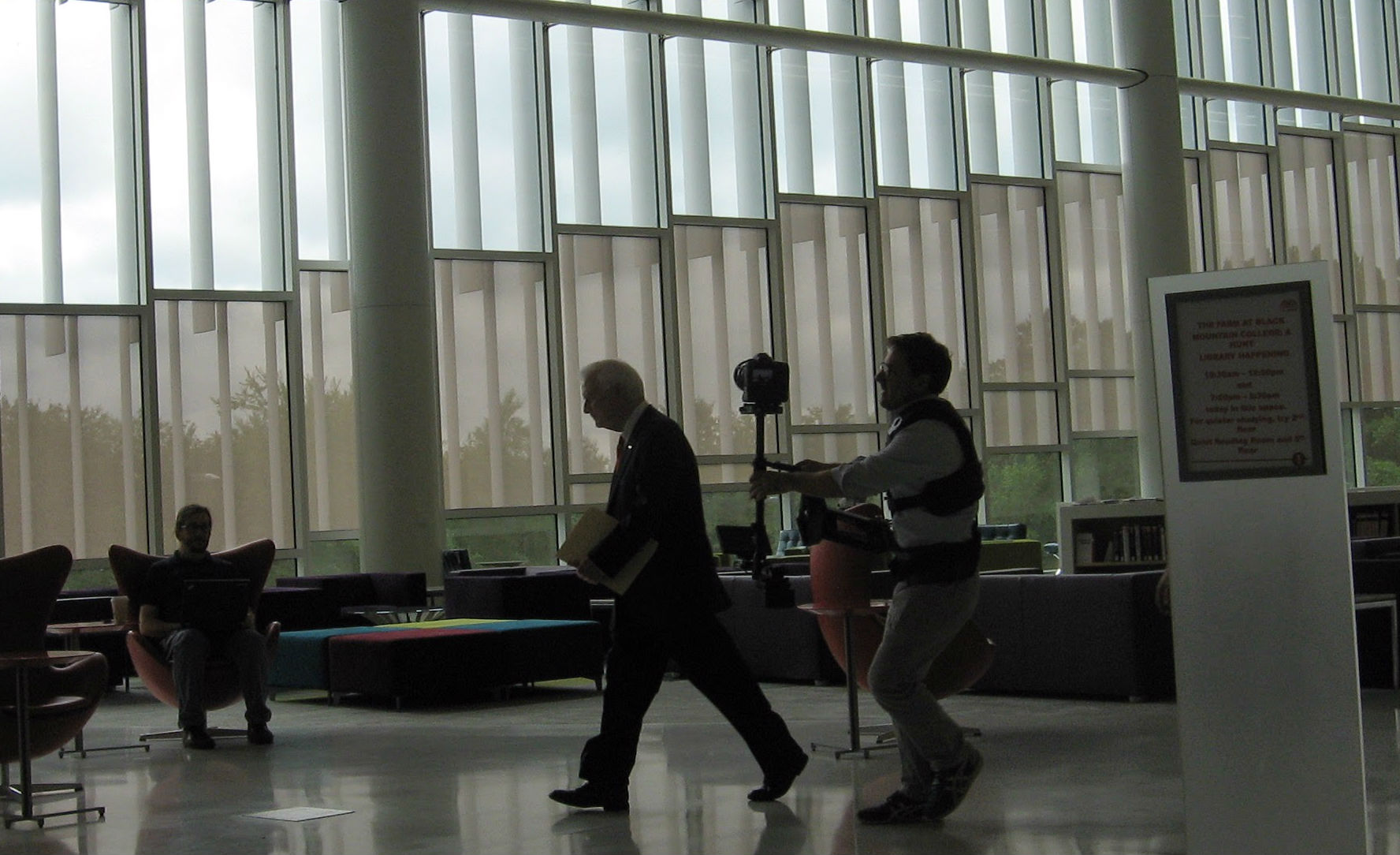
This library really is gorgeous and mind-blowing. Its namesake visited this day, but hurried right past the BMC presentation!
Book Arts, Farming Fueled Black Mountain College

The 2013 Black Mountain College conference, held at UNC-Asheville, covered much ground, as always, with reflections and insights regarding the methods, influence and legacy of the experimental college that is both revered and obscured in the history of 20th century education and art. I always come away with one or more real breakthroughs in my thoughts about these topics, and this year the BMC farm program really came to light in the presentation of David Silver. Tom Murphy spoke of the print shop and letterpress operations, and both of these sessions offered rich, practical examinations of the processes and their implications. As always, the foundation of factual knowledge and interpretation laid down by Mary Emma Harris in her 1987 book, The Arts of Black Mountain College, is acknowledged and utilized by all presenters. Ms Harris continues to lead BMC research efforts, and presented this year about BMC approaches to material studies. She showed how the low-budget humble materials used by Anni Albers and others provided a freedom and at the same time an enforced discipline on the students. “You mustn’t forbid the possibilities of the materials,” and in the notes of Ruth Asawa from Josef Alber’s class, “the whole cosmos is entertaining”. These topics were applied to Asawa, BMC sculptural artist, by Jason Andrew, who showed how Ruth Asawa’s zero-based explorations of the culture of handicraft, and her highly artistic use of negative and positive space, helped lift craft into the perceived realm of art in the mid twentieth century. Christopher Benfey, the featured speaker whose ideas I discussed in the previous post, gave a keynote speech which emphasized a similar theme: “Starting at Zero!” Get your hands involved with available material. Then make an honest response to the materials, including the industrial process involved. The conference highlighted the synergy and profound influence derived from the joining of the design philosophy of Albers and the progressive education ideals of John Rice. Experiential education and the approach of design as a “form of justice between man and material” made BMC the birthing place of many new currents in American art.

David Silver presents about the BMC farm
The BMC farm was a rich source of experiential education, surely, and its operations offered many practical lessons in form and design. David Silver of the University of San Francisco described how students, with Ted Dreier’s supportive oversight, had a huge influence on the development of the farm. From Harris’s book: “In the first year [1934] a vegetable garden was started by Norman Weston [BMC student and “treasurer”] and other interested community members. The college leased a 25 acre farm with a vineyard and apple orchard…” John Rice was not enthusiastic but didn’t mind as long as faculty obligations were not needed. In 1938 the farm went to the future Lake Eden, was expanded in 1941 and by 1944 “was producing most of the beef, pork, potatoes, eggs, dairy products and some vegetables used by the college” (Harris again). Last year and this, Silver offered rich detail into how the farm emblemized the integrated systems, the balance of discipline and freedom, and the “use what you find” attitude that characterized much of the college’s history. His research anecdotes, from local farmers such as Bass Allen, who taught the students how to farm, to the very Albers-like egg lists that recorded every oval, both entertain and enlighten. Mistakes, both horrible and hilarious, were made. But students gained invaluable experiences, including the closest thing BMC offered in the way of physical education. Molly Gregory, who taught woodworking and maintained the mechanical shop, took over the farm in the later years of the college and operated it at a profit. Silver’s admiring portrayal of her BMC work showed that, like Asawa, she helped create an atmosphere that bridged the gap between artisan and artist, that found a space for sublime work of the hands.

Of particular interest to me was my own arena of artisanry; the letterpress printing and other book arts that were pursued at BMC. Tom Murphy from Texas A&M Corpus Christi recounted printing efforts that were of practical help to the college but eventually played a role in the establishment of literary forces and the Black Mountain Poets as important threads in the history of BMC. Again with the support of Harris’s history, he described how Xanti Schawinsky, a noted graphic designer, helped obtain type and a press for a print shop in Lee Hall on the first Blue Ridge campus. The bulletins printed were “not flashy’ and in fact were conventional products that advertised the best face of the college to outsiders. Students like Ed Dorn and John McCandless received hands-on learning and were able to design and effect their own projects. The print shop had a long hiatus before and during the war, but in 1946 was resurrected as part of the wood shop and used in writing projects involving Jimmy Tite, Harry Weitzer, and Ann Mayer. A visit by Anais Nin in 1947 was the catalyst for new literary publications, including Poems by M.C. Richards in 1948. This set the scene for the Olson years, when BMC nurtured energies that traveled to the west coast, Paris, and North Carolina’s own Jargon Press, published by Jonathan Williams. (A fun footnote to the latter is that the BMCM+AC has acquired the imprint and publications of the Jargon Society!)
All of these insights need fuel themselves to become realized. The first session of the conference highlighted the newly emerging resources for such work. UNC-A’s Ramsey Library is digitizing and organizing web pages for several BMC collections. The Western Regional Archive continues to add collections,including the BMC Project papers, generated and collected by Mary Emma Harris. The state archive has selected BMC documents in their online archive. The Black Mountain Studies Journal offers ongoing scholarship in the field. Rich resources indeed!
Design is not decoration, design means an understandable order. It is understandibility. It is not beauty. If it is understandable, it is beautiful. Josef Albers
Book arts came up in one last surprising setting – Julie Thomson‘s highly stimulating talk on Ray Johnson’s commercial design work. She offered the quote above and astounded the audience with images of standard New Direction titles whose covers were designed by Johnson and one of his mentors, Alan Lustig. She pointed out that Ray J had done prize-winning poster work back in Detroit, was a perfectly competent graphic designer – and helped promote the idea of integrating typography with visual art and design.
Congrats to the BMCM+AC for another great conference!
Sustainable Farming in the Triangle
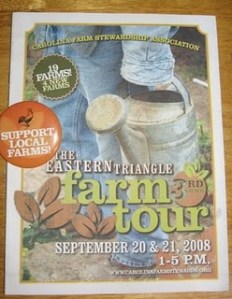
The 3rd Annual Eastern Triangle farm tour by the Carolina Farm Stewardship Association was a blast. There were 19 farms this year, but you can never do more than 3 or 4 a day for the two days of the tour. Cara and I spent several hours Saturday at just two farms, but they were both fascinating. Dew Dance Farm had exotic wool and fur livestock, as well as heirloom naturally colored cotton, and a live-in weaver to use it all. The Piedmont Biofuels research farm was everything I’ve been anticipating for years. Sunday I moved more quickly and did four spots, self-touring. I learned a lot about the new agricultural culture, arising from plenty of inherited Southern values (and land), as well as the most cutting edge green/sustainable practices. We are all eating differently, including more locally, and there is an interesting and decent market for these products. I was amazed to find that not only is this group sponsoring a national conference next month, there is a Politics of Food conference taking place at NCSU this very week!
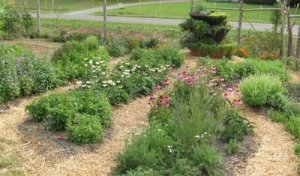
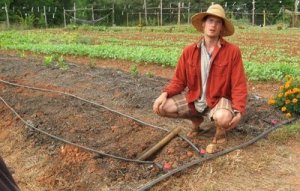
Above is a native plant area at the Piedmont Biofuels research farm. Its purpose is to provide haven and nectar for useful insects. The land is operating as an incubator farm for a couple, who are utilizing species and techniques from Japan on the site as they grow stores, develop contacts and search for land. Below a co-op intern explains the use of bamboo guides for efficient root crop production.
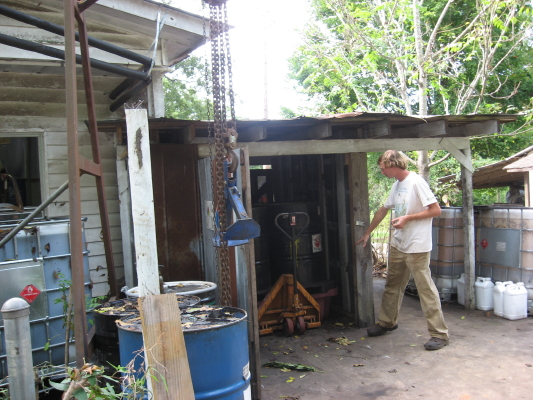
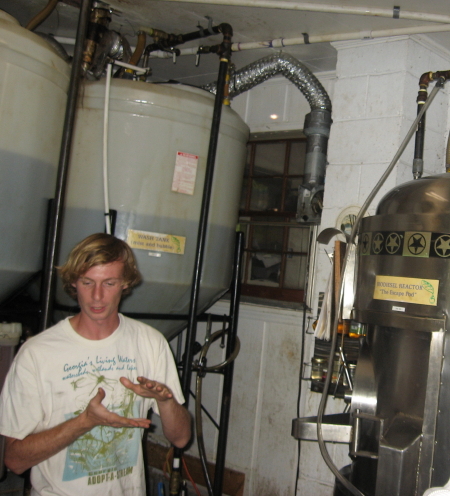
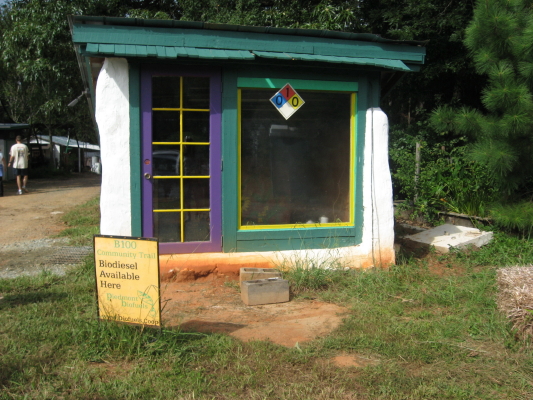
The clickable thumbnails above illustrate the biofuel production process, which also takes place at the farm. Lyle Estill started making biofuel as a kitchen science operation and with his partners developed this system for recycling waste vegetable oil, producing fuel and soap. Now they produce a million gallons a year at a new facility down the road – using chicken fat. This original operation continues, with the honor system pumphouse above right.
Dew Dance Farm typified the average fare of the tour – a Boomer couple using the parents’ land to operate an intensive operation with a well-funded and slight hobby-like atmosphere. As papermakers, we were entranced by the heirloom naturally-colored cotton. Growing even a dozen plants of cotton requires a special permit, inspections, and the promise to burn it all if the boll weevil shows up!
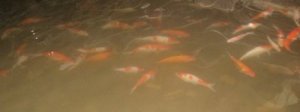
Lakeview Daylily Farm and Weston Farms on Highway 50 had a unique aspect – a koi barn and an outdoor koi pond with fencing to discourage turtles and herons. But my final destination, pictured below, was the Covenant Community Garden, operating in the heart of Fuquay Varina. Church and community volunteers use sustainable practices to grow food for a pantry, a kind of local food bank for those who need it. It doesn’t get any cooler than that. Go green!
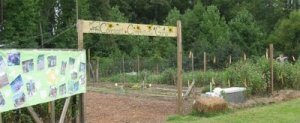
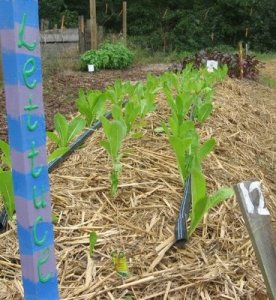
2008 farm tour photo album
*******************
Slow Food Triangle celebrates local food and the people who grow and make it.
Roasted Tomatillo Salsa!
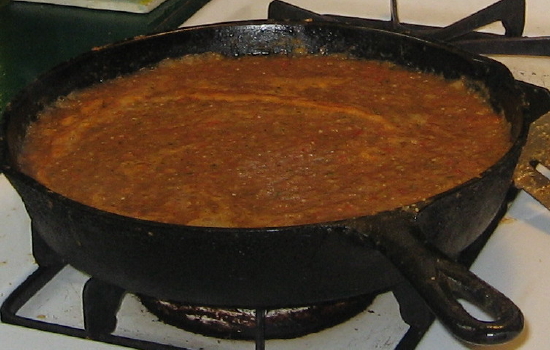
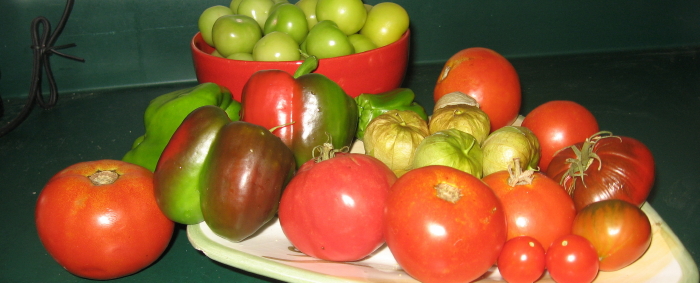
Two measly little tomatillo plants I picked up as discards from the farm where I got my heirloom tomato plants went crazy in our organic compost this year. Tomatos have done great as well, so I’ve been playing with salsas.
Tomatillos are a new thing for me: I first saw them on a homework field trip with my son to a Hispanic grocery several years ago, but this summer was the first time I have cooked with them. The papery Chinese lantern green balloons grow first, then the fruit swells up to fill the inside. When they’re ripe, they fall to the ground and the papery covering protects them quite well. Below is a selection of our urban garden harvest: the tomatillos in the red bowl have had their coverings removed.
Here is the procedure I followed:
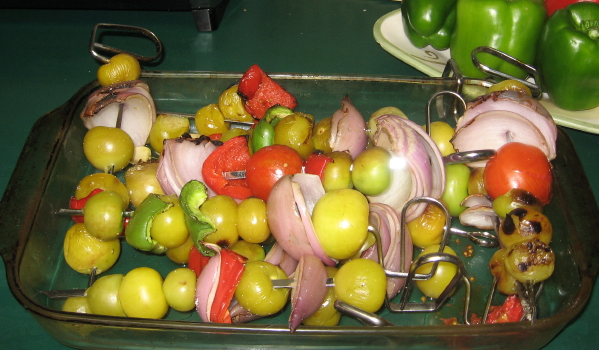
Start a fire. Skewer a pound of washed tomatillos. Skewer a quartered onion, 4 small serrano peppers, a quartered bell pepper, and 4 garlic cloves. Roast these materials. (Mine ended up more smoked than roasted). Place roasted vegetables in blender and puree with fresh parsley ( I dislike cilantro) and seasonings. Sautee this result in olive oil. Add a little lime juice and then a cup of broth. Simmer, cool, chill and serve.

Above are the roasting vegetables. Below is the final product with libation. To see a full album of pictures, including an alternative libation, go to the related post at Pecans and Mistletoe, my nature project blog, which is fast taking on a life of its own as a space for the fascinating issues of sustainable heritage agriculture and locavore food culture in this area, which will be adressed at an upcoming Raleigh conference.

I would have never predicted a food post for Raleigh Rambles. But Lily had exposed me to the best of the cooking shows, and reminded me of the great science lessons in cooking processes. Sarah over at Quiet Quality has provided a post and links that reminded me of food as a hot blogging topic, and last but not least, my buddy Clyde issued a kind of challenge after I bragged about the success of my first batch of roasted tomatillo salsa – that first batch being roasted over a charcoal grill.
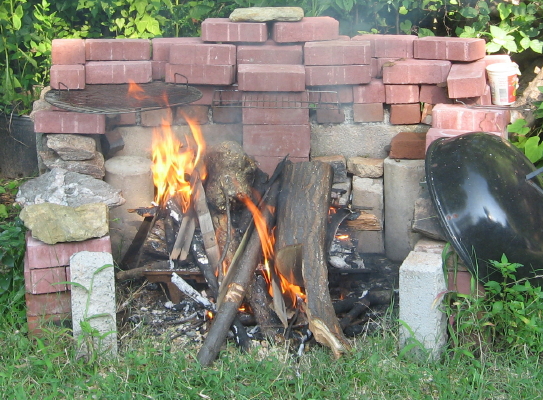
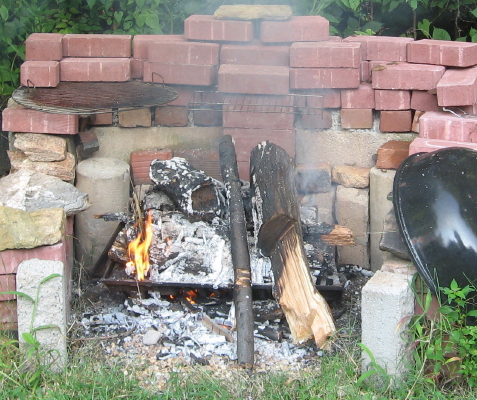
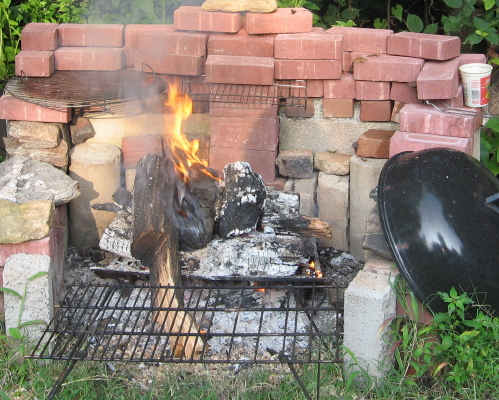
Now I have a confession to make. Being overly enthusiastic to use my newly built brick barbeque for this project, and it being the first Friday night of the school year, with the ensuing enthusiasm and libations, I wasn’t on top of my fire game at ALL and, as previously alluded to, I trashwood smoked instead of coal/flame roasted my vegetables. The final result was an overly sweet salsa totally dominated by the powerful smoky flavor. The slightly hilarious twist is that my challenge salsa makes a truly magnificent barbeque sauce for chicken, and we’ve thoroughly enjoyed it that way. I’m still going to make a fresh batch for Clyde!
Done!
raleighrambles.com
portrait by Guillermo Velasco


 Raleigh Rambles


