All Souls On Deck – Mail Art
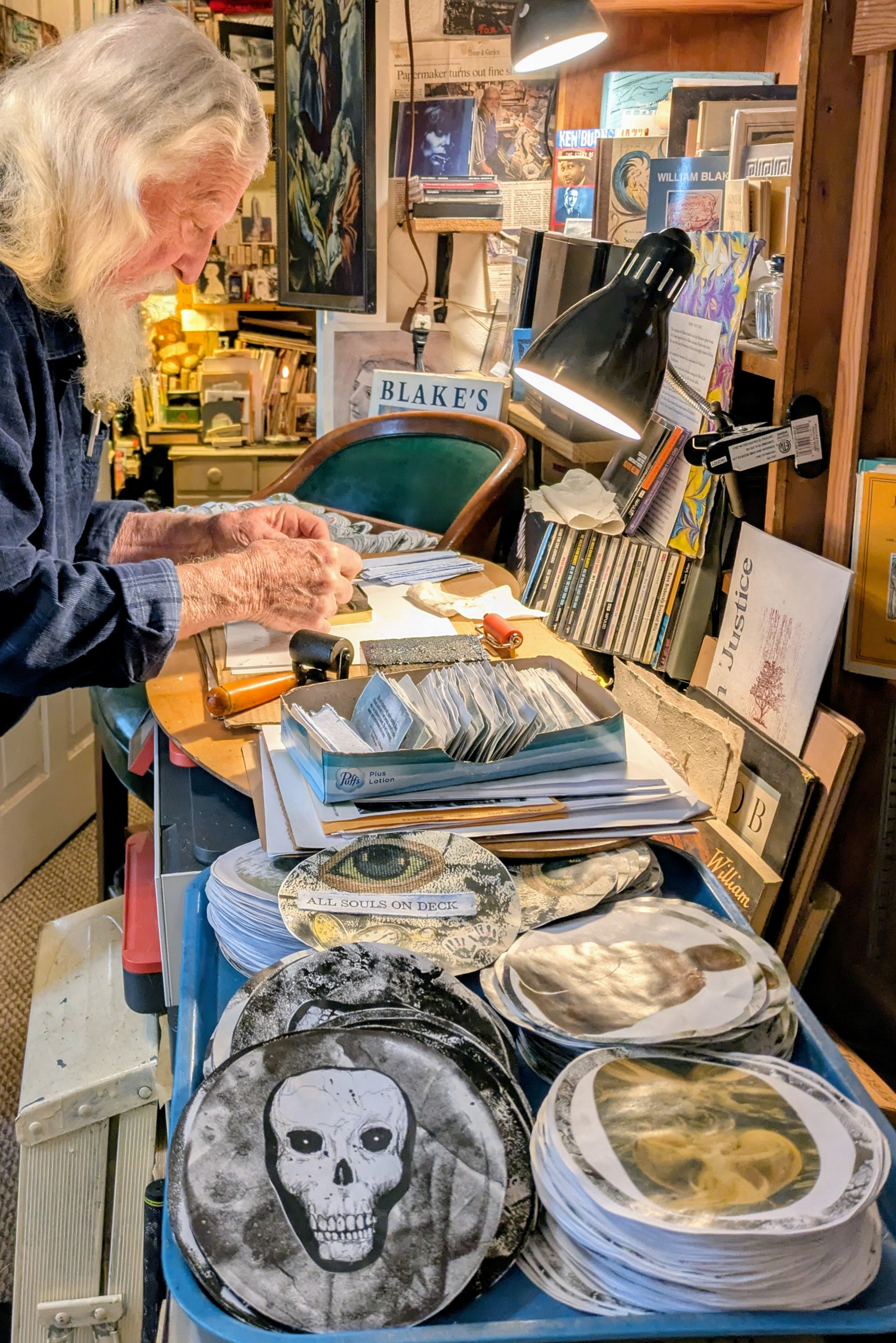
Here is JDJ letterpress printing a small title strip for the new project – but not in the letterpress shop -in my happy place, my library, which has been engulfed for weeks in a massive effort – 2600 cut-outs, 1400 gluings, and a whole lot of folding and wrangling to construct a set of round tarot-type art cards that are a care package for our times.
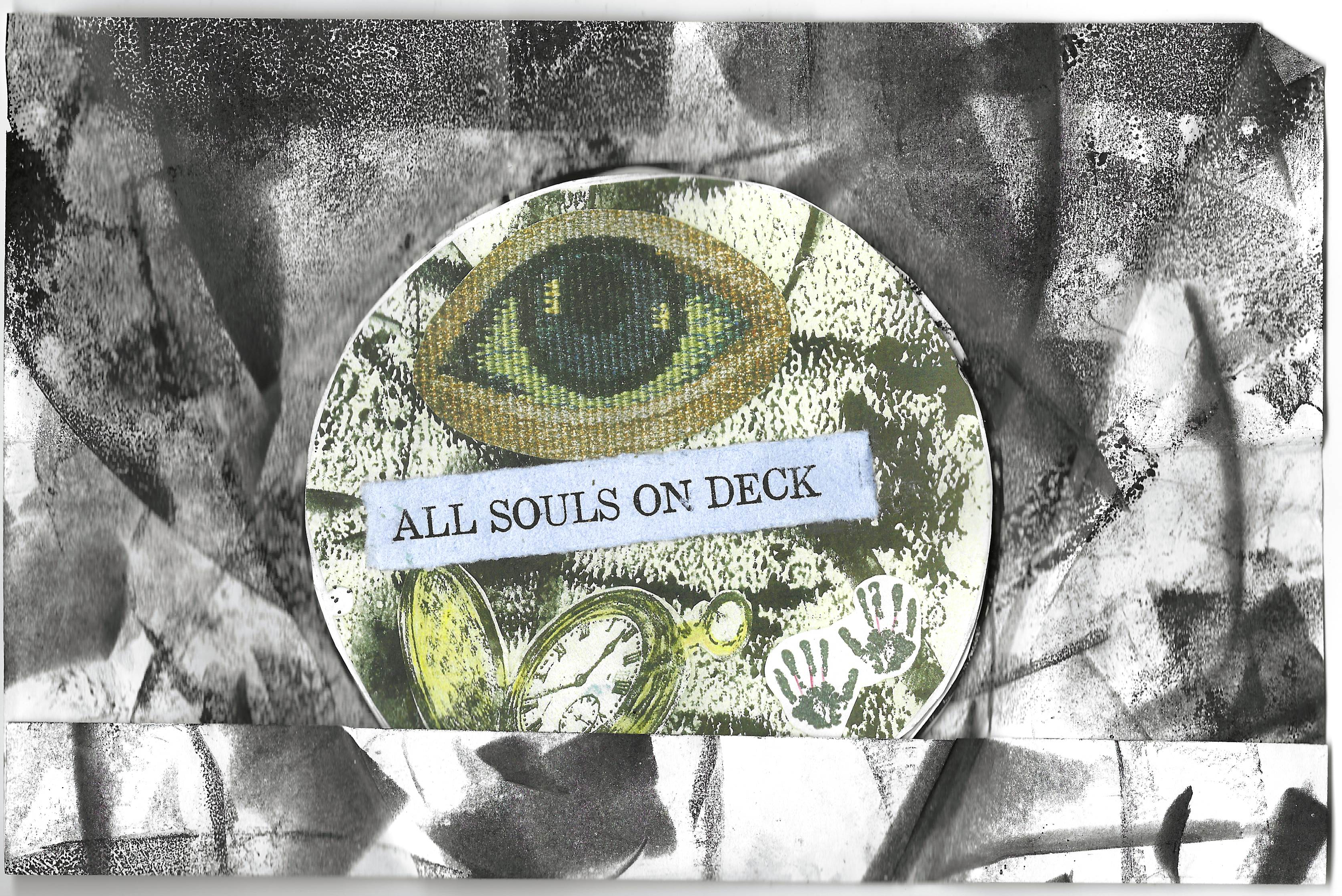
The set comes wrapped in a “decorative” origami envelope – this is the last big use of this black and white letterpress clean-up material for a long while – I promise!
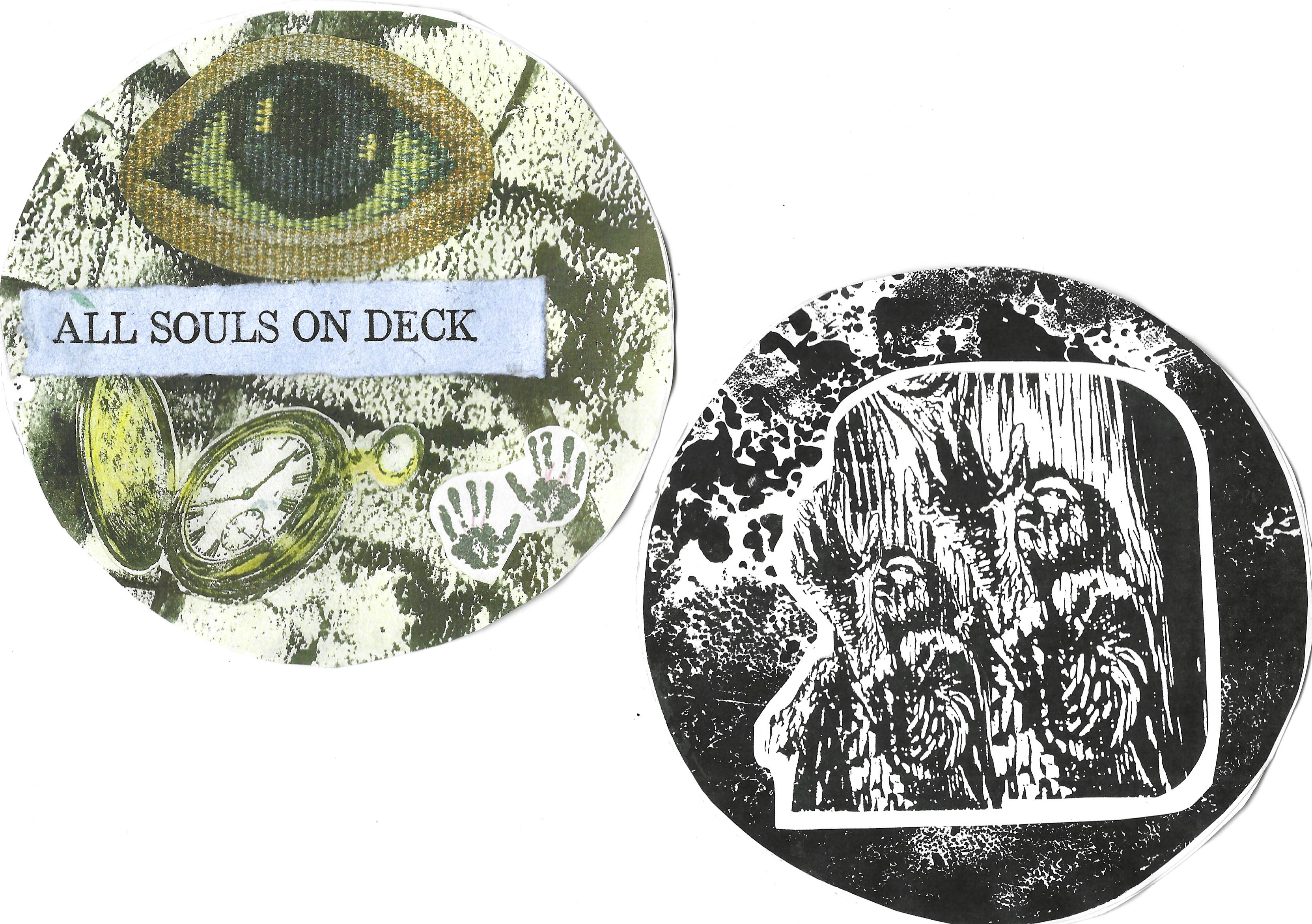
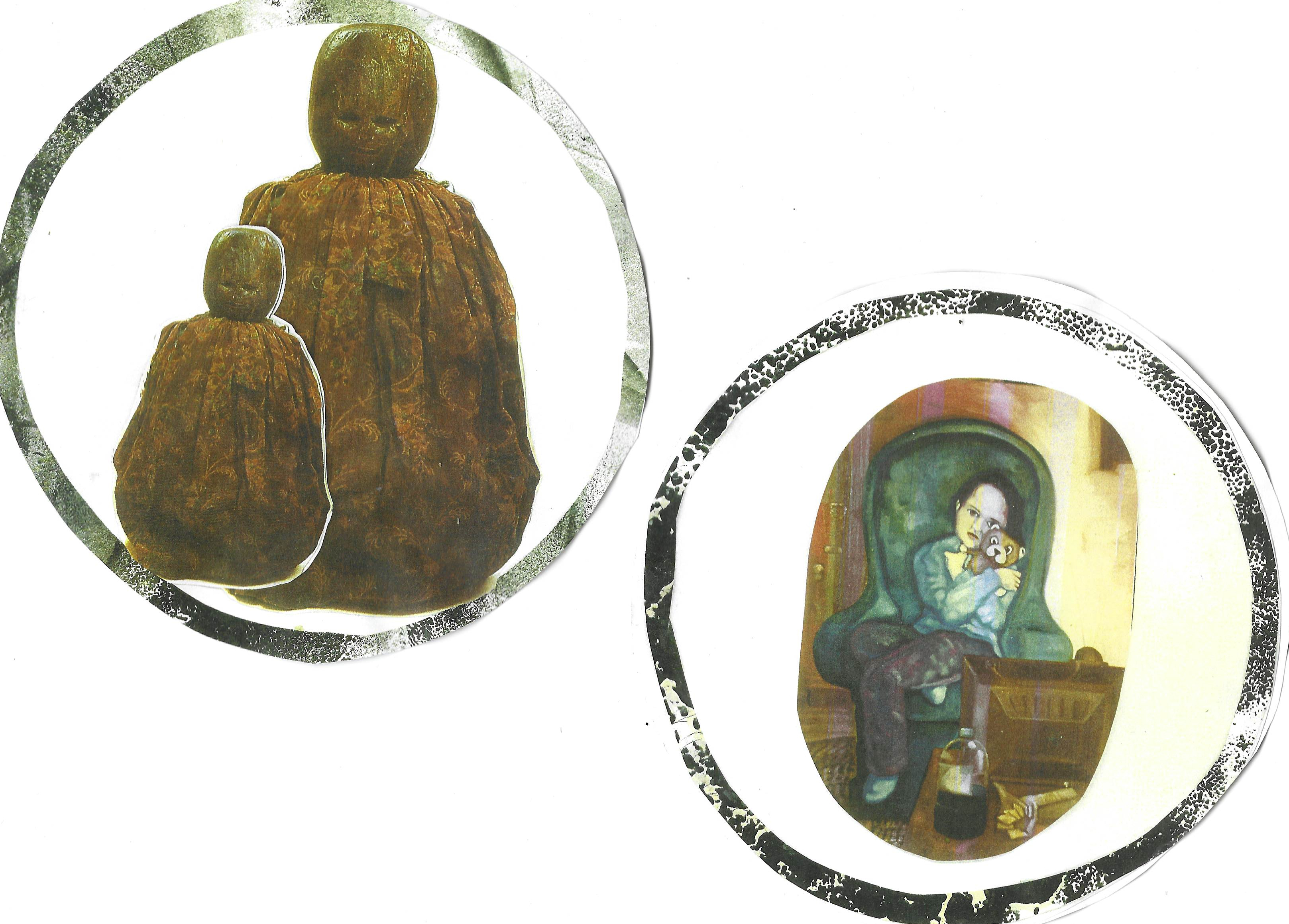
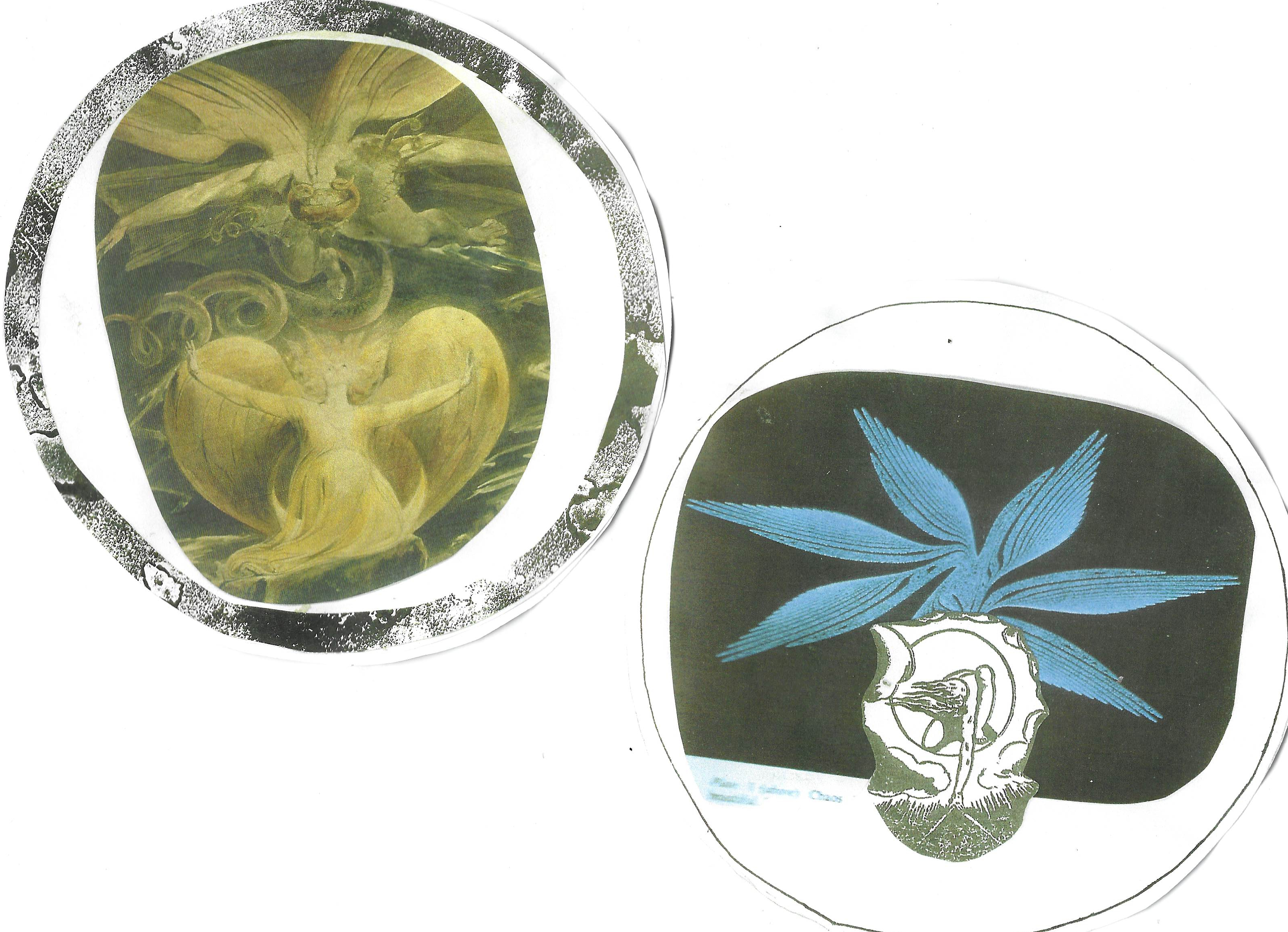
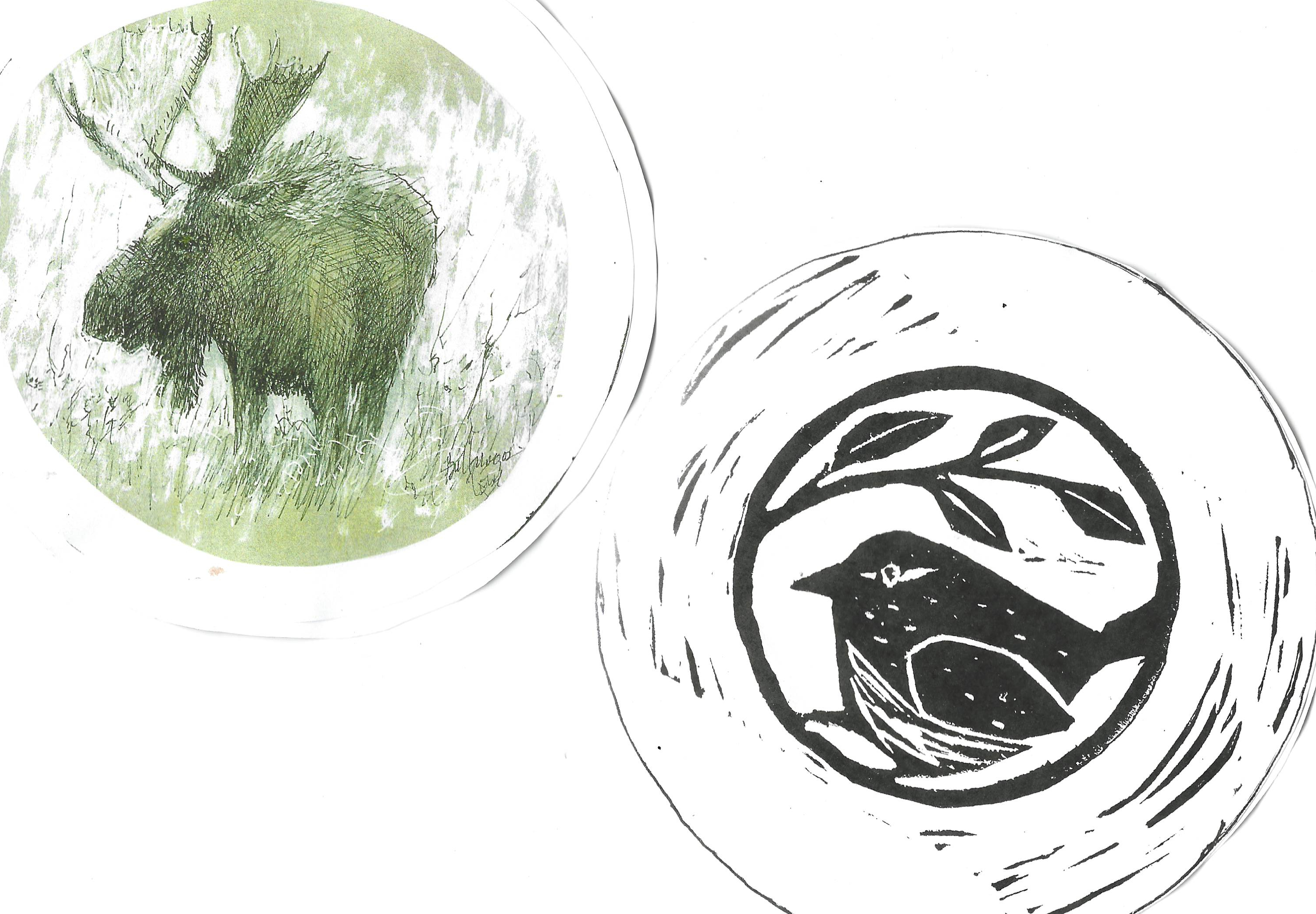
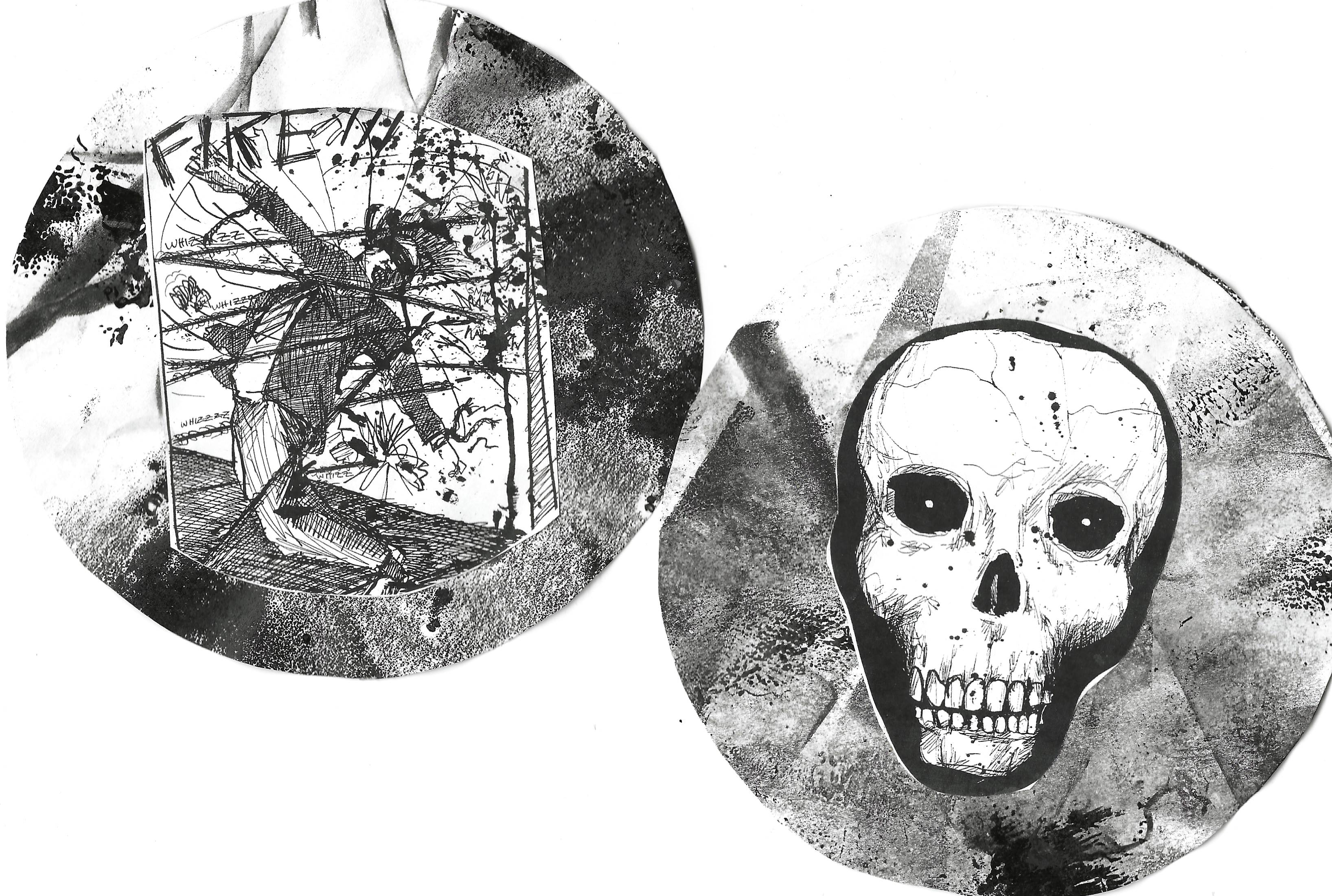
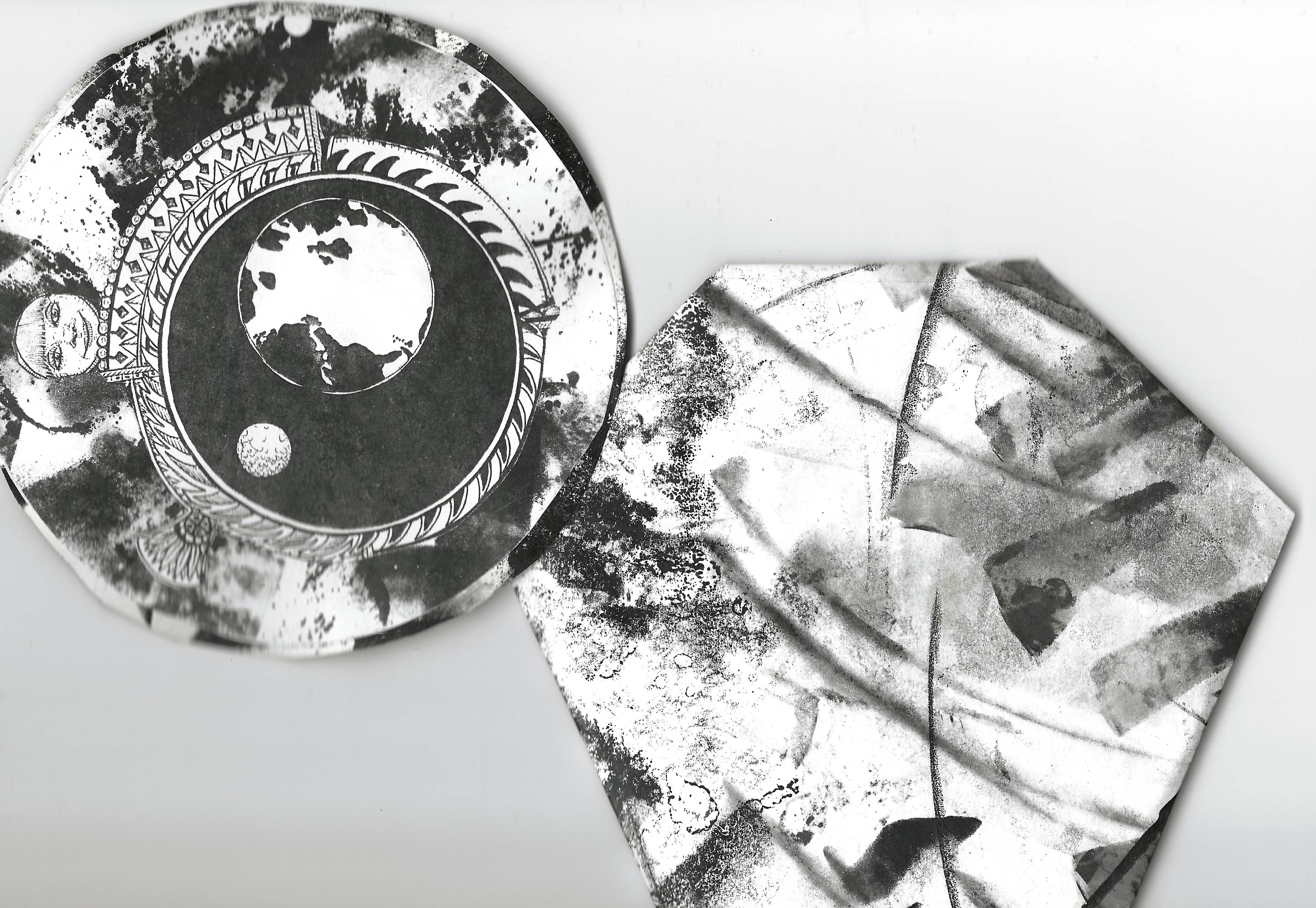
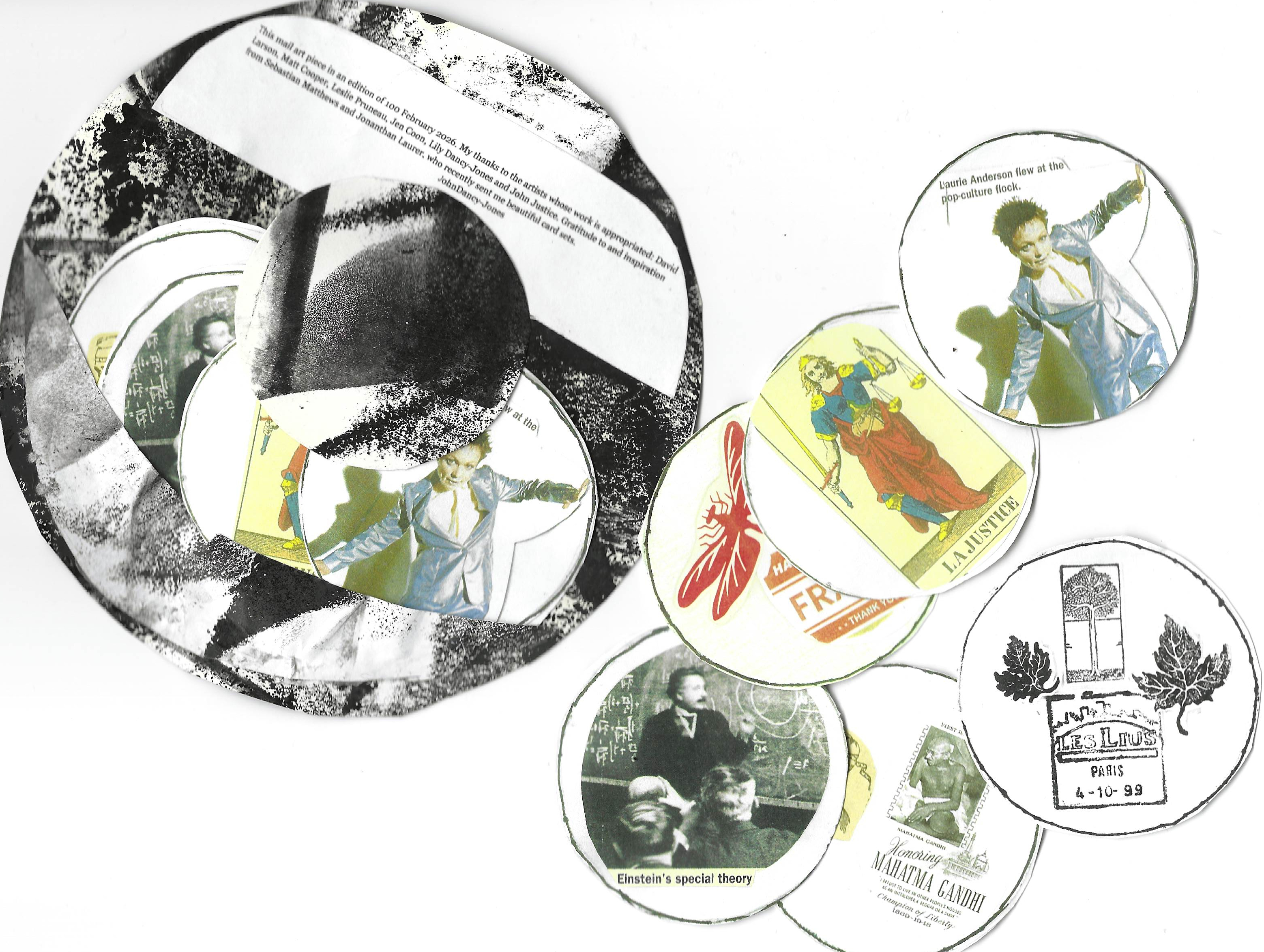
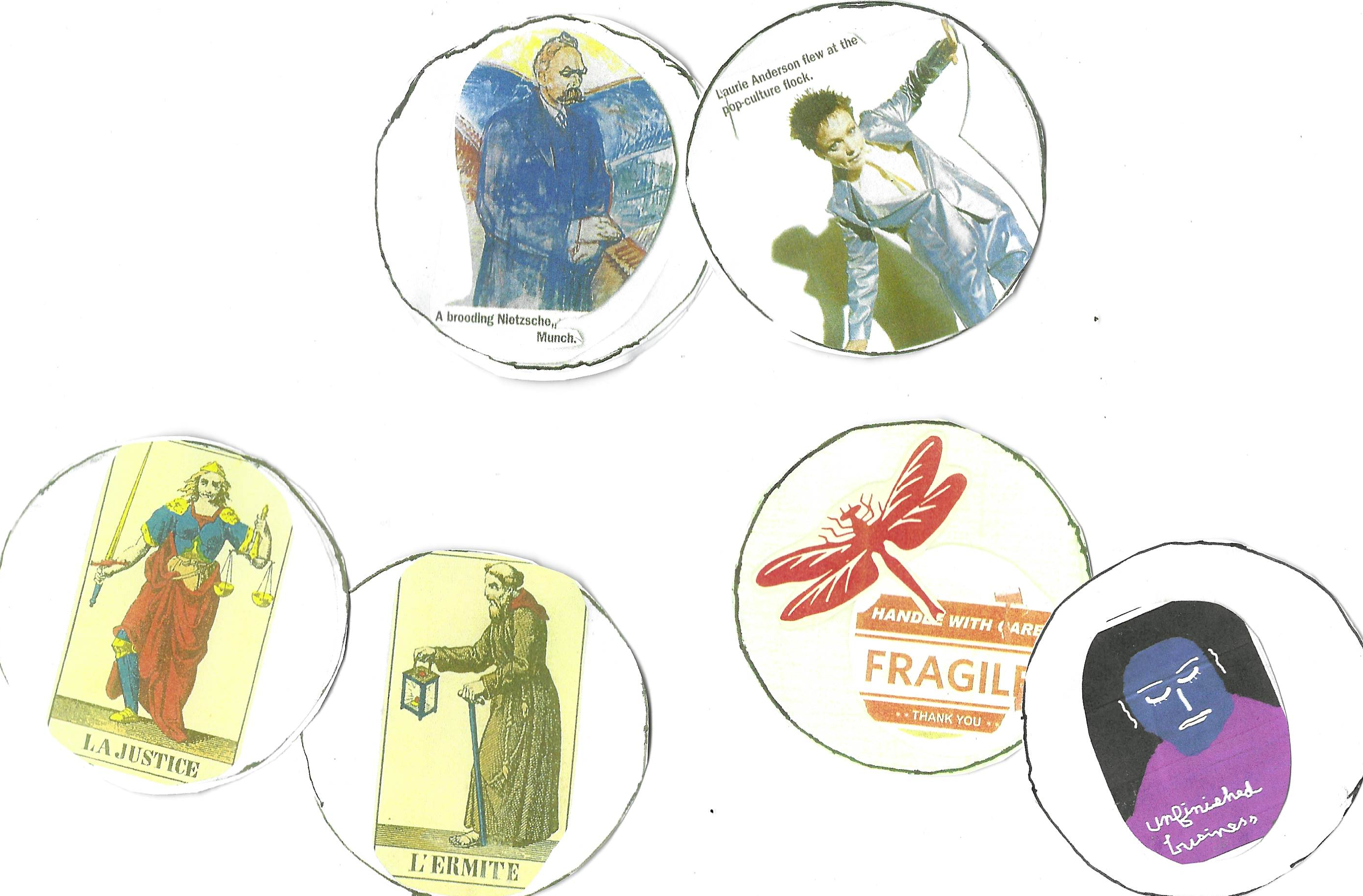
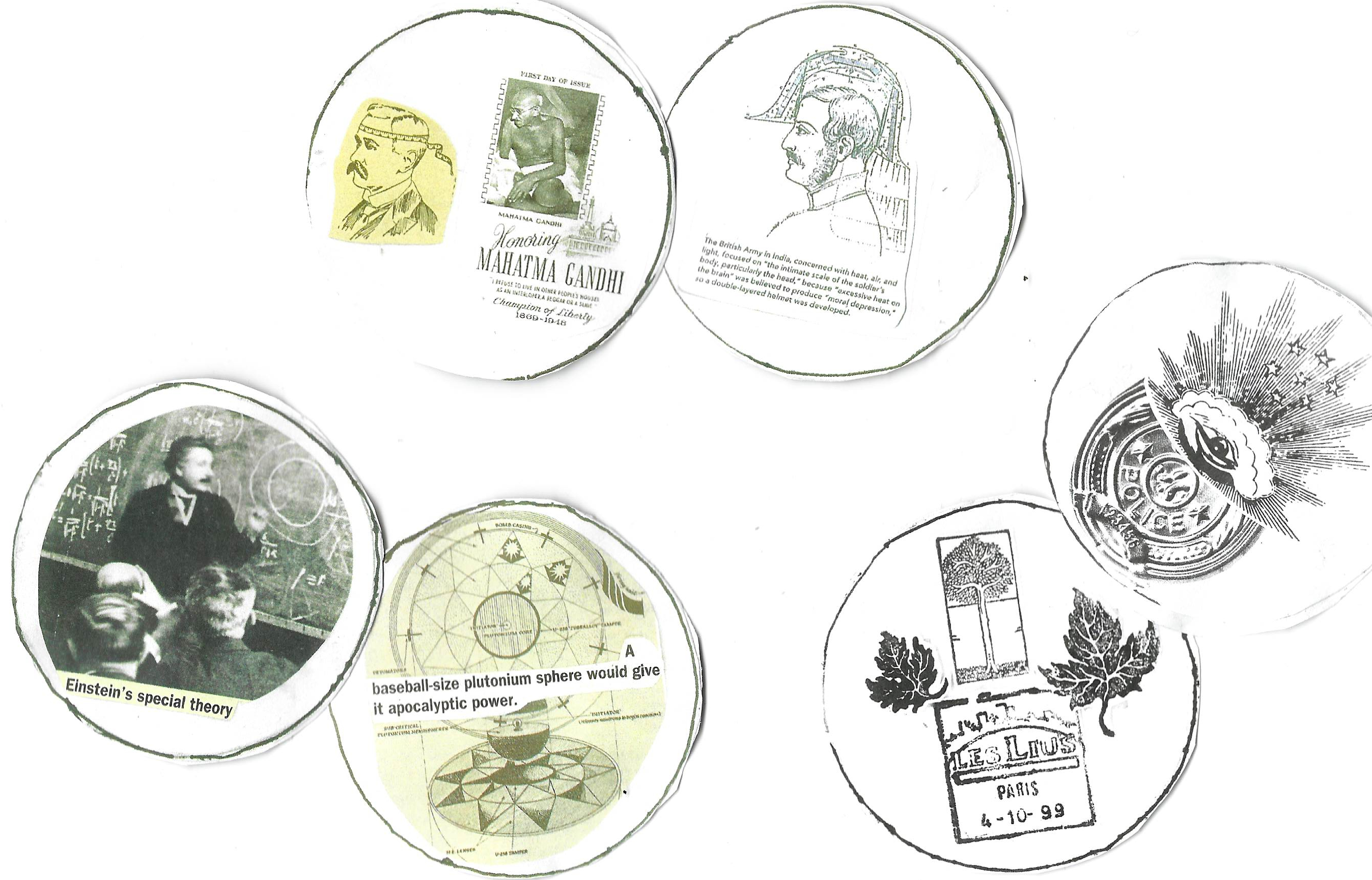
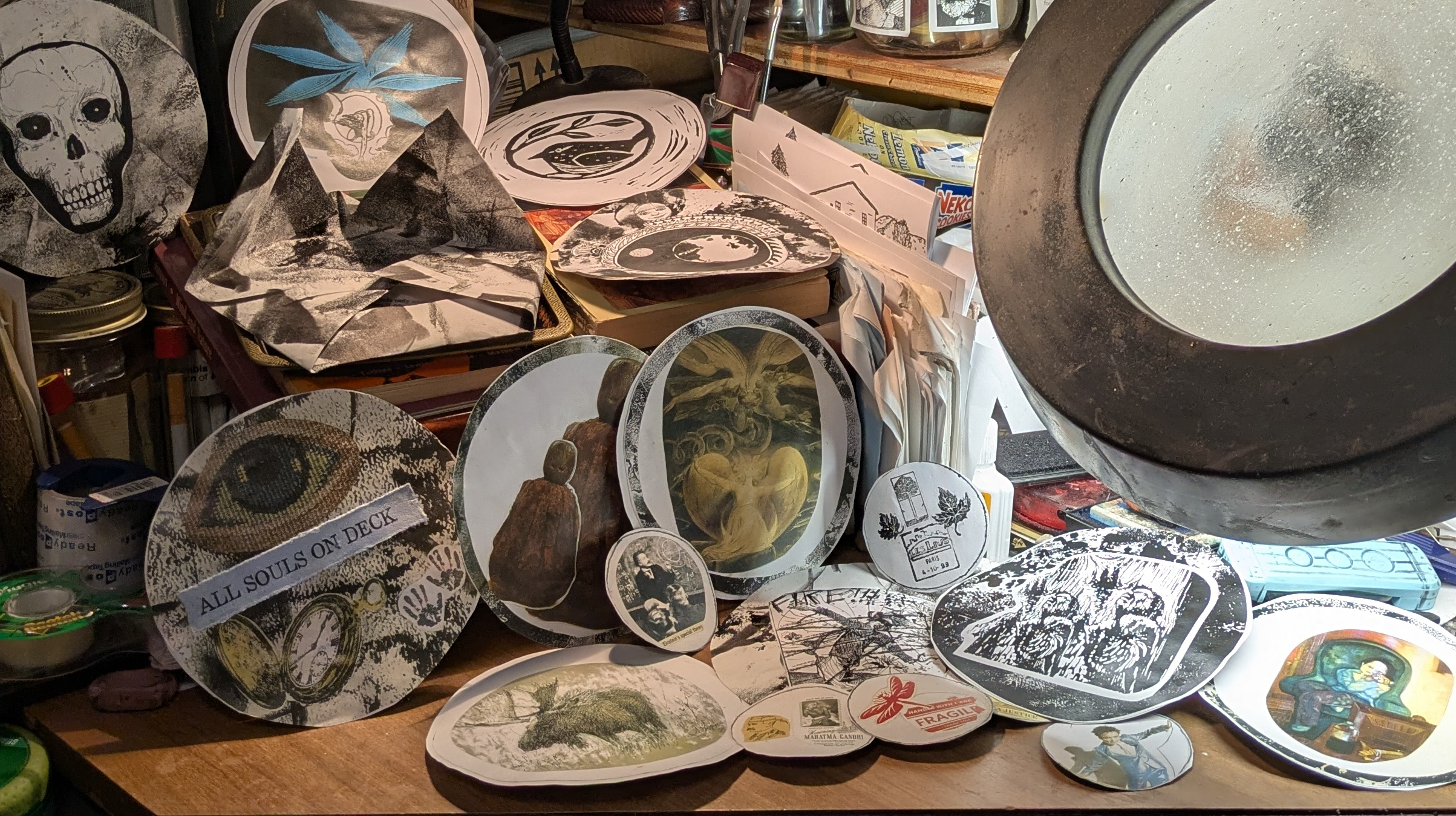
Many thanks to the artists whose work was appropriated: David Larson, Jen Coon, Leslie Pruneau, Matt Cooper, Lily Dancy-Jones and John Justice. Gratitude to and inspiration from Sebastian Matthews and Jonathan Laurer, who recently sent me beautiful card sets.
What To Make of It? What will YOU make out of it: mail art
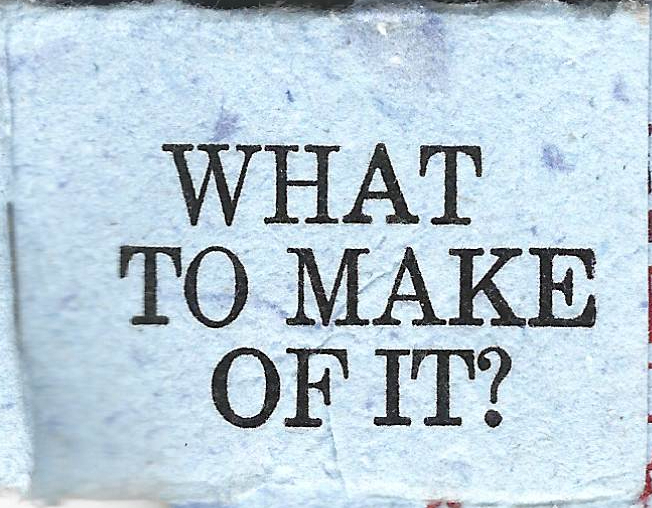
Helene’s fury found me two-thirds through a major mail art project. With the content committed to a pre-election release, I found a way to keep working on it, printing by battery light with a helpful mirror just outside the studio on sunny days. This piece was always going to be “rustic,” even for me, but it was finished in near desperation, taking breaks from printing to shovel silt out of the book arts barn.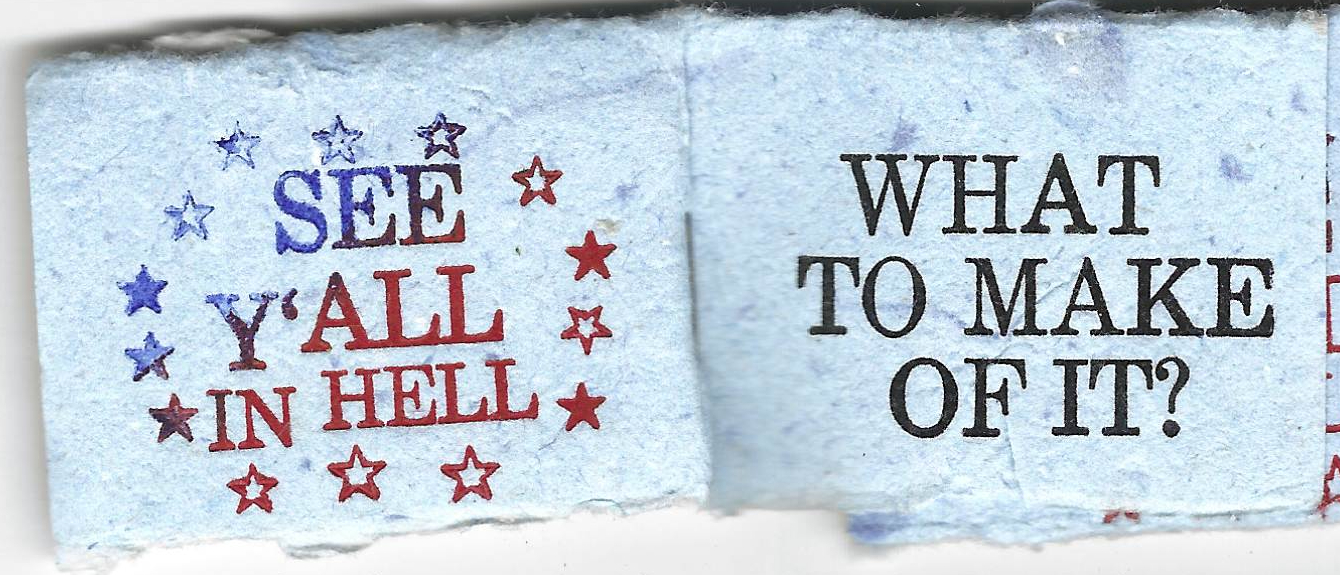
The inspiration for this piece came from Leslie Pruneau, a talented and well-established Raleigh artist, who sent me a wonderful tiny book as a gift in return for my mail art. As soon as I saw it, I knew how I wanted to use the hundreds of one inch strips of hand-laid paper left over from Natural History of Raleigh covers. I folded and trimmed about a hundred little books and started printing the draft of images from my stock of rubber stamps and blocks.
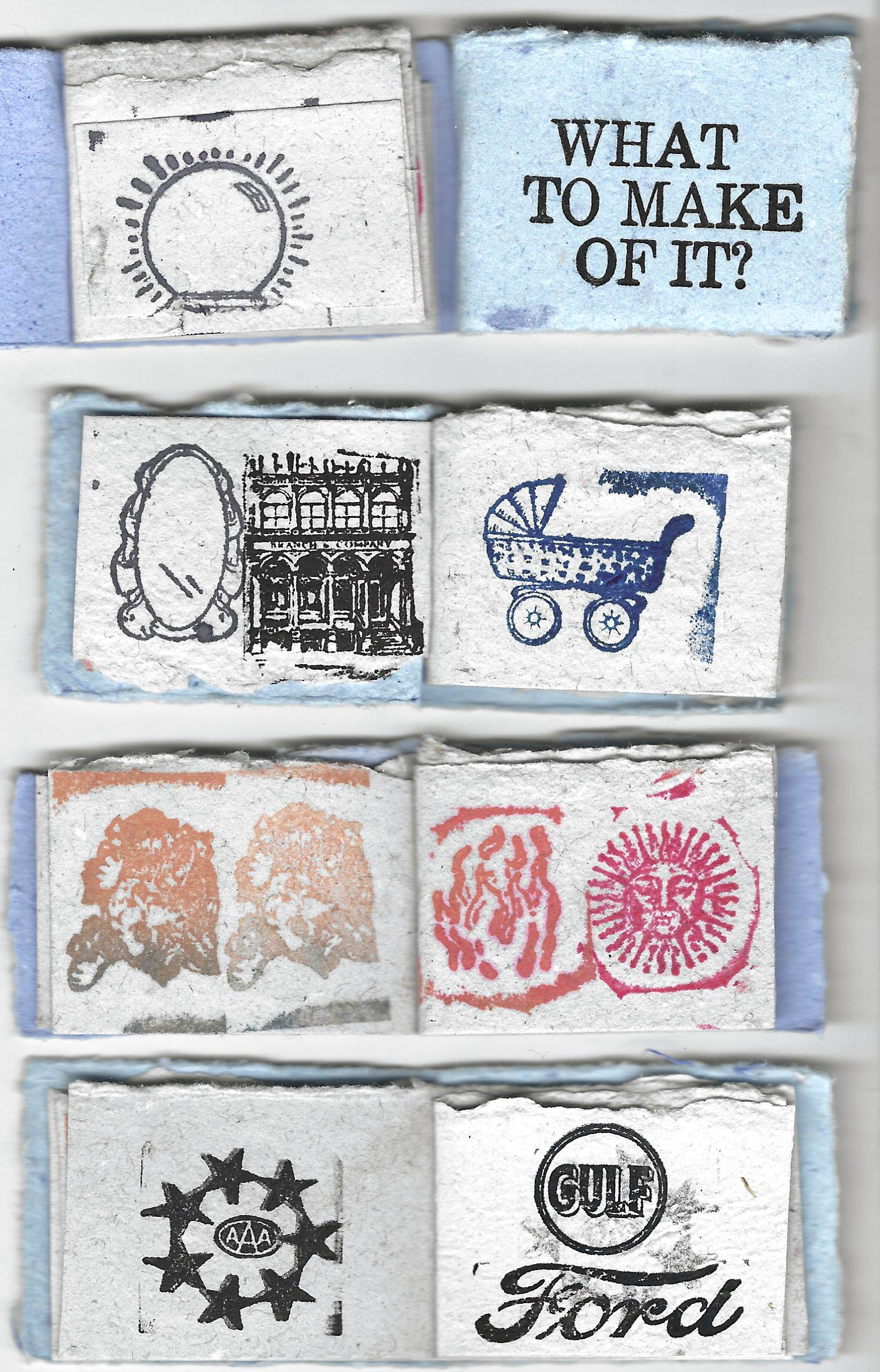
The idea map emerged from thinking about these pictures of untold parables. As always, chance, opportunity and random influences guided me.
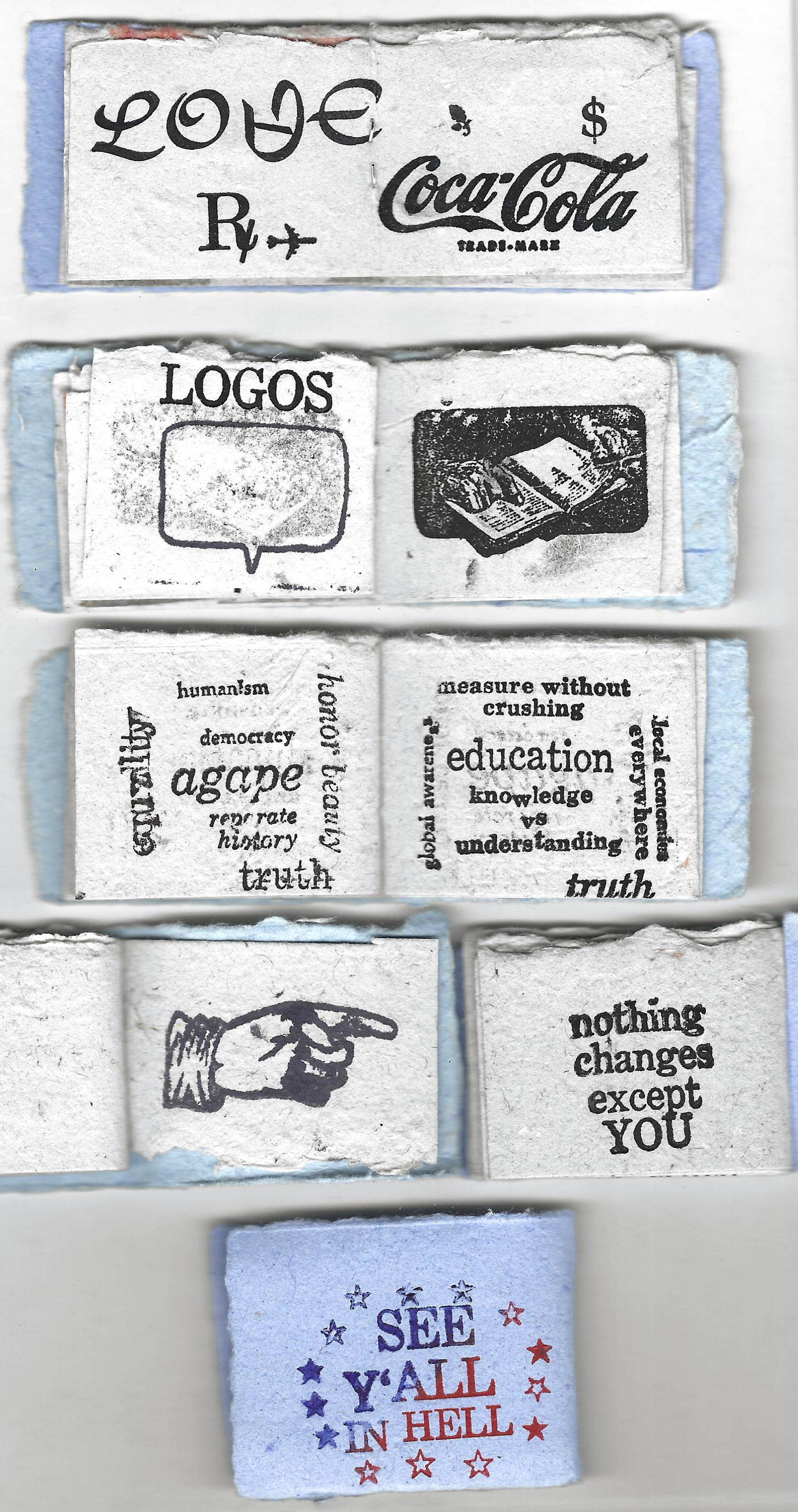
The closing image is from Andrew Lane, a zine artist whose work I first encountered through the 2020 Asheville Zine Fest exchange. I picked up his sticker at the Boone Bound book arts festival and put it right in front of my work station. So sad that Reagan, Newt Gingrich, and the bubbling forces of social media have brought truth into such peril.
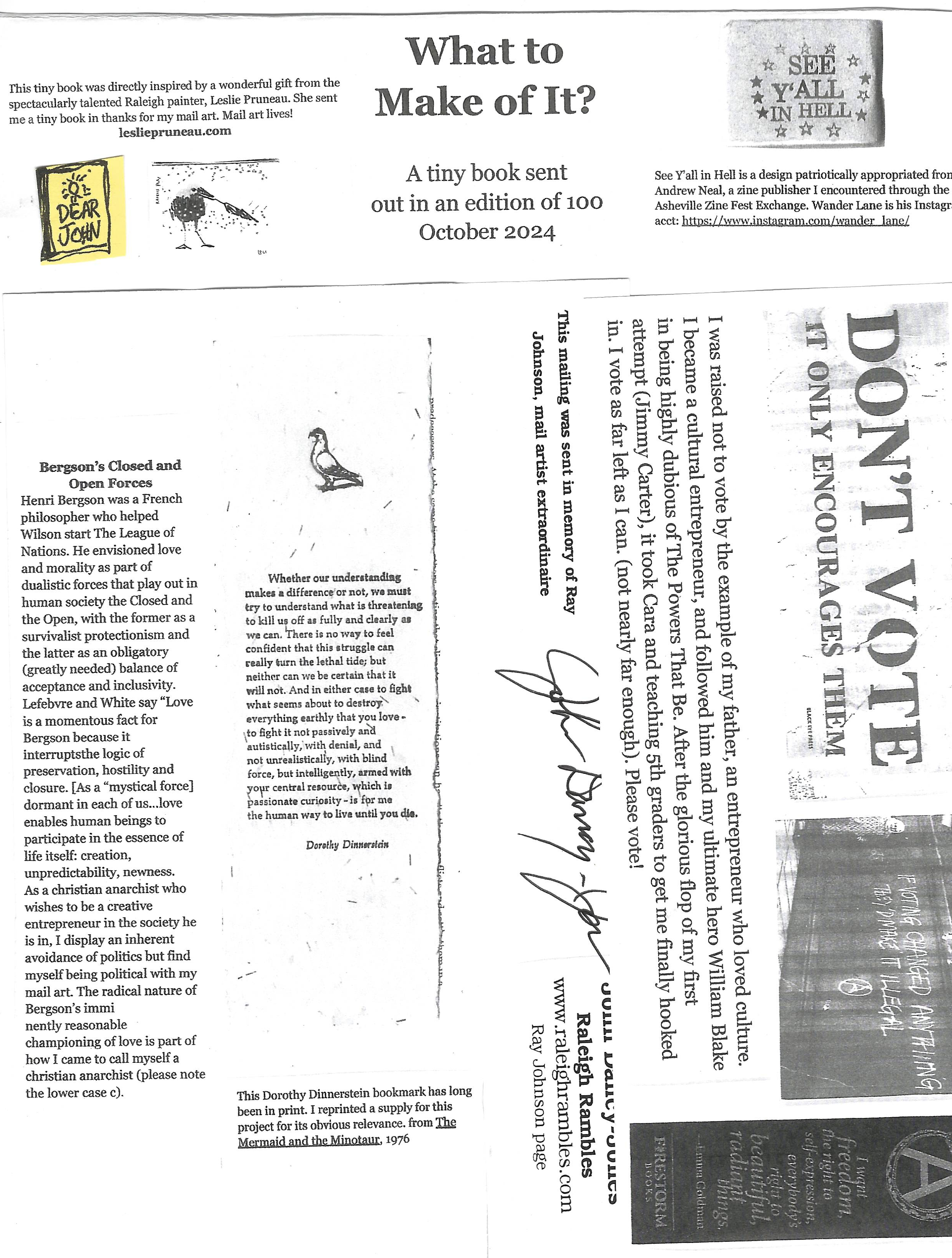
The outer wrapper was designed to suspend the book in the envelope, to help that object make it through as a piece of first-class mail, which is much more tightly restricted than in the past. The Dinnerstein quote bookmark, re-printed on the fly for this project, has a one word omission error. It is such a fantastic quote.
Happy Trails, whatever Nov 5 brings.
PENNY DREADFUL an essay in small print
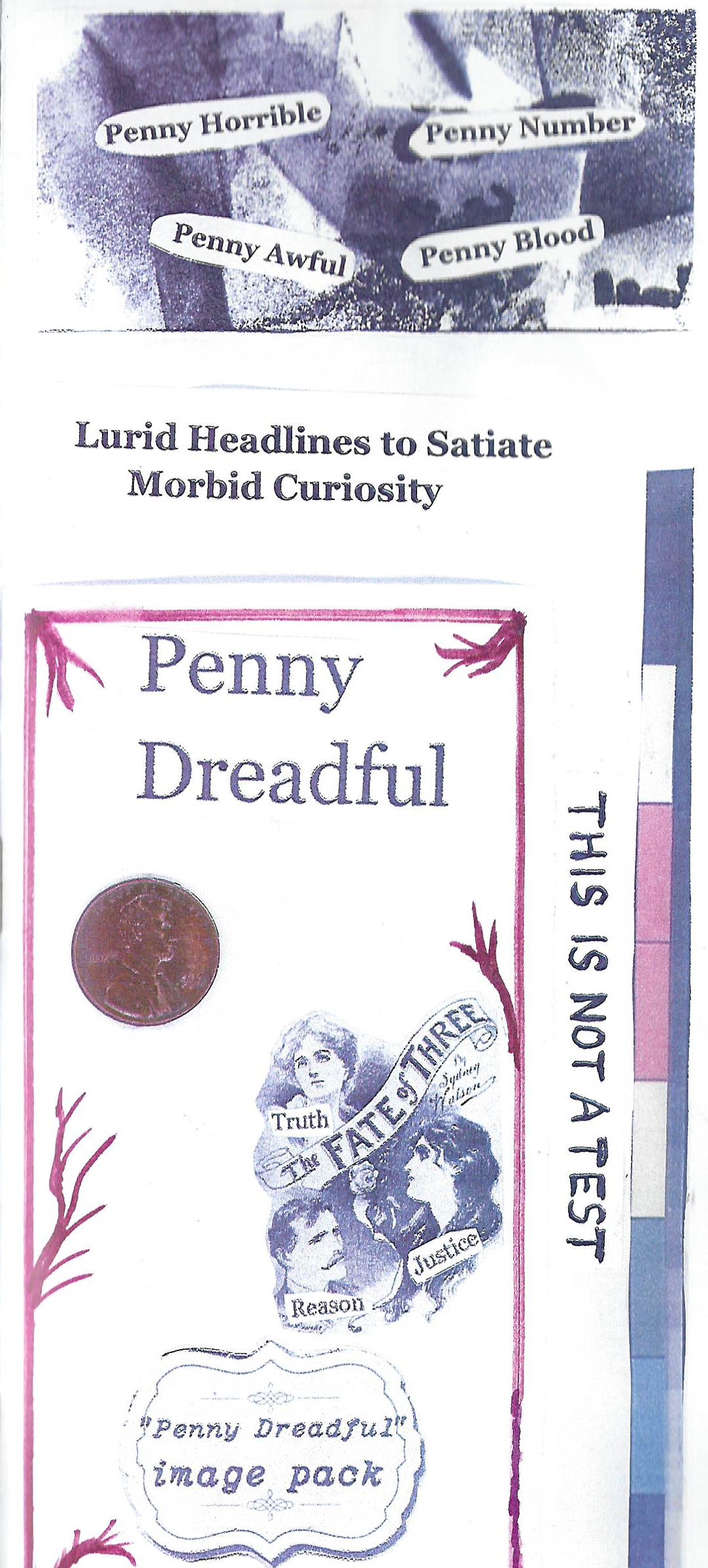
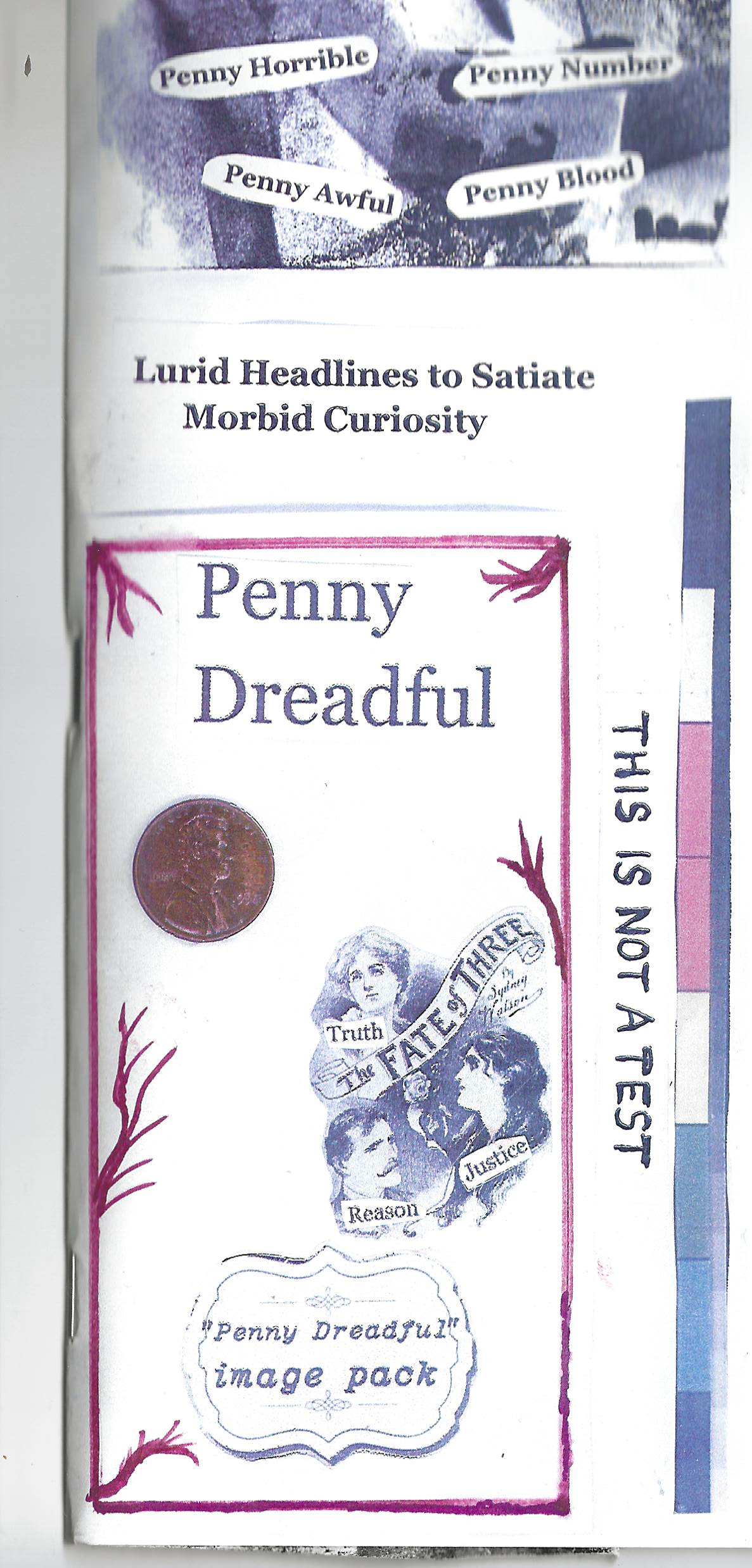
My latest and biggest ever mail art is out in the world in an edition of 120! Based on an early form of street literature I learned about from Dr. Charles Edge at UNC-CH in the early 70’s. I previously used the format in a self-publishing project with 6th graders at Glenwood Elementary my final year in Chapel Hill. Sent one year from an inauguration that will be a watershed for our country – one way or the other.


The format is a 2-sided color photocopy enclosing a small booklet made of an 11×17 sheet strategically used to clean off excess ink from the platen after letterpress printing nature book covers. I also used these for the zine version of my pandemic mail art piece, Plague Daze.
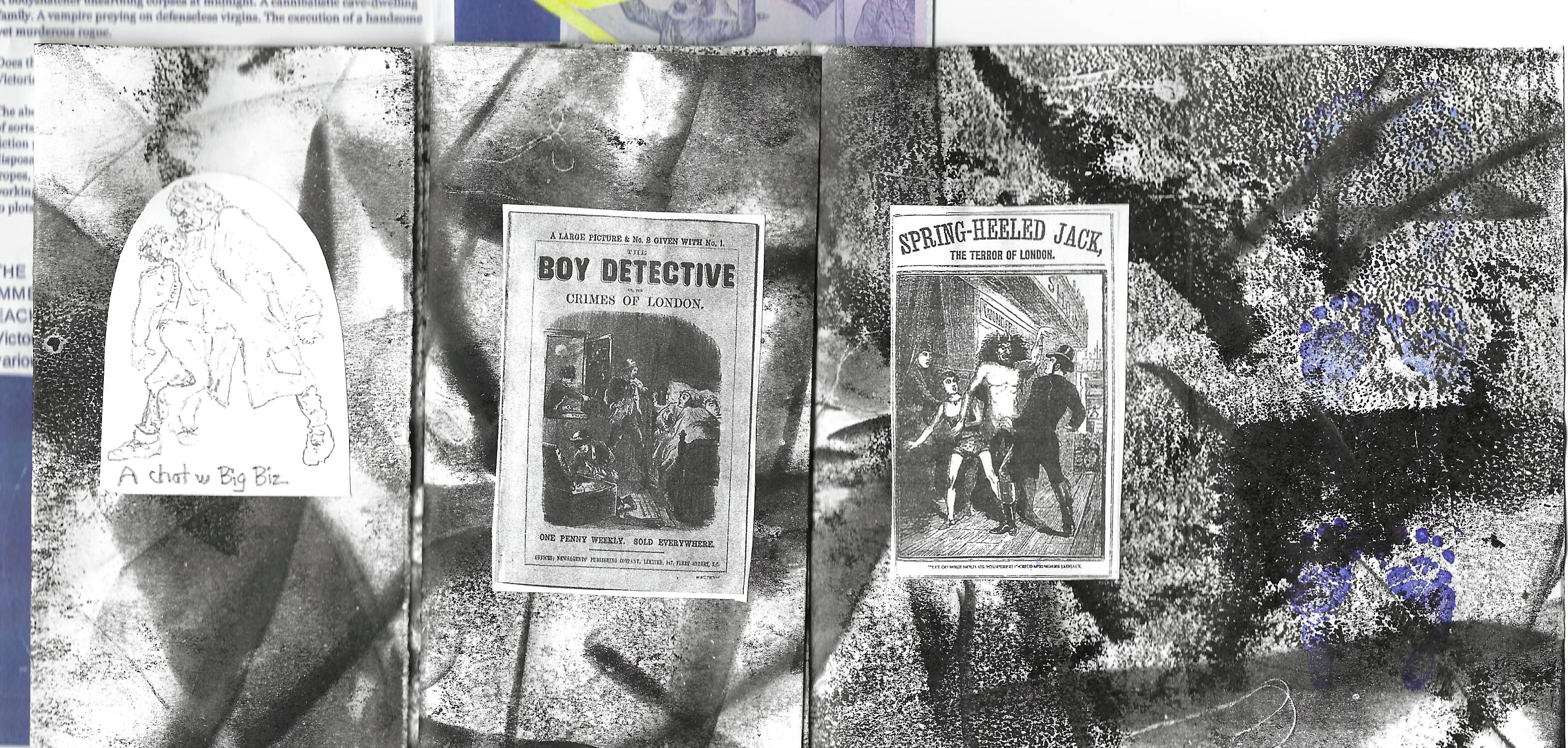
Historic images of Penny Dreadful covers and other historical print images (occasionally modified) were cut out and glued into the booklet. Over 3000 pieces! Not all are shown.

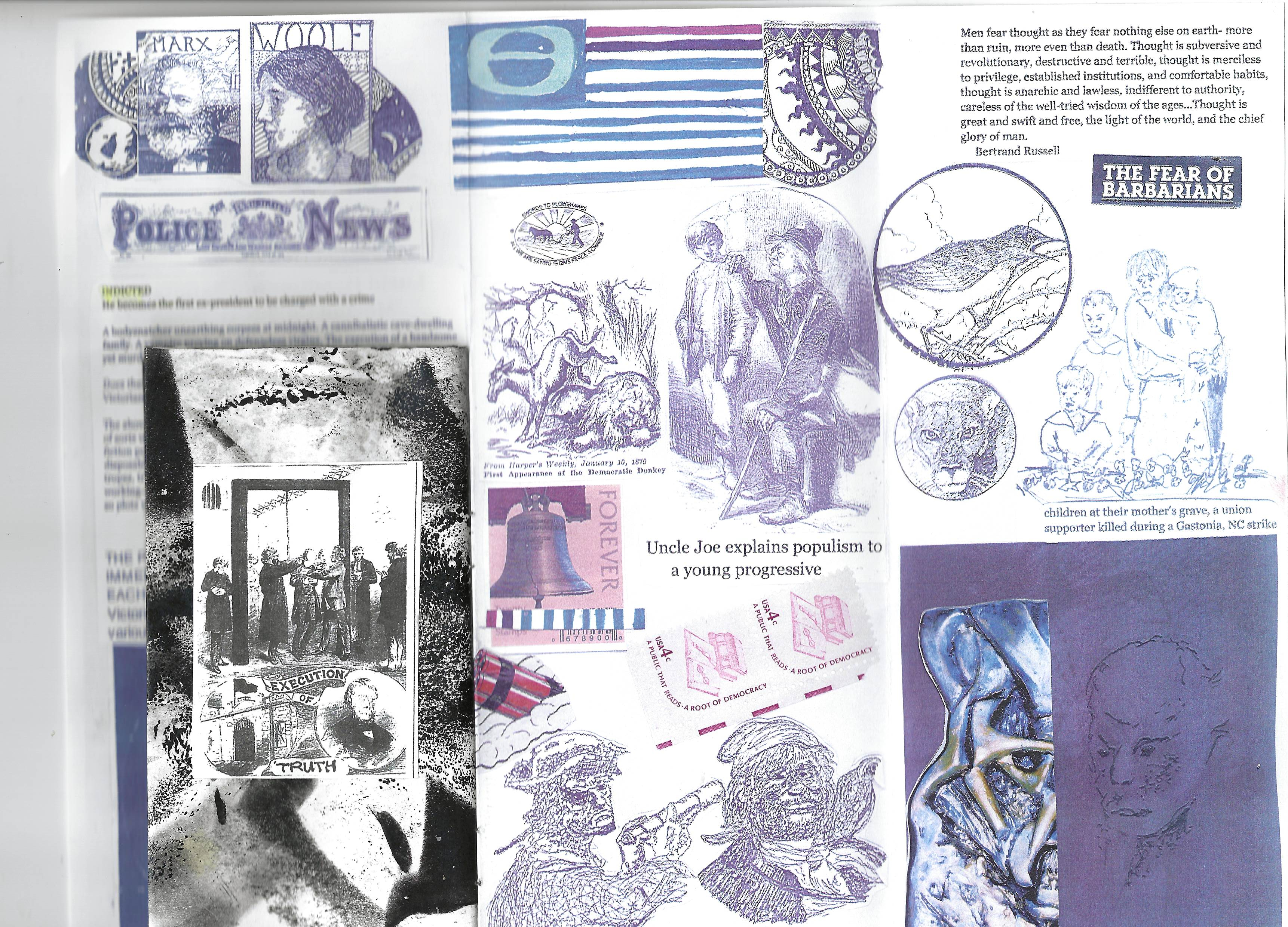
Throughout, the reproduced pencil drawings are my tracings and re-drawings of print images. Hilariously, the mounted penny is the specific reason this mailing is slightly too thick to qualify as first class by current (much stricter) regulations. Also, mounting the penny with glue on the back side is surely a defacement, which is a federal offense. I love the subversion but I fervently hope none get returned (109 are in the mails as I write).
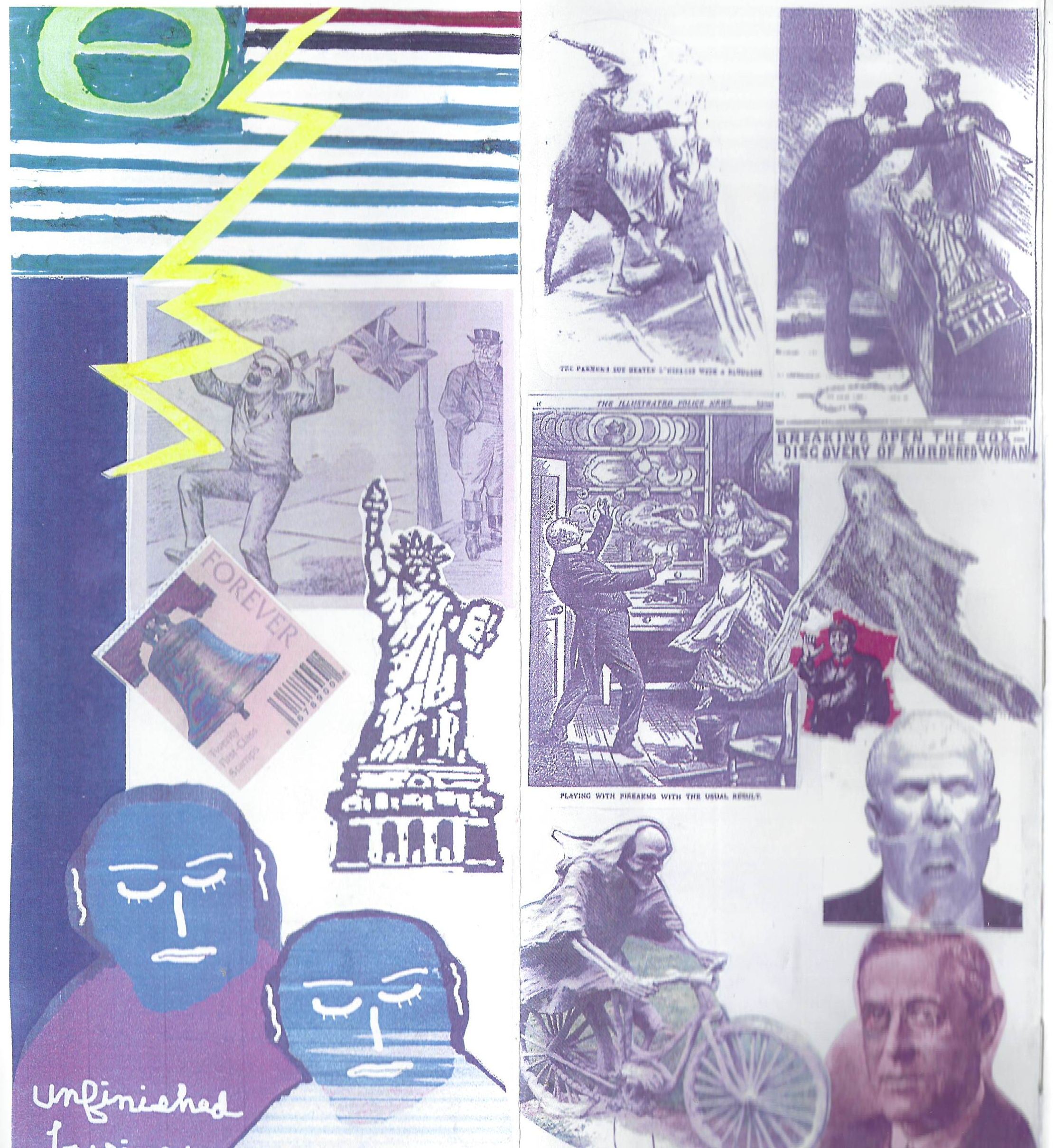
A big thanks to contributors of images: David Larson, John Justice, Jonathan Laurer and of course the online resources for Penny Dreadfuls. This mailing was sent in the memory of Ray Johnson, correspondance artist extraordinaire. Richard C, Ray J’s curator, and John Justice received draft versions of the project which were essential in finalizing the final design. Mail art lives!
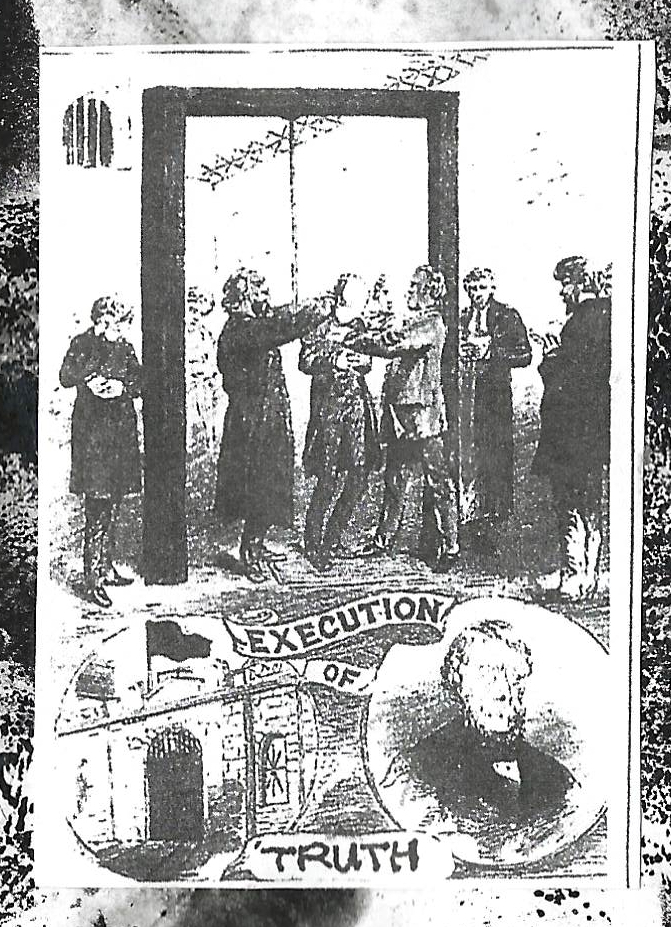
Our country and its democracy, such as it is, WILL survive – American history is filled with far worse episodes. Besides, the really big boys are not going to let our lucrative systems break down – and The System is inexorably getting more progressive and global all the time – but this has been a hell of a wake-up call for all of us. God bless us all.
Feedback on Penny Dreadful
Mary R: Shadow and light conjoined in a delightful dreadful death of democracy, a fine memento mori for Ray….. most grateful and amazed!
Alyssa S: It was such s surprise and delight to receive! I’m looking forward to spending more time with it. Each look, I catch something I didn’t see before.
Cheryl C T: There’s so much to see. Each time I look, I find another interesting detail.
Lee M C: I am really moved by this work..opening it and being..yes this is today and yesterday and the impending proverbial bad penny! amazing imagery , prophetic synchronicity
Eric N:Got my Penny Dreadful mail art a few days ago. Thank you so much–a remarkable assemblage. I love it
Marcia C: What a wonderful surprise to have your very cool little book arrive in the mail. Thank you so much! Penny Dreadful is a rouge book that has some wonderful fingerprints on it. I can see all your hand work and paste and stick and fold.
Jen C.: You have lit up my imagination once again, John.
Fred Chappell, Consummate Poet and Beloved Teacher
When I left Chapel Hill for Greensboro I was determined not to be a professor/writer-wannabee and was highly suspicious and dubious of university writing programs. But UNC-G is a small campus and I was soon active and prominent as a new papermaker and nebulous Creative, though the term did not exist in 1976. I became acquainted with the renowned Fred Chappell, and though I did not become his writing student, he read what I gave him and was kind and very helpful in chats and, later, letters. What a generous soul who celebrated life in some of the richest detail to be found in verse. He wrote the story of his life in rural Canton in poems that were like the richest bits of a short story. His actual fiction was wonderful but never became as well known. The first of his science fiction pieces was Dagon, and having read in an interview that he considered it readable in one sitting, and wrote it with that approach, I immediately did so and told him. He seemed tickled, but then Fred was always bubbling with some kind of energy. He was a learned man and intuitive teacher; he could sound out a human condition and reach out to it with an effortless good humor.
Fred drank in the late afternoons, usually with his graduate students, at the bar on Walker Street and I sometimes bicycled there and sat near them. I was starting a new life after leaving my high school sweetheart wife and starting to write The Suicide of Hooker Van Dusen, which was dedicated to Fred and to the memory of Randall Jarrell, who preceded Fred as a great writer at UNC-Greensboro and whose wonderful poetry was sometimes tinged by a smallness of moral fortitude in living out his L.A. style life in a small town while looking out from his lectern at future schoolteachers, mostly female who, in one infamous poem, reminded him of doe-eyed cows. In huge contrast, Fred Chappell was a southern saint who embraced the beauty and power of rural life and fused his vision of it with a sophisticated and supremely expressive sensibility. He also took his teaching very seriously and gave of himself like few of his talent do. He did like a drink, and that became a hallmark of his legend. My favorite Fred Chappell memory is auditing a film class he co-taught with another UNC-G prof. It was not Fred’s turn to teach, and he was sitting in the back of the tiered lecture hall, having arrived a bit late from Walker Street. The film was Blue Angel, and the professor asked, “Why did the director pick Marlene Dietrich?.” From the upper back, Fred stands and bellows “BECAUSE SHE WAS THE MOST BEAUTIFUL WOMAN IN THE WORLD!!” Fred stopped drinking a few years after I first met him and entered his retirement years as a legendary and transformative figure in North Carolina literature. My novelette became my first published book, and its writing was permeated with the ghost of a writer gone and the warm encouragement of the one who was there. Fred wrote me a nice note about the manuscript of it, and later gave me a couple of excellent PR blurbs in comments about future projects.
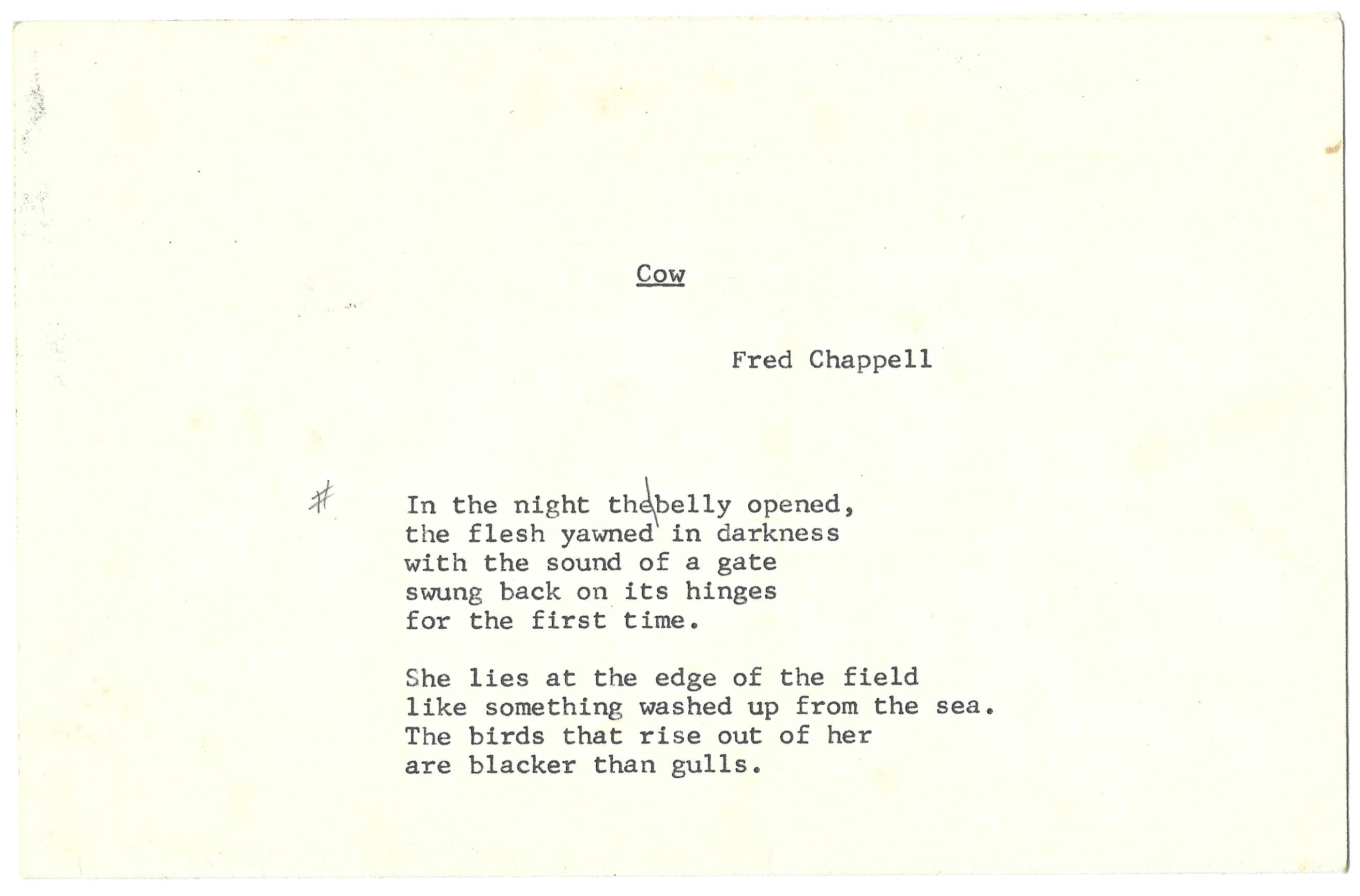
I worked hard to stay in touch with Fred, and when I started publishing, he was first on my list of possibilities, and after seeing samples of my hand-laid paper broadsides, he sent me two poems. The first exists in reprinted form and is still in print. The original publication in 1983 had a second poem on the back. I am sharing Fred’s manuscript copy of that one. I am so proud of having published these, and so grateful Fred had such a long run of life and literature. He passed on January 4, 2024.

Highly Personal Rauschenberg Exhibit Brings Back Memories
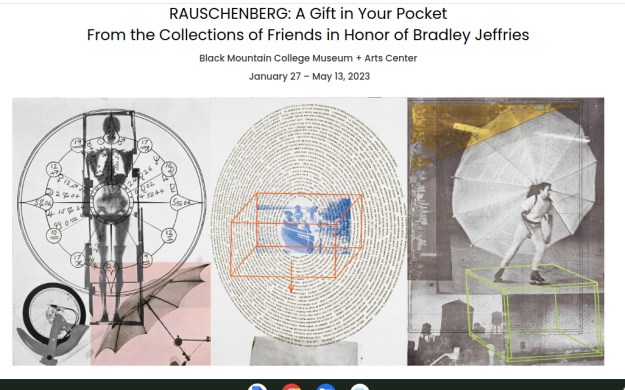
“Auotobiography” lithograph set 1968
all images shown in deference to Robert Rauschenberg’s estate
The Black Mountain College Museum + Art Center is hosting a traveling exhibit of a special set of work by Robert Rauschenberg – gifts, many made just for her, to his studio manager and confidant of 30 years, Bradley Jeffries. It’s an outstanding show with an initial grouping that is one of the most sensually beautiful I have ever seen in this or any museum. A good range of different media from this most versatile artist is shown, but a predominant one is solvent transfer, which captures pre-existing images, from text to photos to anything, in a dreamy and bluish hued tone of nostalgia.
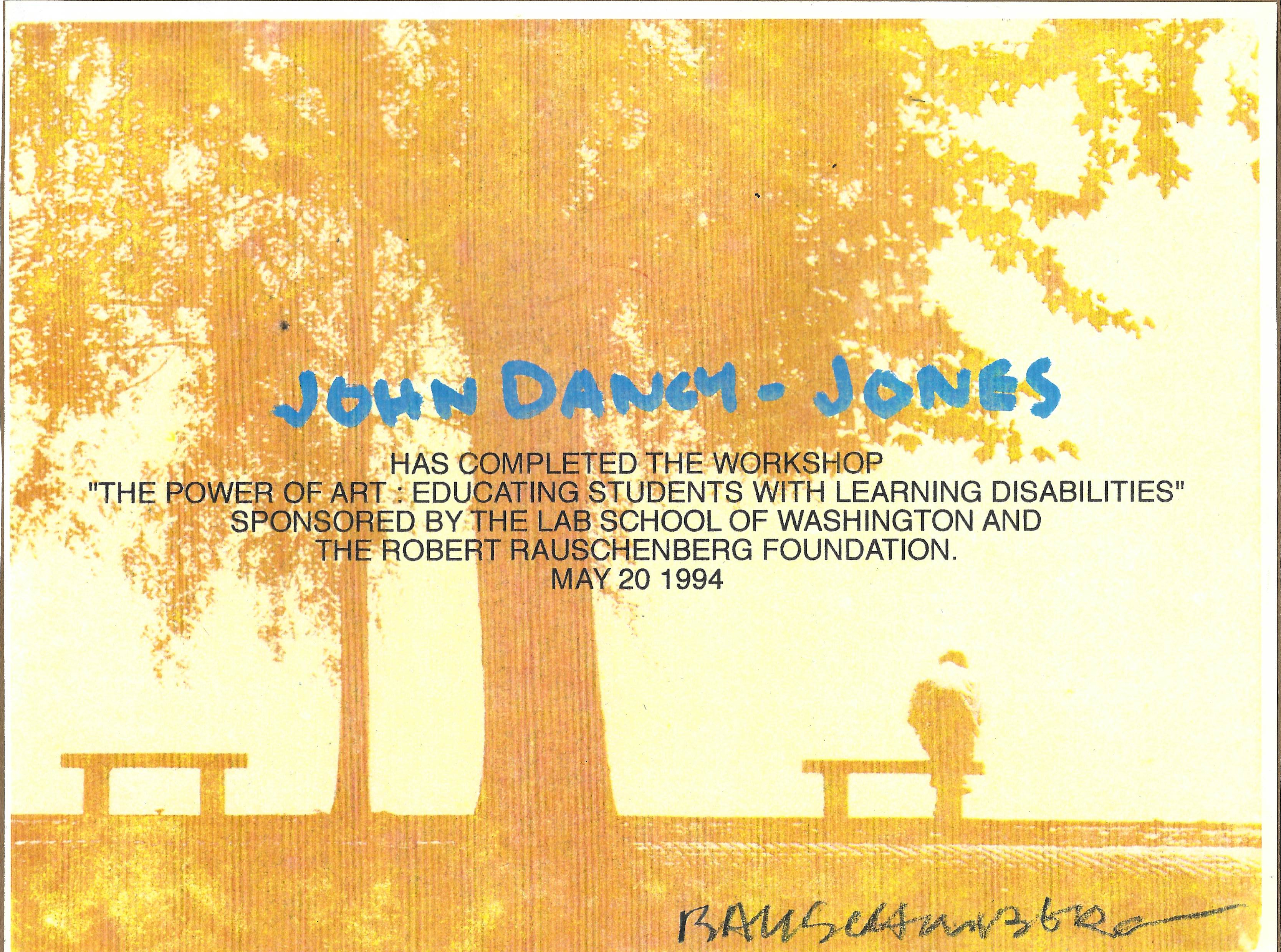
Much nostalgia for me in seeing a certificate of participation in a glass case, earned by Ms. Jeffries, for completion of the workshop The Power of Art, a program sponsored by Robert Rauschenberg at the Lab School, a self-contained day school in Georgetown in Washington, D.C. which serves students with learning differences. Her’s was for 1999; I was a charter participant the first year in 1994. I was a new art teacher at The Achievement School (now The Fletcher Academy) and applied for the workshop using student linoleum prints executed on scrap linoleum from the school’s gymnasium.
Mr Rauschenberg spent the day with us,as I describe on my Black Mountain College page.
Robert Rauschenberg found out as an adult that he had a learning disability ( as distinguished from being what he thought was “stupid”) from Sally Smith, founder of The Lab School. He became a supporter of the school, and the “Power of Art” program, of which I was a charter participant, rewarded art teachers who worked with that that population. Mr Rauschenberg treated us to a presentation along with his assistant, gave us signed posters, a five hundred dollar gift certificate to Jerry’s Artarama,and sat and listened to each of us present about our work. That evening, we were feted at a private reception at the National Gallery’s East Wing, and Mr Rauschenberg favored us with a tour of his own work on the walls. He discussed his decision to create the “white painting” while at Black Mountain (Josef Albers thought it a needless extreme), and he gave a vivid description of painting the huge 25 foot work which was on display in the main room -smearing his hands with the white lead paint for hours and then having to go into immediate treatment for weeks because of the lead poisoning. He was charming and down-to-earth, yet fragile and a bit ethereal in his personal presence. That was a wonderful day.
Below is a photcopy of my certificate. Sadly (and thoughtlessly) I displayed the original near a south-facing window and it has faded considerably. Just as bad, I used dorm room sticky to mount the poster Mr. Rauschenberg SIGNED. Such is life when you are a generalist with too many pies cooking. But now I have added this event to the several that have linked me repeatedly to Black Mountain College over the years, leading me now to be a private scholar in the field and an active participant in the activities of the wonderful BMC museum in downtown Asheville.
raleighrambles.com
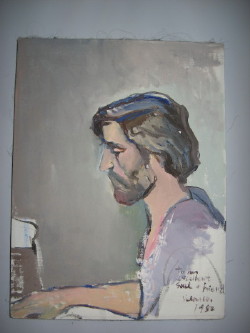
portrait by Guillermo Velasco


 Raleigh Rambles