First Friday recap – downtown Raleigh teems with good art.
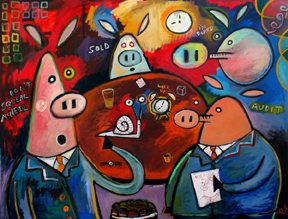
Don't Squeal McNeil by Keith Norval
Up to date news is not the style of this blog – I am, as Clyde reminds me, part of the Slow Blogging movement. No matter for this post – EVERY Friday is First Friday this December til Christmas, and you may easily recreate my journey with most of the galleries discussed.
Starting at Artspace as usual, I stopped by the front gallery to see Keith Norval’s opening of The Corporate Art Show. Keith has outdone himself in the wake of his new parenthood, along with the talented Ann Podris. Keith’s quirky rendering of goofy cartoon images with surprisingly subtle oil color and brushwork may or may not be your favorite style, but you can’t miss these hilarious concoctions of Angry Squirrel Customer Service, Rhino Dollar Bills, and Pig Salt.
This new series of oil paintings by Keith Norval explores the theme of business and animals. With the current state of things (environmental destruction, factory farming, extinctions) it seems animals would be better off if they had some kind of representation. …this show aims to give them their own voices. Artspace website
The blessed couple was upstairs in their gallery, dancing and swaying their little bundle into First Friday submission. Good luck, guys, and sleep when she does – you’ll need it!
*************

Down the street at Lump, more caricature and mayhem. Cannonball Press has a jam packed display, indeed “an irrefutable deluge of relief prints.” You could walk in here with a hundred bucks and get a lot of gift shopping done, if you have friends who like inyourface graphics.
************
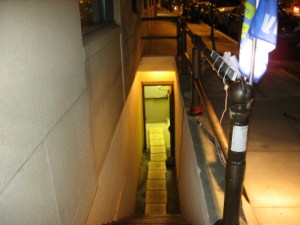
Up on Fayetteville Street, in what used to be my Dad’s barber’s basement shop, The Fish Market was showcasing an always widely varied and intriguing selection of work by College of Design students. Marie Formaro had some wonderful spires of canvas framed with metal, as well as a beautiful screen on canvas called “Ritual of Gesture.”
**************

Right down Hargett and upstairs is a truly fine gallery in a decidedly unflattering space. Adam Cave Fine Art stands up well to its claim as a home for national level talent. The current offerings that reach that level are mostly prints, from the precise yet softly diffused light studies by Donald Furst to the highly textured assemblages of interacting shapes in the woodcuts of Merrill Shatzman. My favorites prints were the alphabet and symbol studies by John Gall; intaglios with a hint of Bosch and a good dash of Rube Goldberg.
*************
While Adam Cave looks and feels like the former shopkeepers’ living space it is, the funky semi-amateur galleries at the top of Glenwood are intricate mazes of hopeful artists, all offering wine and cookies and hoping to share their wares. The Carter Building at 20 Glenwood and Point of View at 22 have a rich mix of artists, most of whom appear to have day jobs. Make no mistake – there are magnificent high spots in these cramped halls – and lows as well. I was thrilled to find Ellen Gamble and her abstract oils again after several years. Peter Filene‘s double exposures (no photoshopping at Point of View!) present well composed and strongly evocative images. And I’m always happy to have my horizons broadened by strong work in a realm I wouldn’t usually investigate – such as the fashion line drawings of Stephanie Freese, whose retro blackline compositions evoke a blend of the roaring twenties and film noire – and she turns out to be a fascinating comic artist whose online publishing work, pictured below, is revered by writers.
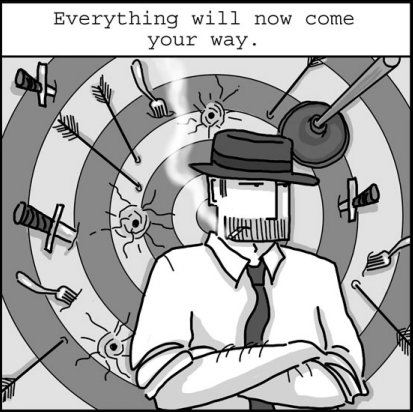
Dada Detective
***********
I make a late pass back east, heading for home but hoping to catch a couple of more spots. I have amazing luck. I finally catch up with Nancy Baker, whose Tire Shop Gallery started on McDowell, migrated to Glenwood, and has found a permanent home in the snazzy new building on Morgan across from the Flying Saucer. Her work, always at such a high technical level, captures scenes from Medici Florence to outer space with equal ease and insight.
They were ready to close shop at the Longview Center Gallery, which is curated by Rory Parnell from the Collecters Gallery. I asked the artist, Jesse Green, if I could see his light sculptures with the house lights out, and we had a neat experience looking at them in the dark. Then they scooted me out of this basement space where, believe it or not, my friends and I built a church coffeehouse in the late sixties.
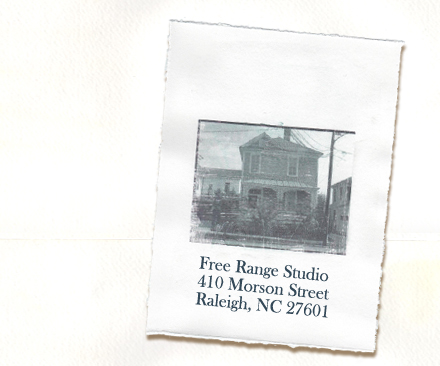
I was the last customer at Carrie Knowles’ Free Range Studio, which held it’s last First Friday event. Carrie will concentrate on studio work and continue to have several events each year. Heading home, I realized I had missed DesignBox. You really can’t do it all.
*************
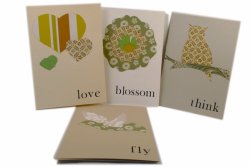
I took a break from finishing up this post to visit the Boylan Artswalk, where dozens of talented folks exhibit the first December Sunday each year. It was a chance to check on Rebus Works and their fine display of work from Penland, and to see a museum quality piece of cabinet work just completed by Billy Peacock down in the basement. BLAM! was exhibiting over at Lee Moore’s house, with previews of the Bain Water Project work. I will be posting much about the Bain Project soon. The Boylan neighborhood sported pet portraits by Emily Weinstein, linocuts and CDs from Gerry Dawson, pottery from Nancy Redman, coptic journals from Bryant Holsenbeck, and much, much more. Friday or Sunday, there’s a lot of creativity around this town!
Building the Green Triangle

Green is red hot! Green is the factor of choice to apply in so many settings. You can choose a green college, a green vehicle, and a green refrigerator. I recently learned that right here in the Triangle you can even hire a green caterer. The friendly wager between Ed Begley, Jr. and Bill Nye, as to who has the greenest domicile, made national news. And of course there is a strong local thread of green options online these days, including the strong journalist investigations at Raleigh Eco News and the celebrations of sustainability at Green Grounded.
New construction in the Triangle is no exception. Green architecture is really picking up speed, with growing support from a market-driven, PR-supported, and professionally nurtured series of spectacular successes across the Triangle. Architecture has been the pioneer discipline for the business model of green conservation. A recent conference included some of the area’s largest employers exploring the bottom line benefits of “sustainability, broadly defined as meeting present needs without compromising those of future generations.” Green builders are giving architects exciting arenas for enacting this process. And we all benefit when we put some lean grace into our footprint.
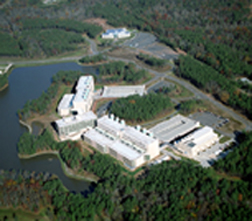
The national icon of green institutional architecture is right here in the Triangle. The EPA campus, dedicated in 2002, represents a standard of both practical details and aesthetic and human values that will be hard to match for a long time. In terms of sustainable design, it is considered the top rated project in the country. Not to be outdone, IBM is building a new data-base center that will be mighty green as well. Durham boasts the North Regional Library and a brand new Duke student residence as highly rated green structures.
Chapel Hill simply requires ALL new construction by or for the town to be LEED certified, which is the national standard of sustainable design. Frank Harmon’s design for the visitor center at the NC Botanical Garden is “slated to be the first Platinum LEED building in the Southeast.”
Frank Harmon seems to be riding a surfer’s wave of green projects. He is working on a multi-phase project at the Museum of Natural Sciences’ Prairie Ridge site in Raleigh, and was recently awarded the design for the new AIA headquarters at the edge of the Blount Streets Commons project.
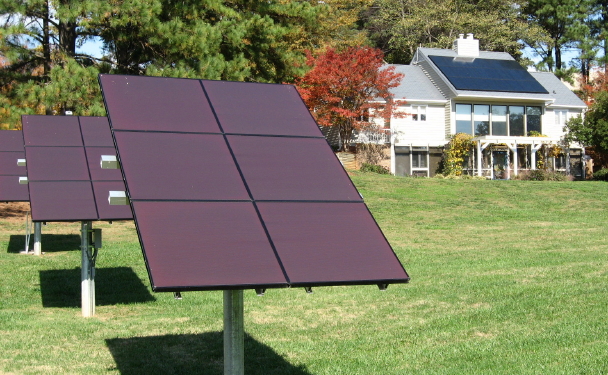
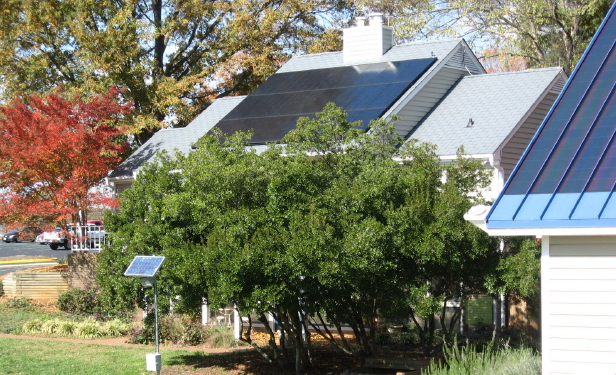
All of these institutional projects are to be applauded. High end housing, if Ed and Bill have anything to say about it, will continue to grow the value of sustainable design. Local lower income residences may soon be included in the trend. We’ve had a local model for all this a very long time. A good final touch in any discussion of local green architecture is the NCSU Solar House, which, since 1981, has stood as a testament to and lab for these inevitable but so-long delayed trends. Now the Solar House has expanded its mission to support investigations into landfill gas energy, coastal wind programs and Healthybuilt Homes. NCSU and the College of Design give Raleigh and the Triangle a big boost in green leadership – let’s all join in and keep it up!

Mixed Media Memories
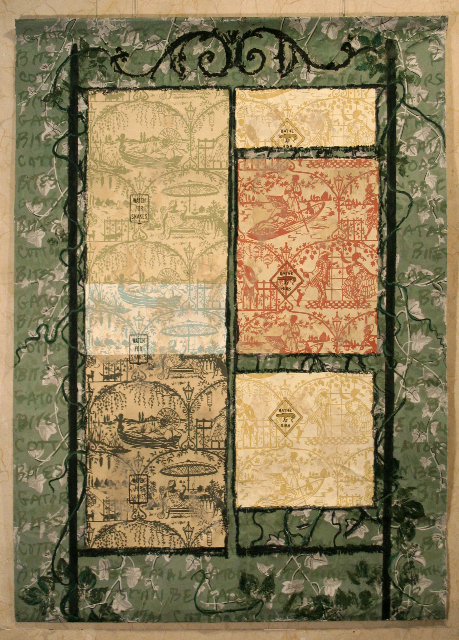
Southern Living (Gators & Cottonmouths)
by Marty Baird
photograph by Mary Kay Kennedy
Lest I forget that cultural arts, not culinary arts, are the primary features of this blog, let me tell you about some of the wonderful art I’ve seen lately. The image above is from a great new show, Patterns of Memory, at the Miriam Block Gallery in the Municipal Building downtown through November 18. This piece really speaks to me as a Southerner, a naturalist, and a lover of intricately interlaced printmaking elements. Marty has incorporated real signage about animal threats into an intricate quilting of images that stimulate a slight discomfort in the way that cast iron “lantern boys” can, and yet strongly evokes a South deeper and wilder than Raleigh, and strongly rooted in the natural world. Every culture has its way of containing and humanizing nature and the South has a unique style in that regard. This piece seems to have interlocking ironies about animals, nature, people and race that keep me thinking as I revisit the piece.
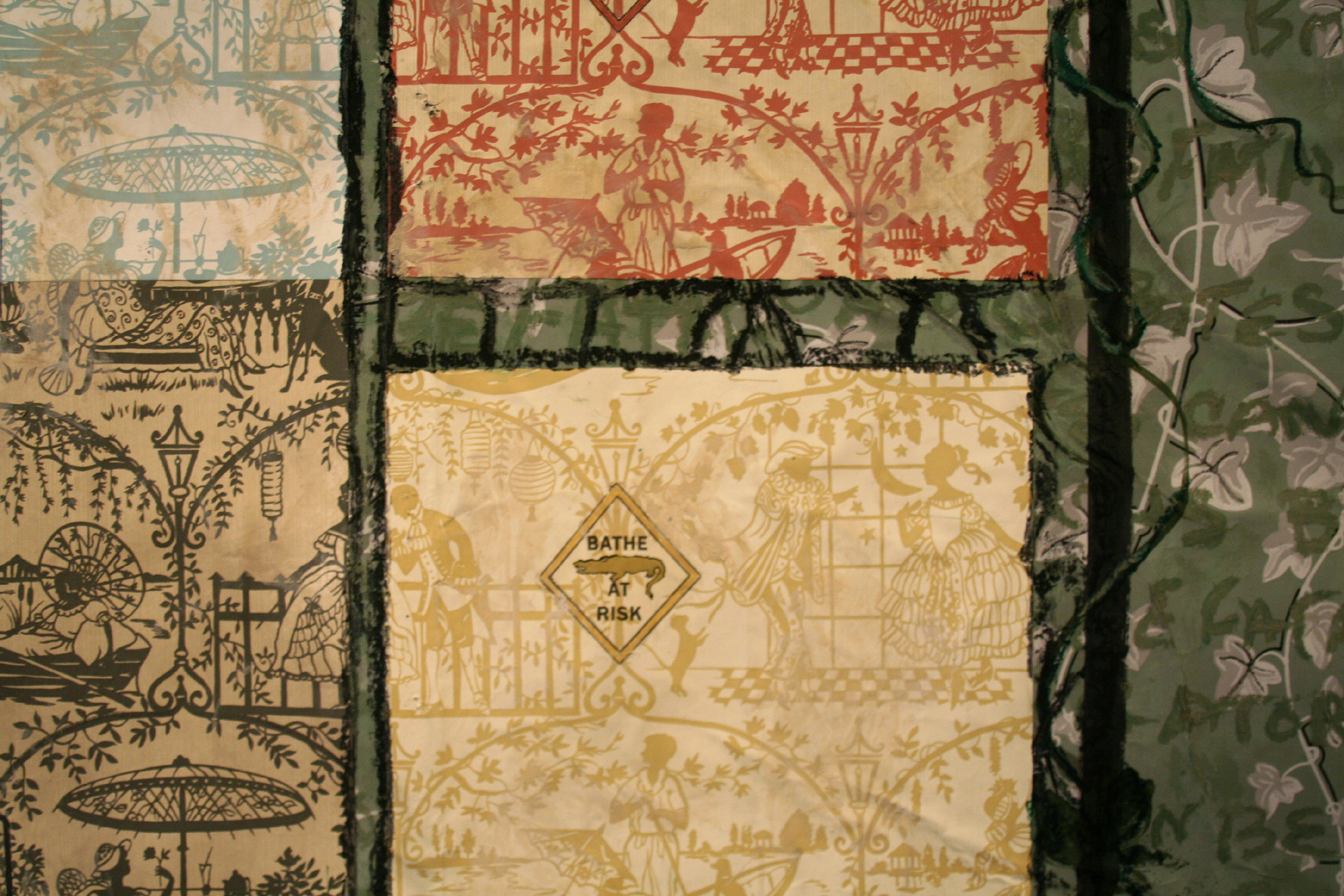
Please click on the image above to enlarge this detail and see how you can get lost in the painterly intricacies of this piece. The various elements are brought together by a roughly sketched gate that represents the frame we always use to cope with our relationship to the flora and fauna around us.
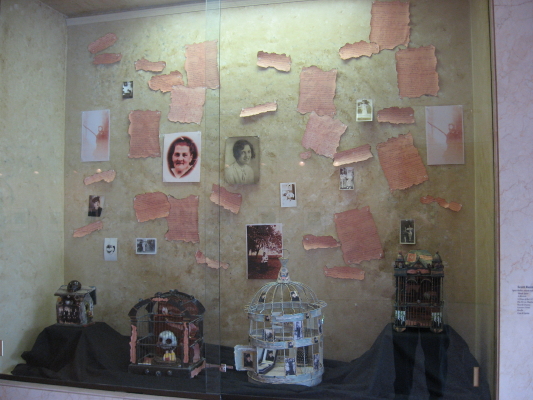
The Block Gallery show also includes hand-tinted gelatin photographic prints by Alison Overton and an installation of assemblages by Scott Renk. Renk’s work, which is in the display cases on the second floor of the space, consists of highly personalized, realistic historical artifacts given iconic status by their inclusion in the quaint yet ironic structures created by the artist. At the reception, Scott confided that a viewer sidled up to him and asked “Have you seen the voo-doo houses?’ whereupon he informed her that he, in fact, had made them. Reminiscent of the eery feelings of injection into a past created by the Titanic show at the NC Museum of Natural Sciences, these windows back into time are worth a look. My snapshots are below (with thanks again to Mary Kay Kennedy for the pristine images above).
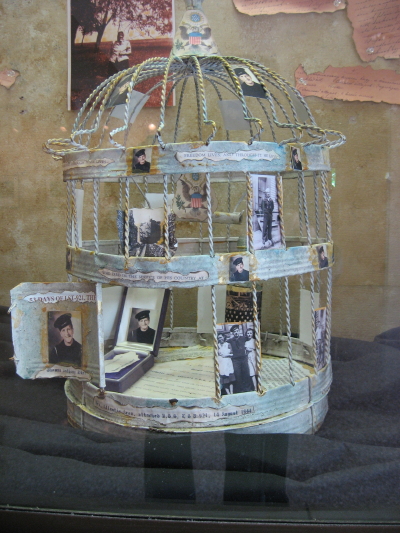
********************
Artspace: Now in Print: Printmaking Invitational
Exhibition: September 13 – November 15, 2008
The exhibition presents a glimpse into the diverse methods and techniques within contemporary printmaking today. The exhibition features a large woodcut banner by Cannonball Press (NY); intaglio monotypes by John Ford (NC); deconstructive screenprints by Julia Freeman (WA); engravings by Oscar Gillespie (IL); multiple color woodcuts by Endi Poskovic (MI); and vitreopgraphs by Dan Welden (NY).
Artspace has a very strong show in its main gallery. It certainly isn’t a broad show, with just six artists, but each type of work has its own area of the room, and these are large scale pieces with highly varied techniques, so they need it. Largest of all is the fantastically huge patched-together woodcut print by the team of Martin Mazorra and Mike Houston, aka Cannonball Press.
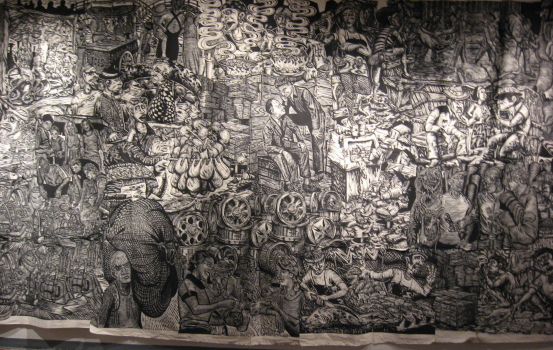
The artists say this piece is about the American perception of the economy as diety. It dominates the room, but also breaks into individual visual narratives as you get close. The price listed on this piece is a slightly astronomical extrapolation ($6000) of the sixty buck high quality prints for which this team is famous.
****************
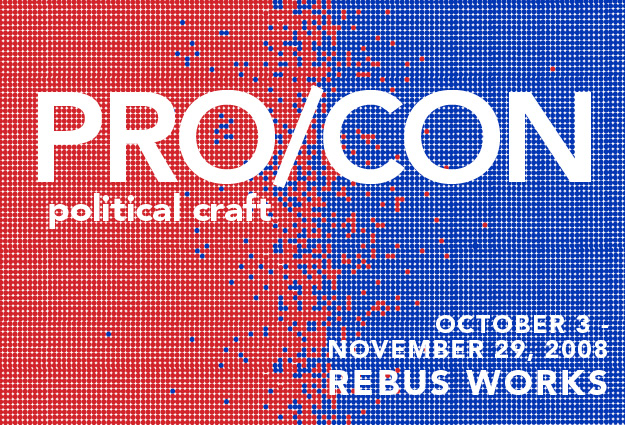
Rebus Works has a strong political show which includes pillow portraits of Sarah Palin and stunning pieces of hand-laid paper. Below is a description of those pieces. I have to mention that Cara and I used garments from old romances ( as well as objects old, new, borrowed and blue) to make the pulp for our wedding invitations. Combat Paper is a much more profound use of the idea, but the idea is not new. Having that perspective made the work all the more powerful for me.
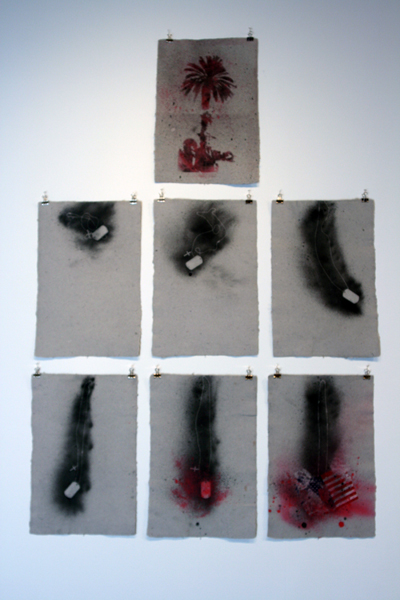
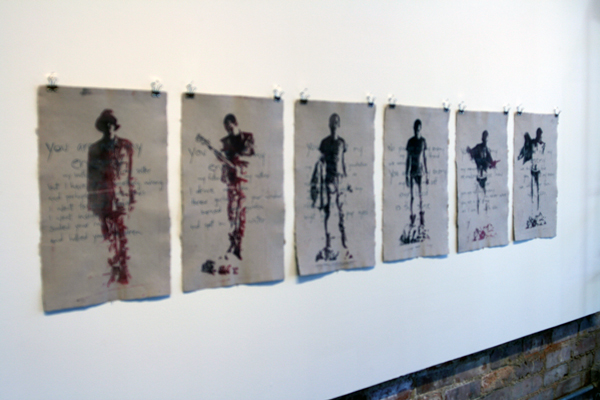
Combat Paper is a collective project based in Burlington, Vermont. Created as a vehicle for returning Iraq war veterans to reconcile their experiences through art, veterans involved in this project use their uniforms to make paper. This hand-made paper is then incorporated into prints based on their experiences. Contributing artists for Pro/Con are Drew Cameron, who served in the Army and is the director of the Green Door Studio, which is home to Combat Paper and Jon Michael Turner, who served in the Marine Corps in Haiti, Fallujah and Ramadi. These pieces provide a first-hand look into the effects of war, and the experience of those who have served.
Rebus Works deserves praise for their bravery in showing these artistic acts of true patriotism. Sarah Blackmon, involved in half of the shows in this post, continues to bring challenging and highly creative work to our local galleries.
***************
Stillness and Spirit: Paintings by Susan Toplikar
Frankie G. Weems Art Gallery
September 7–November 2
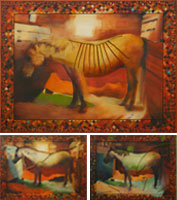
Susan Toplikar has a magnificent, career-capping show at Meredith. The link will take you to a sumptuous color online brochure (pdf), which includes extensive statements by Susan, the curator and another artist/writer. Six major oil works comprise a series that explores multiple levels across each of the fundamentally similar pieces. The horse images derive partly from Susan’s experiences of the cave paintings of France’s Dordogne Valley. The harlequin pattern that borders each piece derives from ceramic tiles she saw in Avignon on the same trip. The painted sticks which so exquisitely insert themselves into the oil paintings “reference a part of the horse’s anatomy or [alternatively] the role of the horse in our collective history.” There is a wonderful interplay of themes and techniques, but the real reason to go see this show is simply to enjoy the fusion of skill and emotion in Susan’s gorgeous oil paintings on linen. The horses evoke the archetypal Ole Paint of our cowboy dreams, visioned in the smoky memories of cave art, and framed with elements that help bridge the eons. These horses will move you!
Sustainable Farming in the Triangle
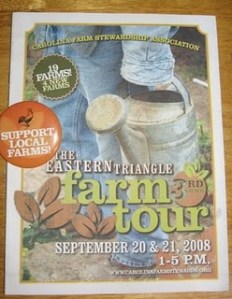
The 3rd Annual Eastern Triangle farm tour by the Carolina Farm Stewardship Association was a blast. There were 19 farms this year, but you can never do more than 3 or 4 a day for the two days of the tour. Cara and I spent several hours Saturday at just two farms, but they were both fascinating. Dew Dance Farm had exotic wool and fur livestock, as well as heirloom naturally colored cotton, and a live-in weaver to use it all. The Piedmont Biofuels research farm was everything I’ve been anticipating for years. Sunday I moved more quickly and did four spots, self-touring. I learned a lot about the new agricultural culture, arising from plenty of inherited Southern values (and land), as well as the most cutting edge green/sustainable practices. We are all eating differently, including more locally, and there is an interesting and decent market for these products. I was amazed to find that not only is this group sponsoring a national conference next month, there is a Politics of Food conference taking place at NCSU this very week!
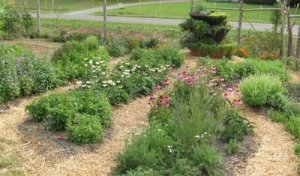
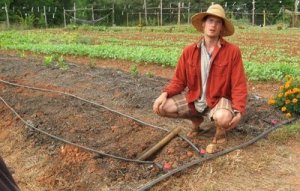
Above is a native plant area at the Piedmont Biofuels research farm. Its purpose is to provide haven and nectar for useful insects. The land is operating as an incubator farm for a couple, who are utilizing species and techniques from Japan on the site as they grow stores, develop contacts and search for land. Below a co-op intern explains the use of bamboo guides for efficient root crop production.
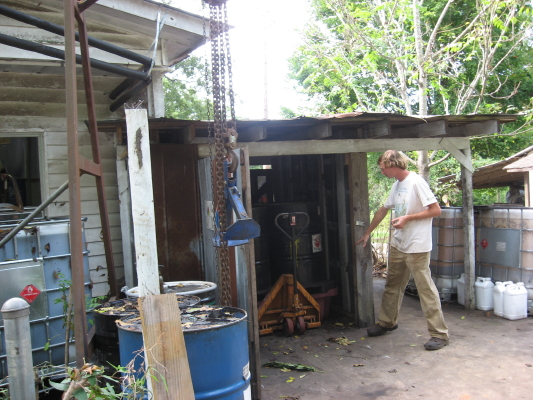
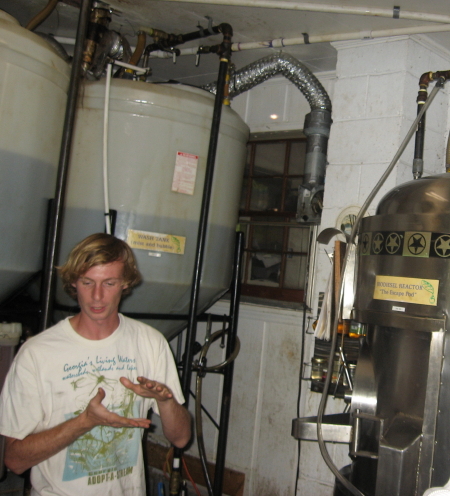
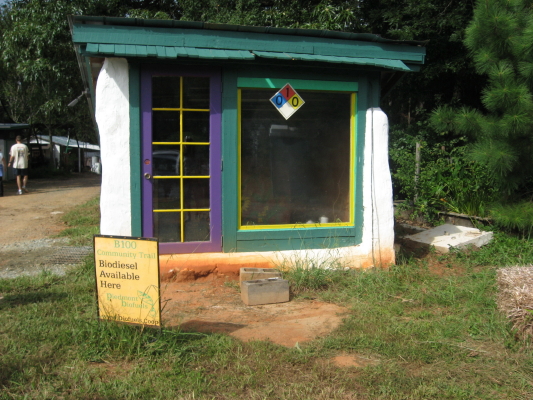
The clickable thumbnails above illustrate the biofuel production process, which also takes place at the farm. Lyle Estill started making biofuel as a kitchen science operation and with his partners developed this system for recycling waste vegetable oil, producing fuel and soap. Now they produce a million gallons a year at a new facility down the road – using chicken fat. This original operation continues, with the honor system pumphouse above right.
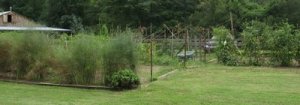
Dew Dance Farm typified the average fare of the tour – a Boomer couple using the parents’ land to operate an intensive operation with a well-funded and slight hobby-like atmosphere. As papermakers, we were entranced by the heirloom naturally-colored cotton. Growing even a dozen plants of cotton requires a special permit, inspections, and the promise to burn it all if the boll weevil shows up!
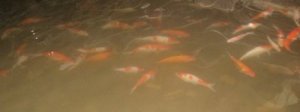
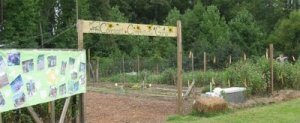
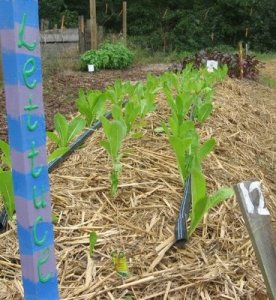
Lakeview Daylily Farm and Weston Farms on Highway 50 had a unique aspect – a koi barn and an outdoor koi pond with fencing to discourage turtles and herons. But my final destination, pictured below, was the Covenant Community Garden, operating in the heart of Fuquay Varina. Church and community volunteers use sustainable practices to grow food for a pantry, a kind of local food bank for those who need it. It doesn’t get any cooler than that. Go green!
2008 farm tour photo album
*******************
Slow Food Triangle celebrates local food and the people who grow and make it.
Roasted Tomatillo Salsa!
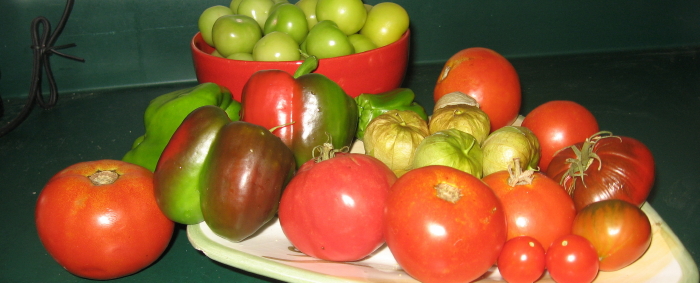
Two measly little tomatillo plants I picked up as discards from the farm where I got my heirloom tomato plants went crazy in our organic compost this year. Tomatos have done great as well, so I’ve been playing with salsas.
Tomatillos are a new thing for me: I first saw them on a homework field trip with my son to a Hispanic grocery several years ago, but this summer was the first time I have cooked with them. The papery Chinese lantern green balloons grow first, then the fruit swells up to fill the inside. When they’re ripe, they fall to the ground and the papery covering protects them quite well. Below is a selection of our urban garden harvest: the tomatillos in the red bowl have had their coverings removed.
Here is the procedure I followed:
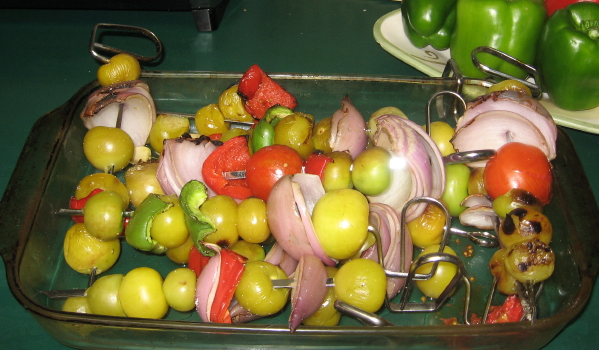
Start a fire. Skewer a pound of washed tomatillos. Skewer a quartered onion, 4 small serrano peppers, a quartered bell pepper, and 4 garlic cloves. Roast these materials. (Mine ended up more smoked than roasted). Place roasted vegetables in blender and puree with fresh parsley ( I dislike cilantro) and seasonings. Sautee this result in olive oil. Add a little lime juice and then a cup of broth. Simmer, cool, chill and serve.

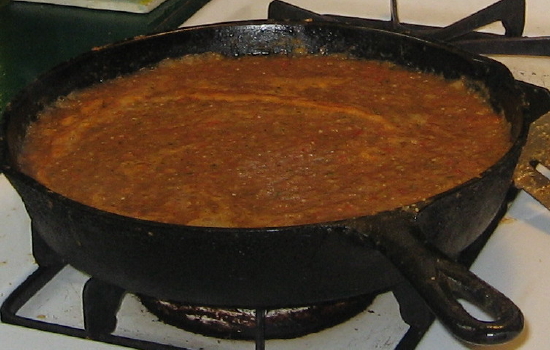
Above are the roasting vegetables. Below is the final product with libation. To see a full album of pictures, including an alternative libation, go to the related post at Pecans and Mistletoe, my nature project blog, which is fast taking on a life of its own as a space for the fascinating issues of sustainable heritage agriculture and locavore food culture in this area, which will be adressed at an upcoming Raleigh conference.

I would have never predicted a food post for Raleigh Rambles. But Lily had exposed me to the best of the cooking shows, and reminded me of the great science lessons in cooking processes. Sarah over at Quiet Quality has provided a post and links that reminded me of food as a hot blogging topic, and last but not least, my buddy Clyde issued a kind of challenge after I bragged about the success of my first batch of roasted tomatillo salsa – that first batch being roasted over a charcoal grill.
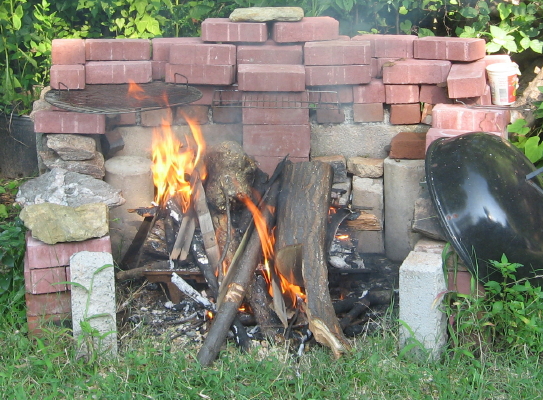
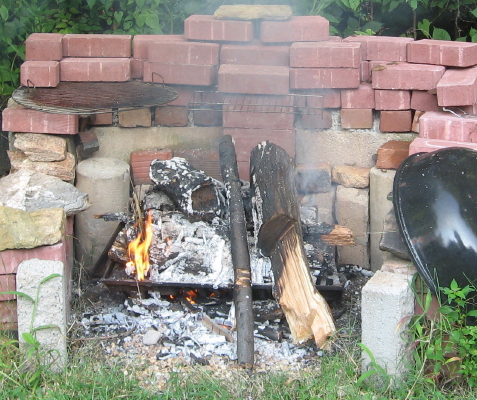
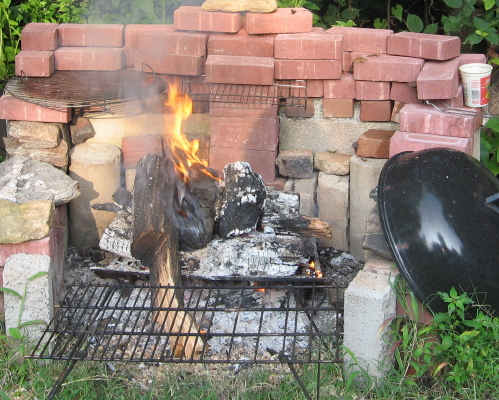
Now I have a confession to make. Being overly enthusiastic to use my newly built brick barbeque for this project, and it being the first Friday night of the school year, with the ensuing enthusiasm and libations, I wasn’t on top of my fire game at ALL and, as previously alluded to, I trashwood smoked instead of coal/flame roasted my vegetables. The final result was an overly sweet salsa totally dominated by the powerful smoky flavor. The slightly hilarious twist is that my challenge salsa makes a truly magnificent barbeque sauce for chicken, and we’ve thoroughly enjoyed it that way. I’m still going to make a fresh batch for Clyde!
Done!
raleighrambles.com
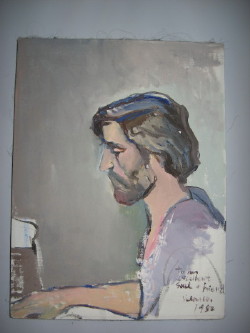
portrait by Guillermo Velasco


 Raleigh Rambles


