BMC Conference Features Leo Amino and More
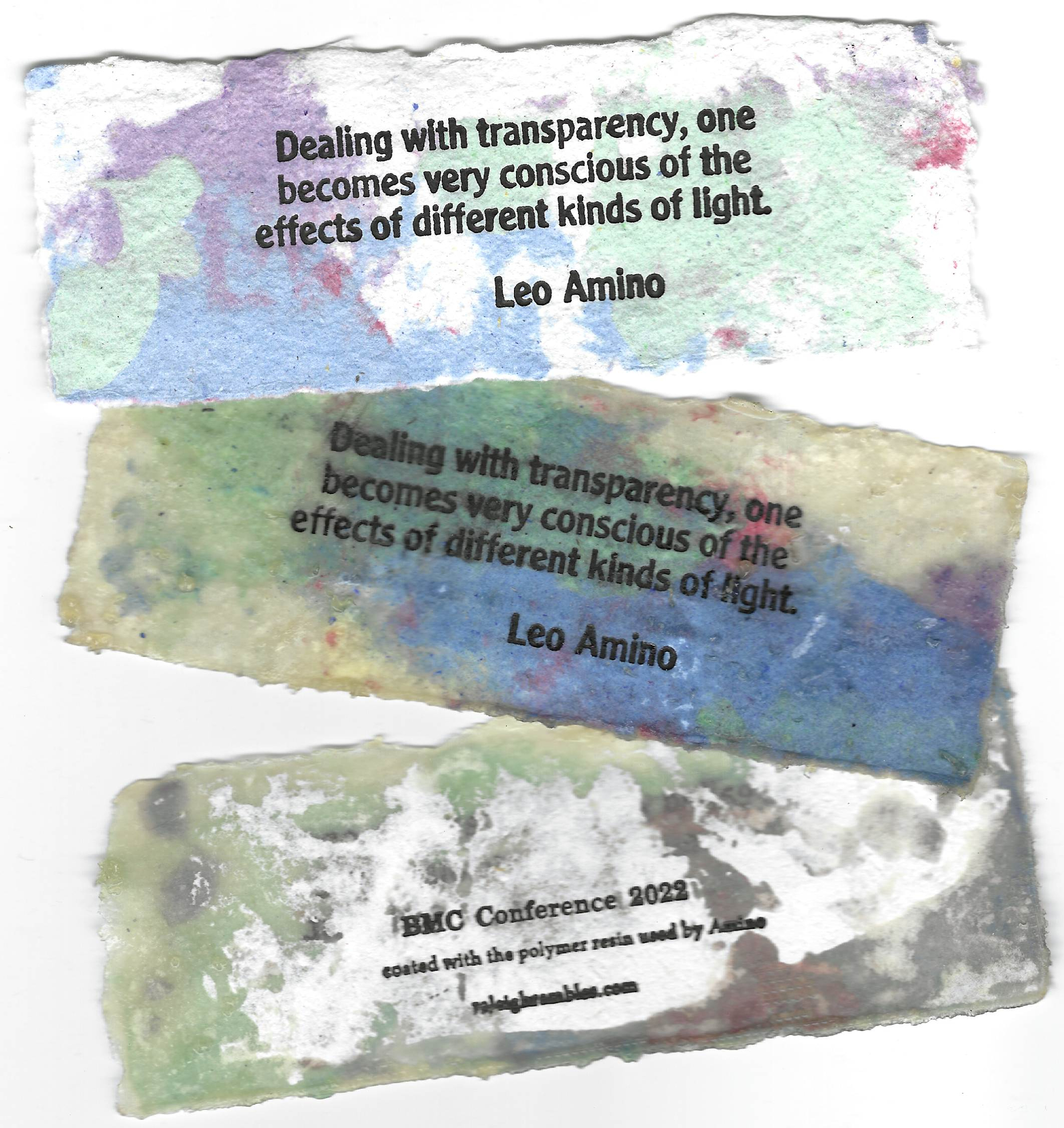
The 13th Black Mountain College conference called ReVIEWing features Leo Amino, of whom I had not heard before this event. He pioneered the use of polymer resins as the material for abstract sculpture. My annual BMC give-away is pictured above, with a book mark quote from Amino experimentally coated with polymer resin.
This year’s conference is marked by an ever evolving process of globalizing or non-Westernizing the narrative of art in America while signaling the amazing resilience of the importance of Black Mountain College principles and experiences in that narrative. BMC was very early in integrating its faculty and student body, and the Sunday campus tours always recall the major role of beloved African-American staff were in college life. The role of students in governing the college, the powerful roles played by women throughout its history (especially during WW II and then much less so in the last failing years), and the progressive experiential and material-based art instruction at the center of its teaching, all made for a wonderful readiness to explore new ideas that permeated the atmosphere and the work done. Now BMC scholarship is investigating the ways artists like Leo Amino created art that helped open up the artistic tradition to a wider set of values.
The Adventurists, by Richard Butner
The Adventurists. Richard Butner. Small Beer Press. 2022.
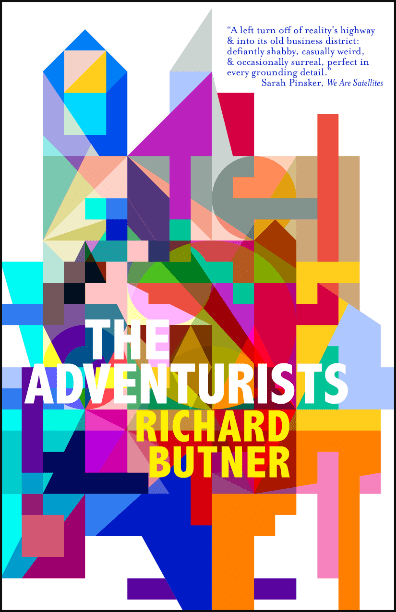
Richard Butner’s new collection of SF stories is a wonderful look at his long-established but back-burner career as a writer of speculative fiction. Richard is beloved by many in Raleighwood for his quirky and often endearing local theatre roles, his championing of local music and its venues, and (among the cognoscenti) his loyalty to Modernist architecture. This review is overtly from the perspective of a Raleigh native who enjoys the many local references in these stories and the bits and pieces of RB rendered in the protagonists.
The past, though gone forever, can seem so real. Recognition and familiarity run like reinforcing wire through these stories. The past seems hazy but here the cliched futurism of science fiction is reversed and the past makes the content so real through the tangible details of memory. The past is all the content any of us have, when you think about it. Most of the stories end in an unrealized present that is left in your, the reader’s hands, to make of it what you will- armed, perhaps, with the newly discovered possibilities that have just emerged from the story’s view of the past.
Nostalgia for old Raleigh was ignited for me with “At the Fair,” a send-up of the State Fair hoochie-cooch show, which enthralled me as a young teen and lasted amazingly far into the 20th century. But only Richard Butner could make this setting into an anarchic scheme for a socialist utopia. More social commentary is embedded in the most well-known story in the book, “Horses Blow Up Dog City.” Also full of Raleigh bits, from scents of RB’s band, “Angels of Epistemology” to the founder of Humble Pie, it chronicles a viral media star being eaten alive by his life. Perhaps the strongest dose of Raleighwood is found in “Under Green,” featuring a temporarily homeless young woman who takes up residence in the Rose Garden and haunts Raleigh’s magnificent greenways. In a book full of slightly underemployed, sexually cautious male nerds, this is the strongest female character, whose efforts to be a good Samaritan fail but who nevertheless finds a not unhappy ending.
The SF aspects of these stories often involve virtual reality, sometimes close to the most recent developments in the real life versions of the technology. One of the most gripping stories for me, “Give Up,” mirrored my memory of student parents who broke up over the man’s attempt at climbing Everest. In Richard’s story, extreme abuse of the technology is complicated by a criss-cross of realities which sets in with a vengeance. In the final story, “Sunnyside,” the VR is so believable you could imagine donning the all-enclosing suit and joining the wake celebration that brings its subject back to life in the midst of impossibly detailed relics from the past. And if the past is all in our heads, but can become as real as it does in these stories, maybe we really can apprehend the past – or make it more to our liking. These stories make you wonder.
Slide Pastels & Smears – David Larson bonus page
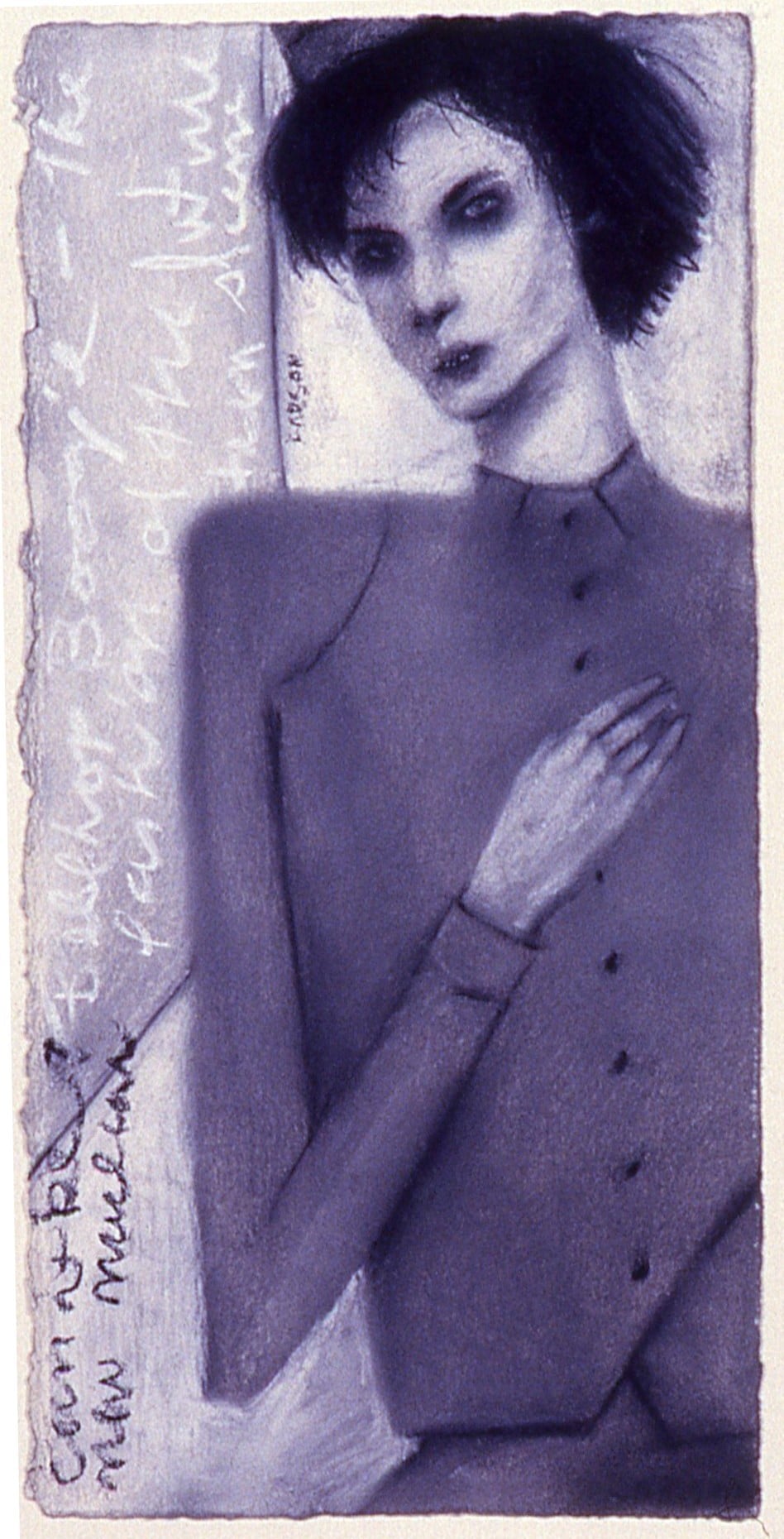
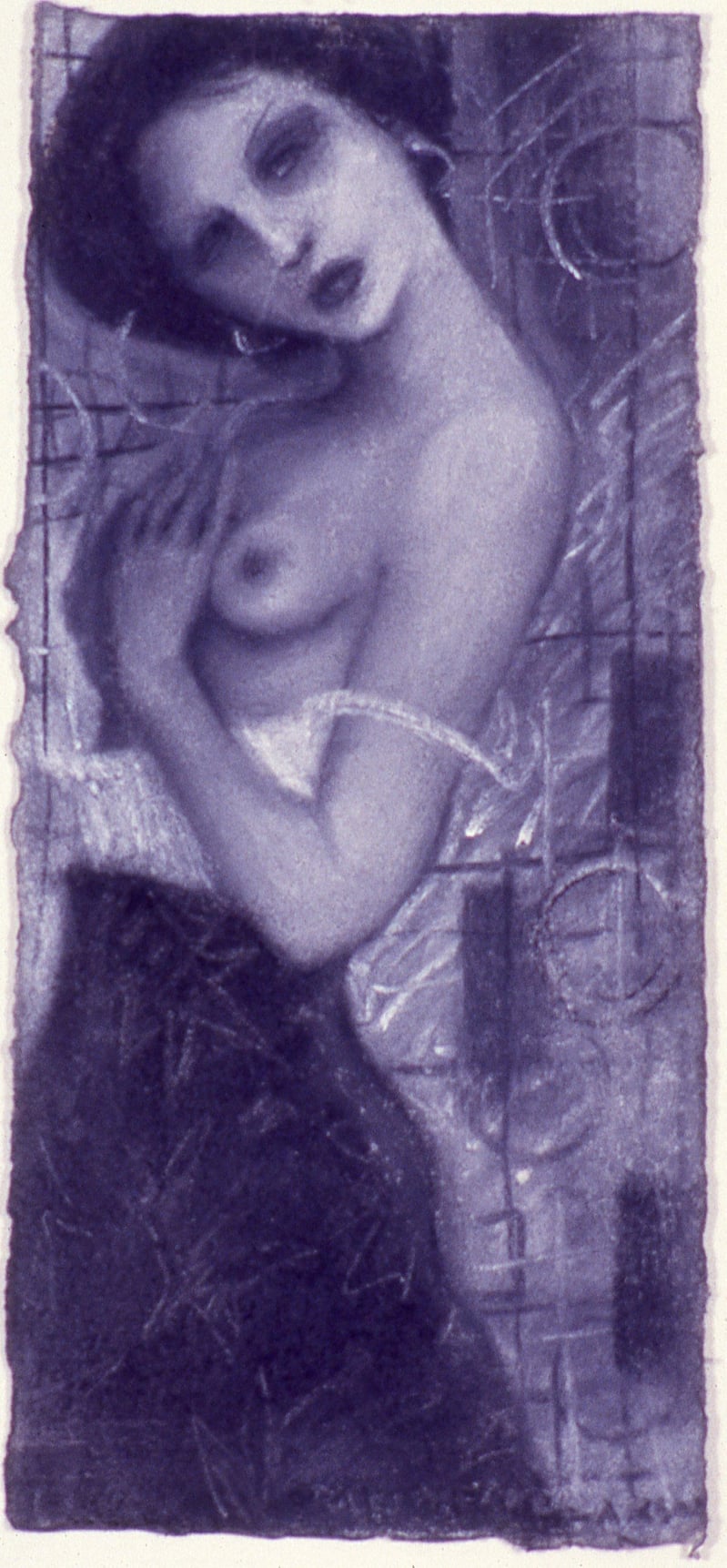
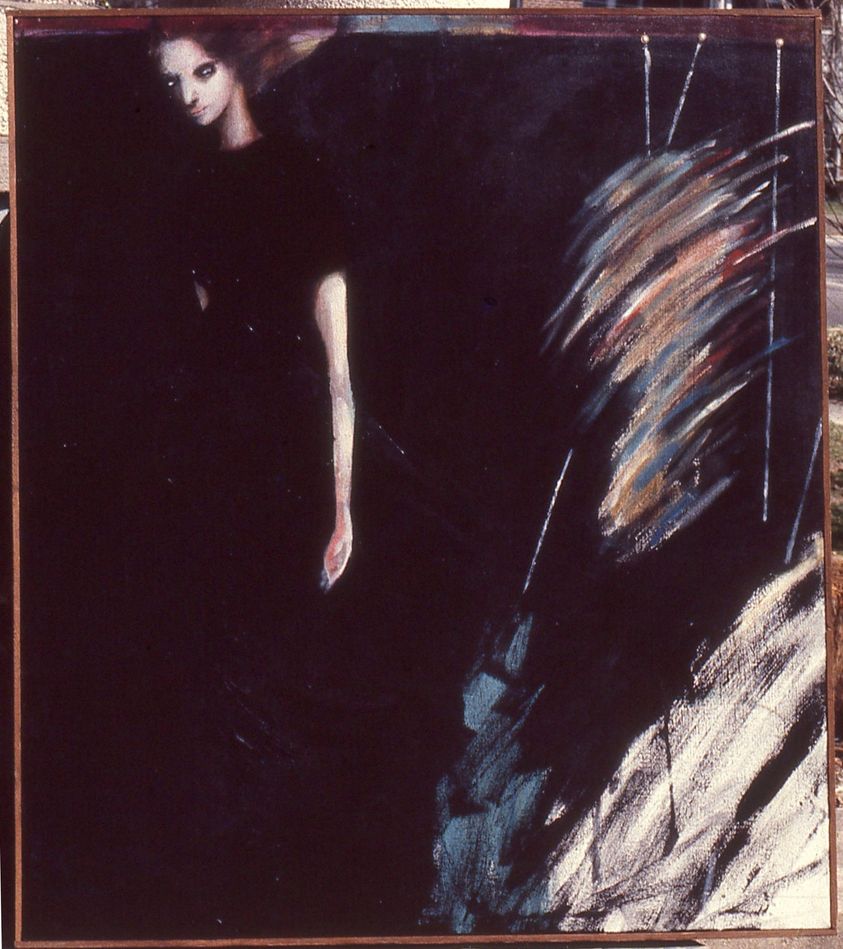
The piece above was used in David’s first major review.
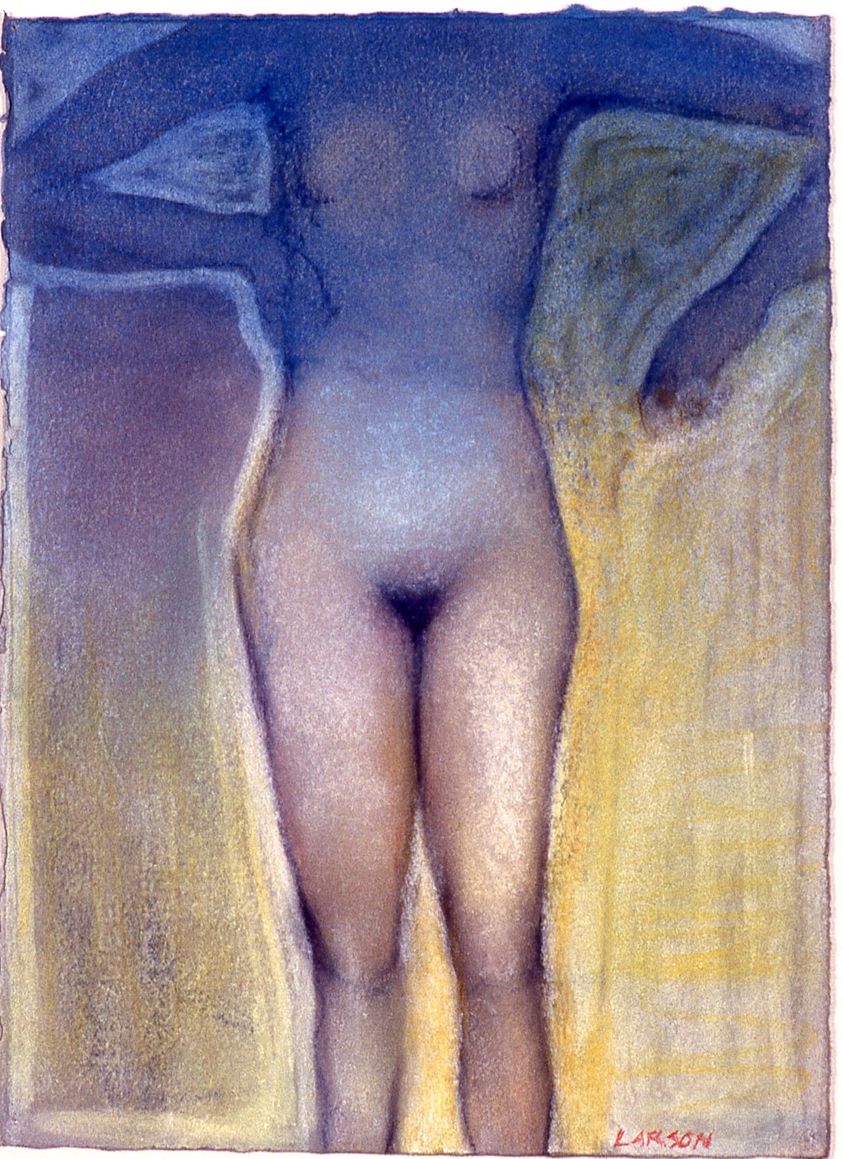
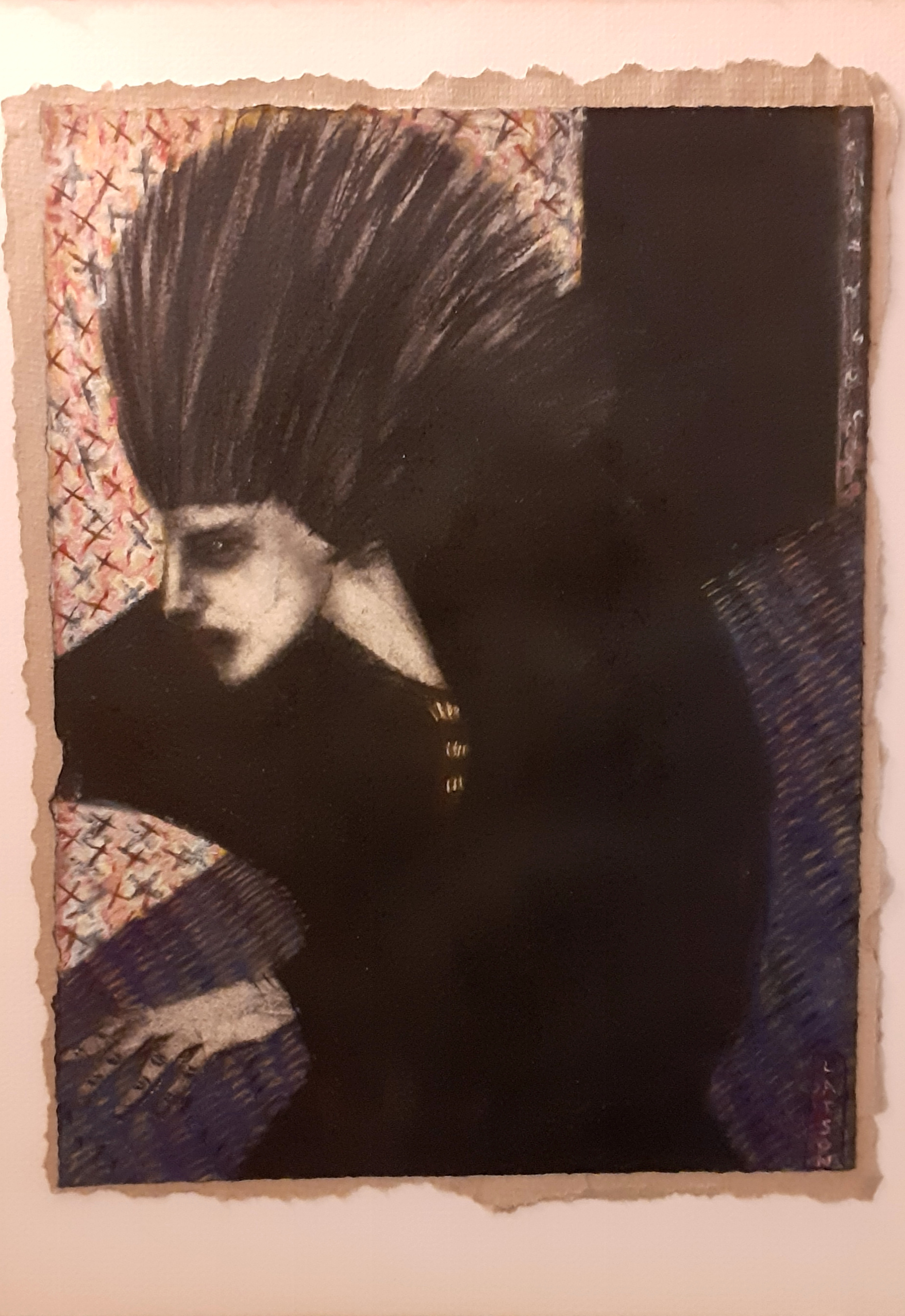
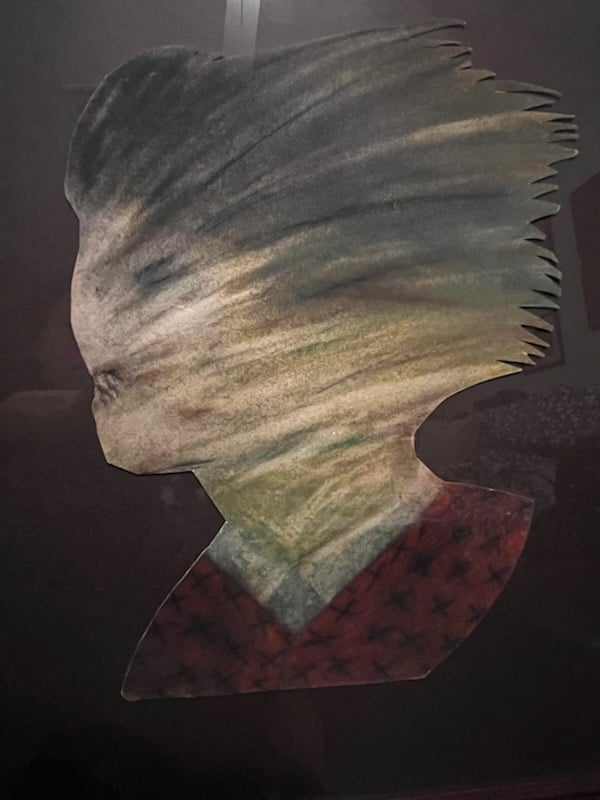
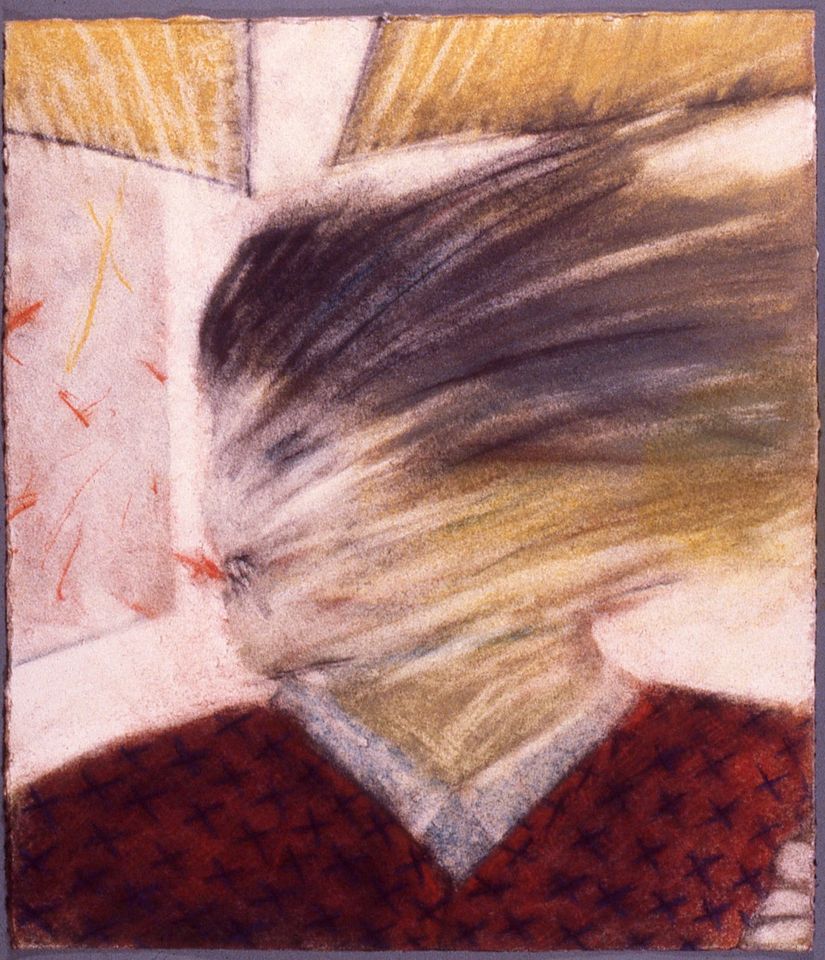
Thanks to Alan Bowling for all his work organizing and sharing art from David’s estate, with a big assist of scans by Grace Jenkins. Here are some of those images. (This is a subpage of Pastels)
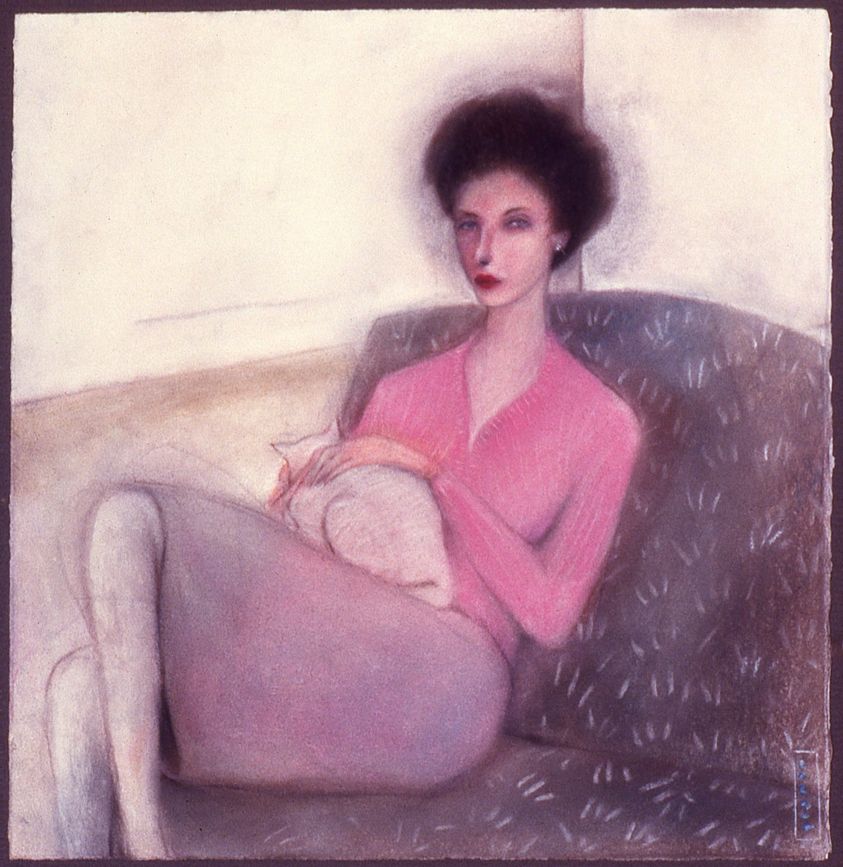
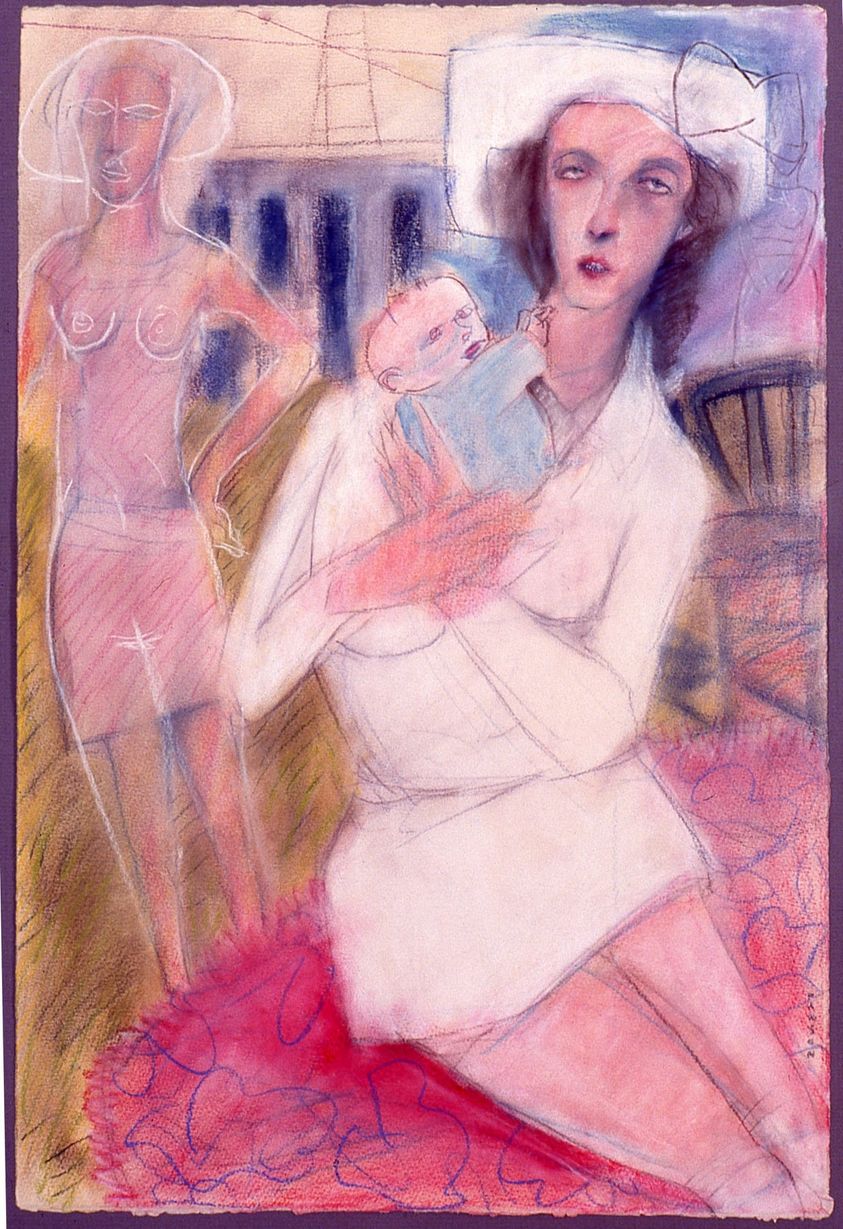
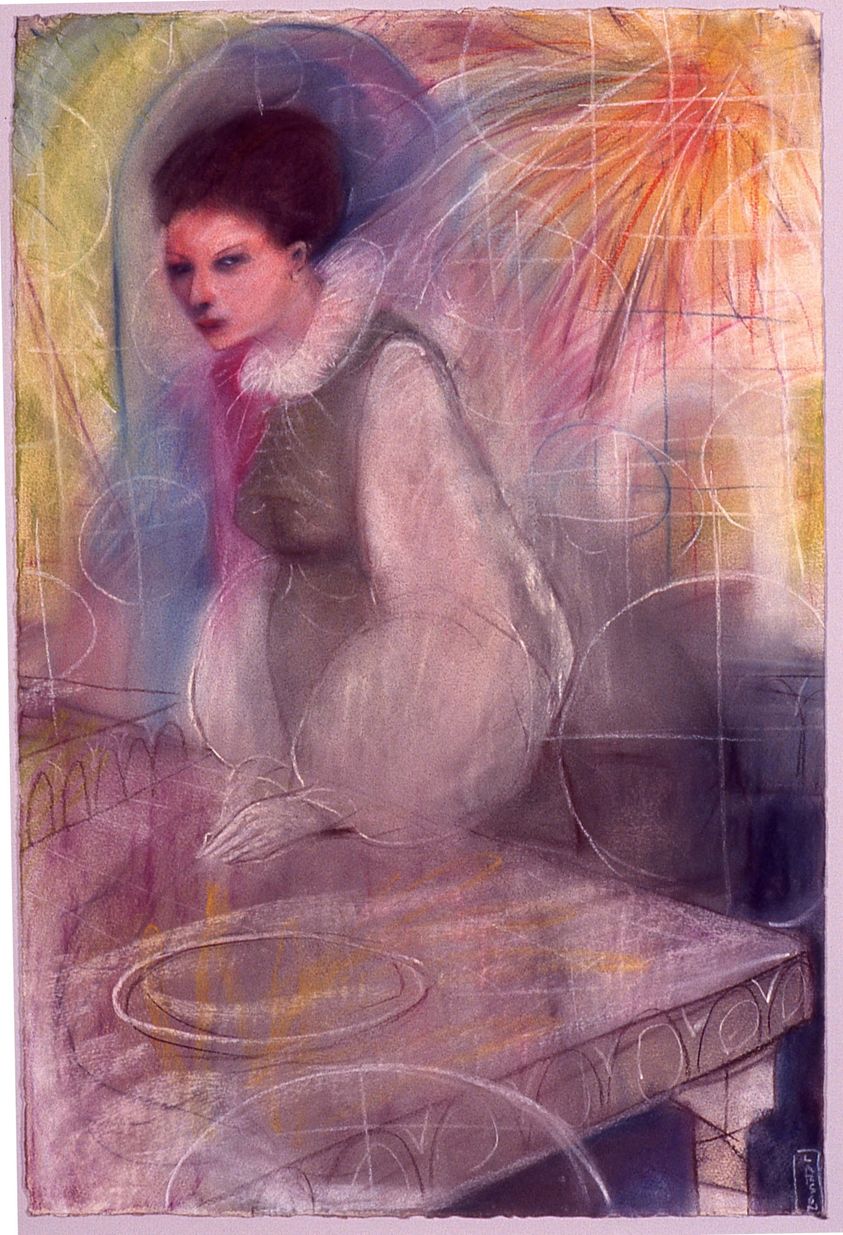
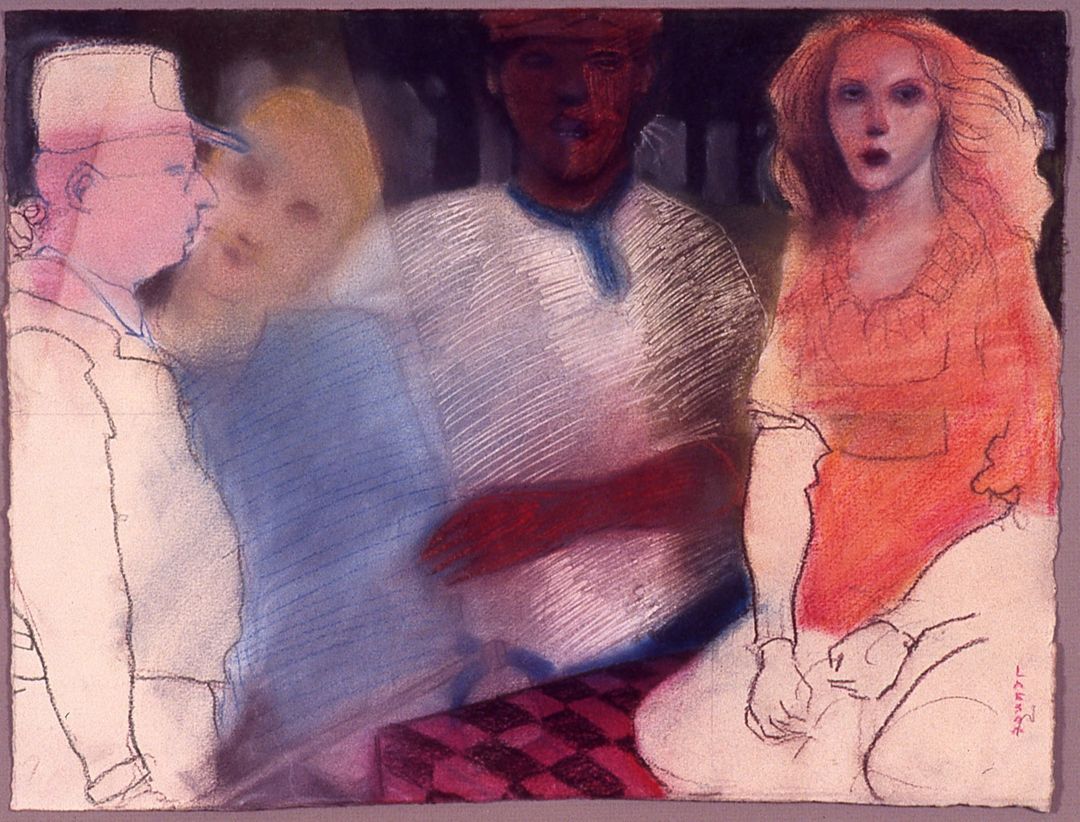
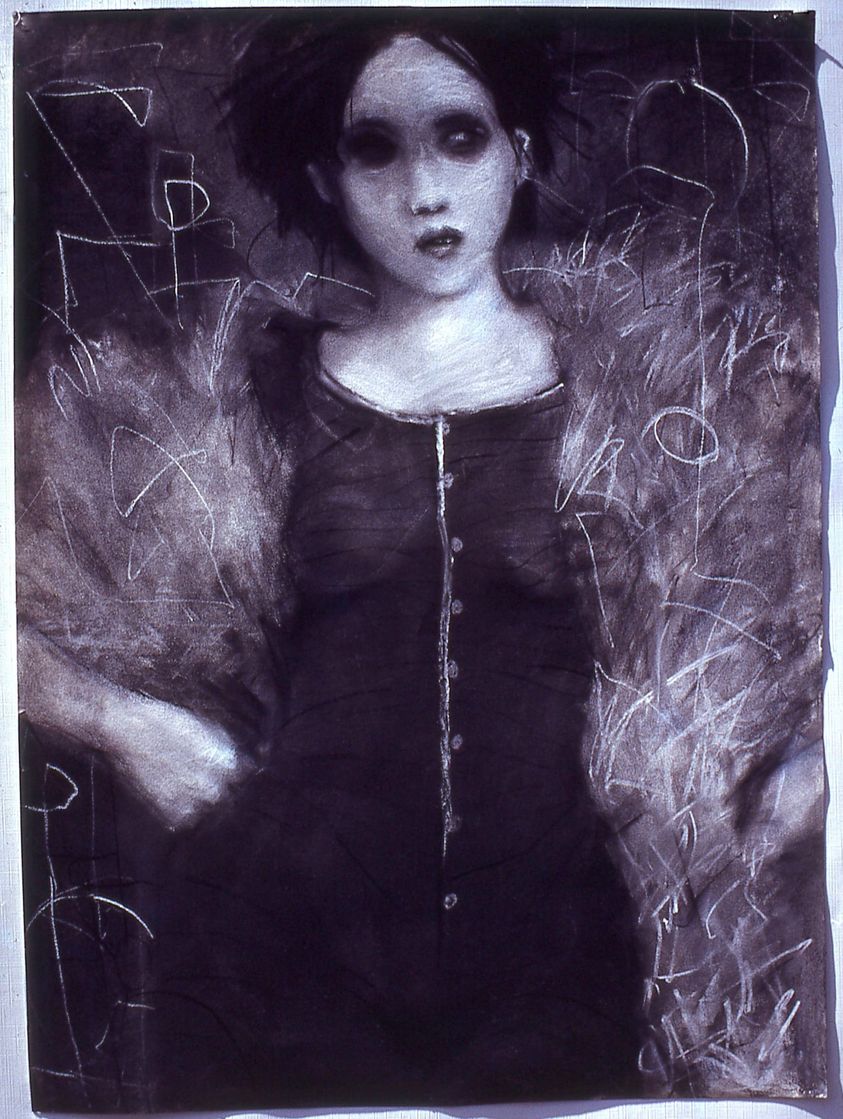
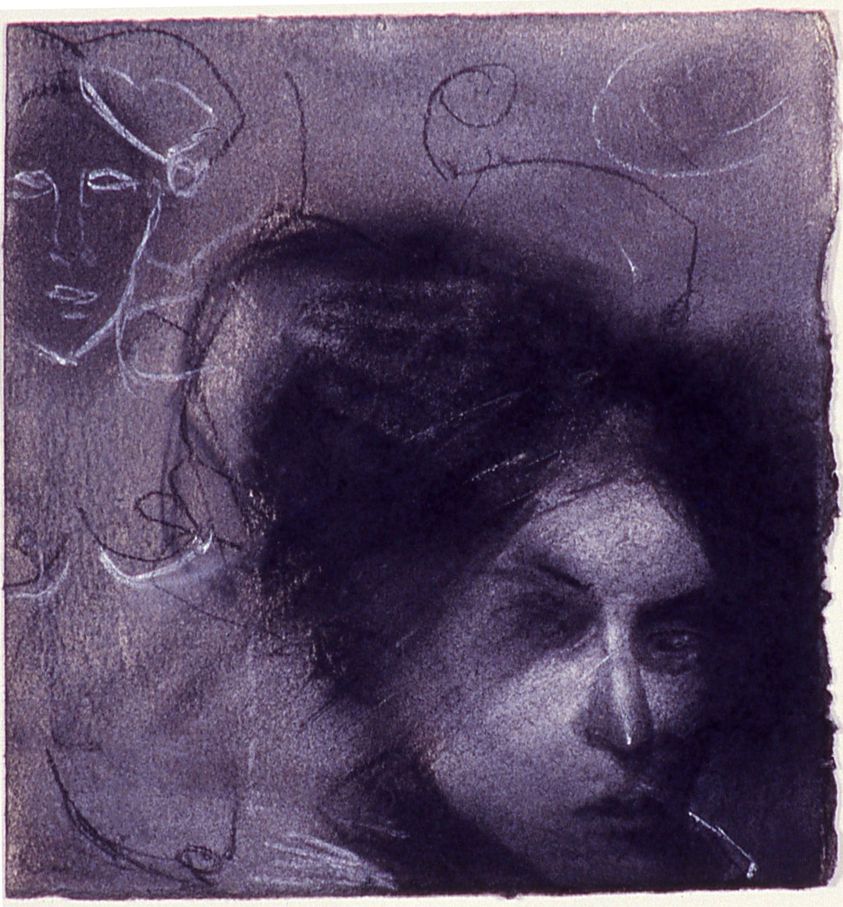
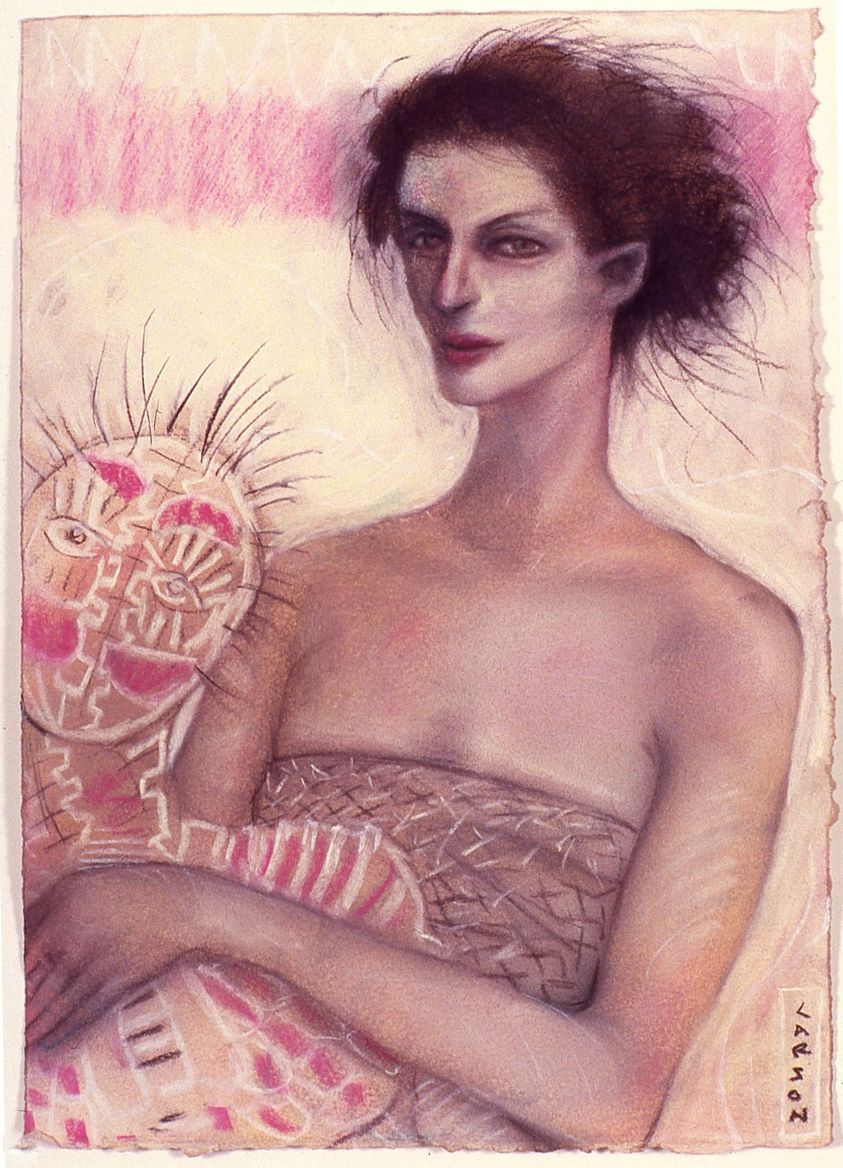
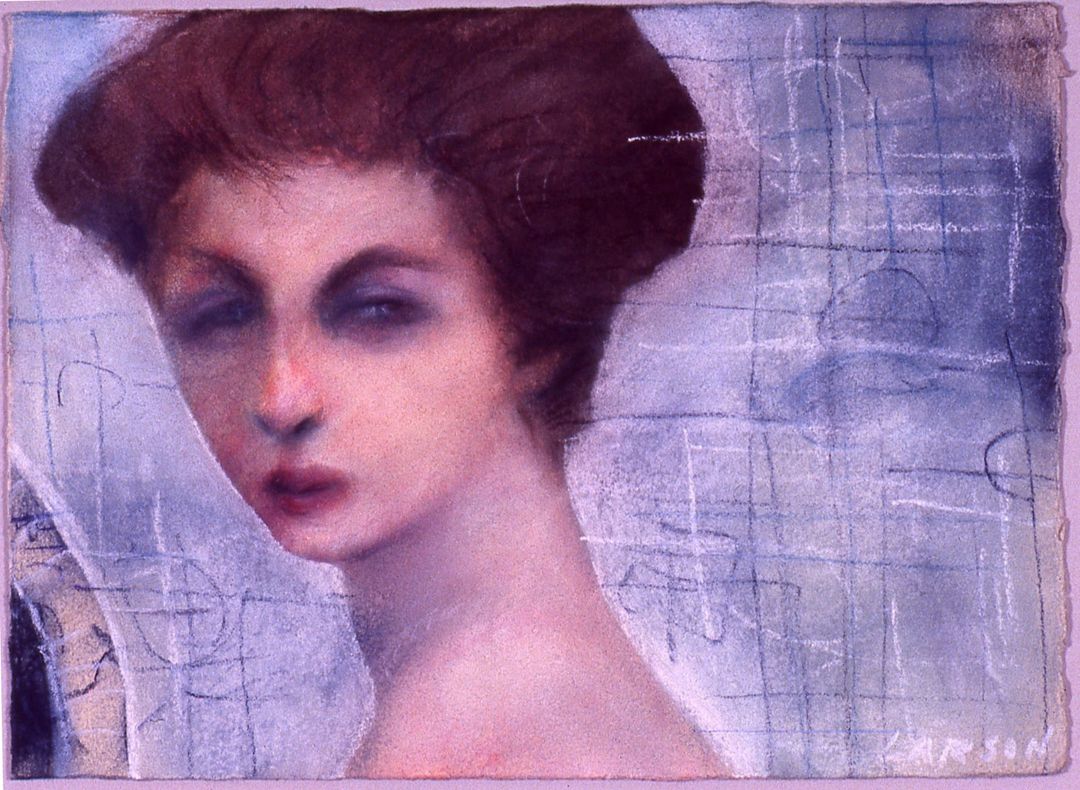
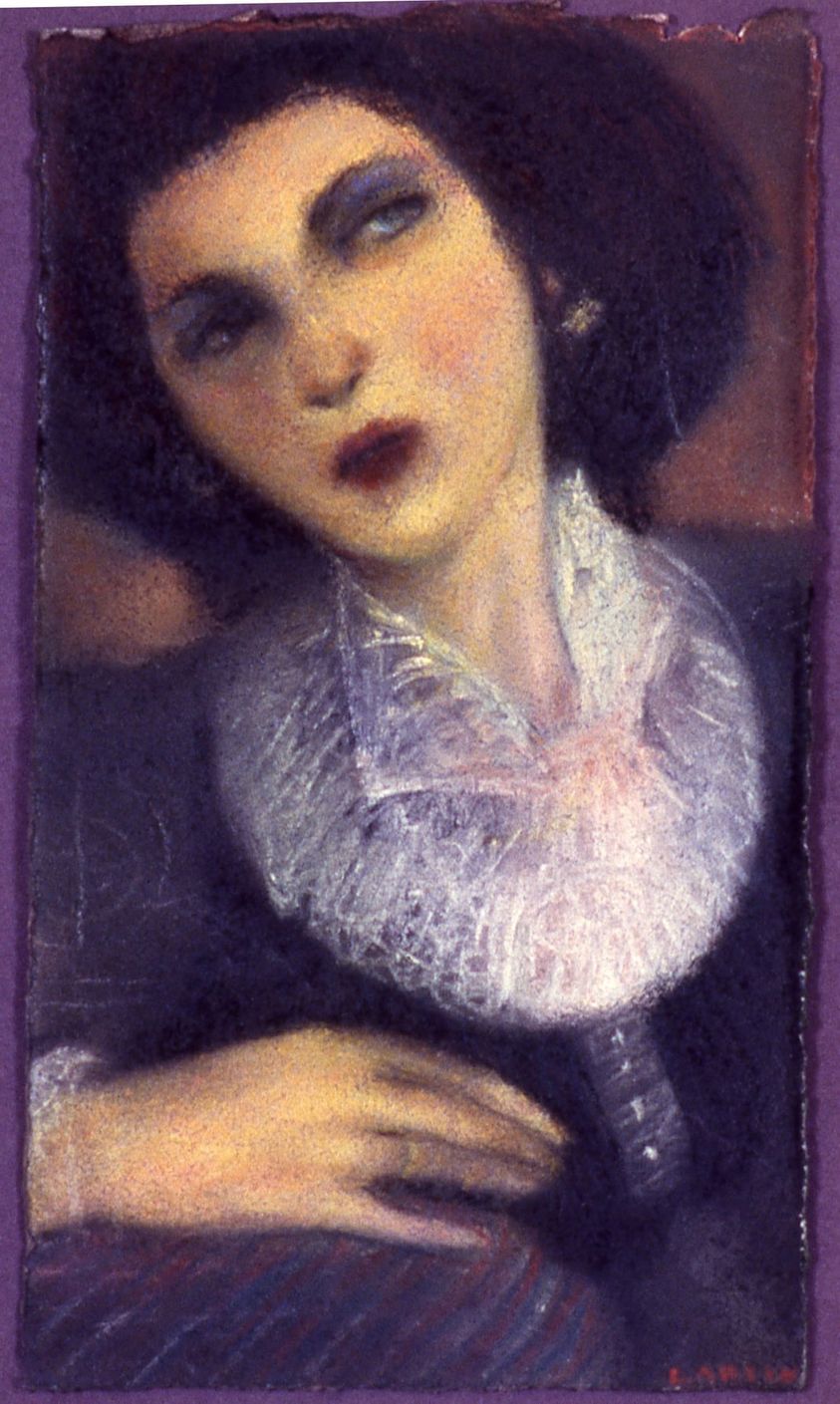
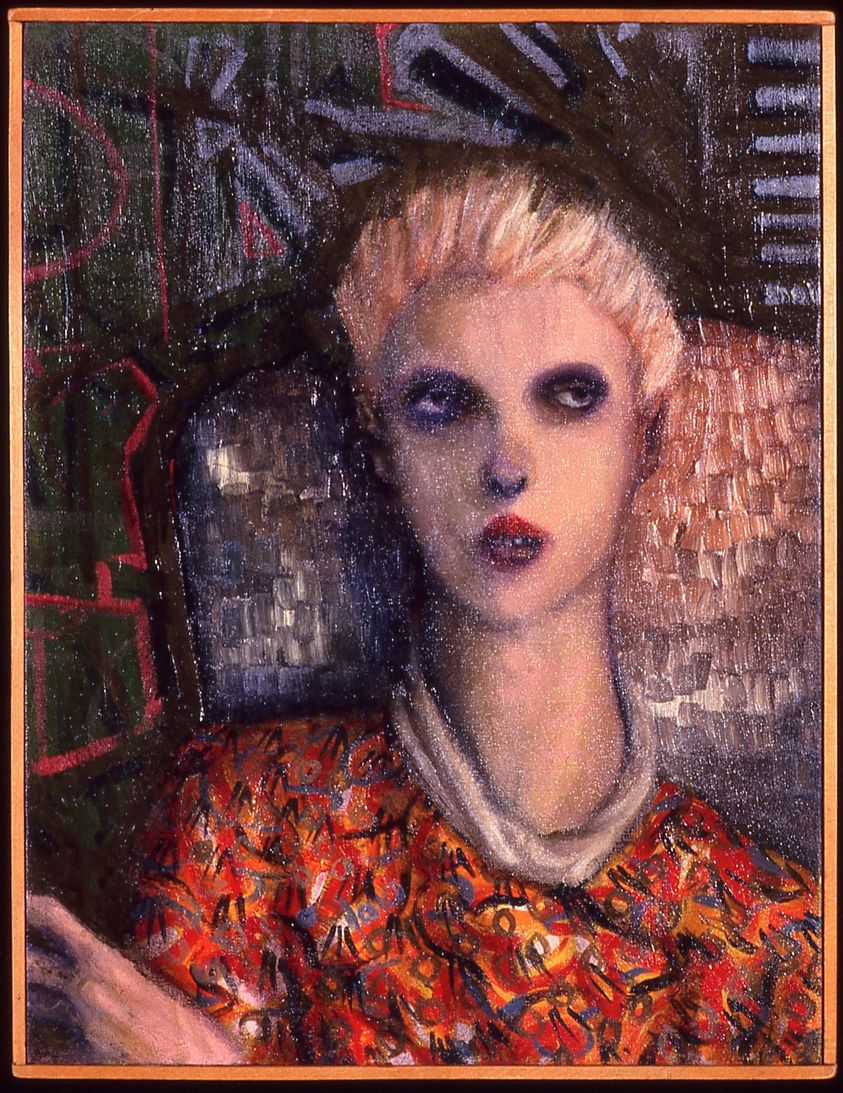
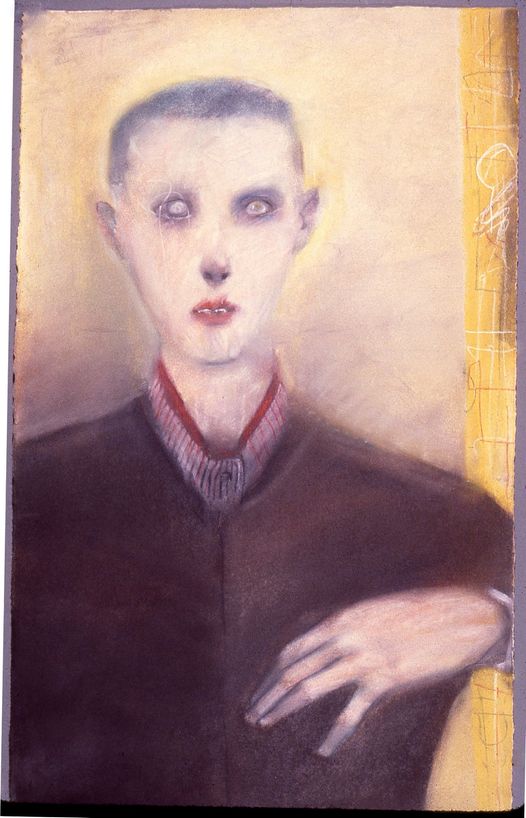
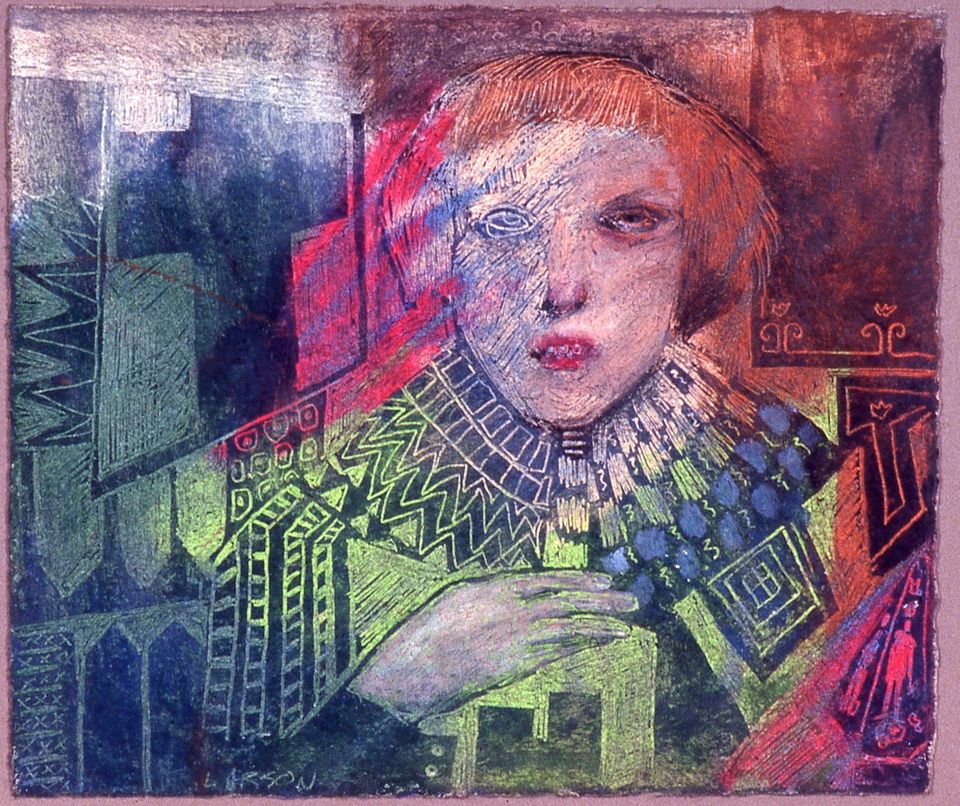
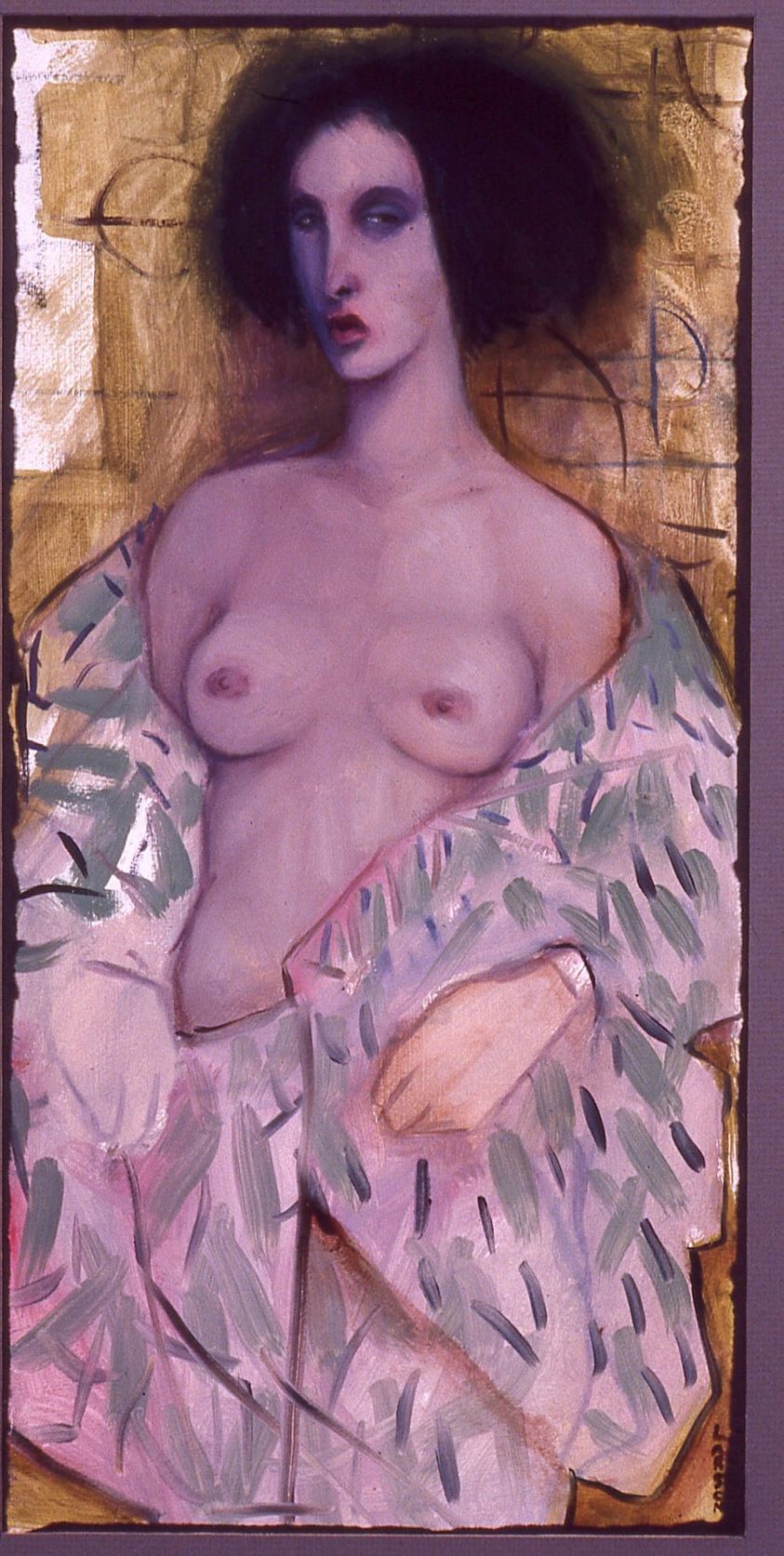
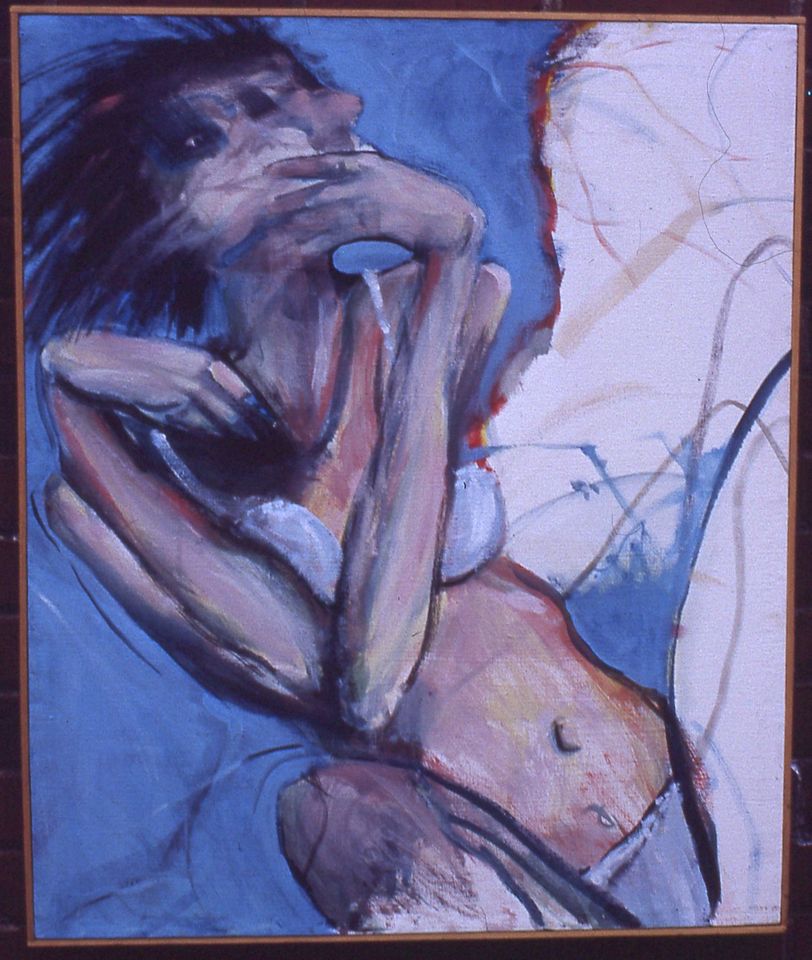
painting on canvas
Smears Project
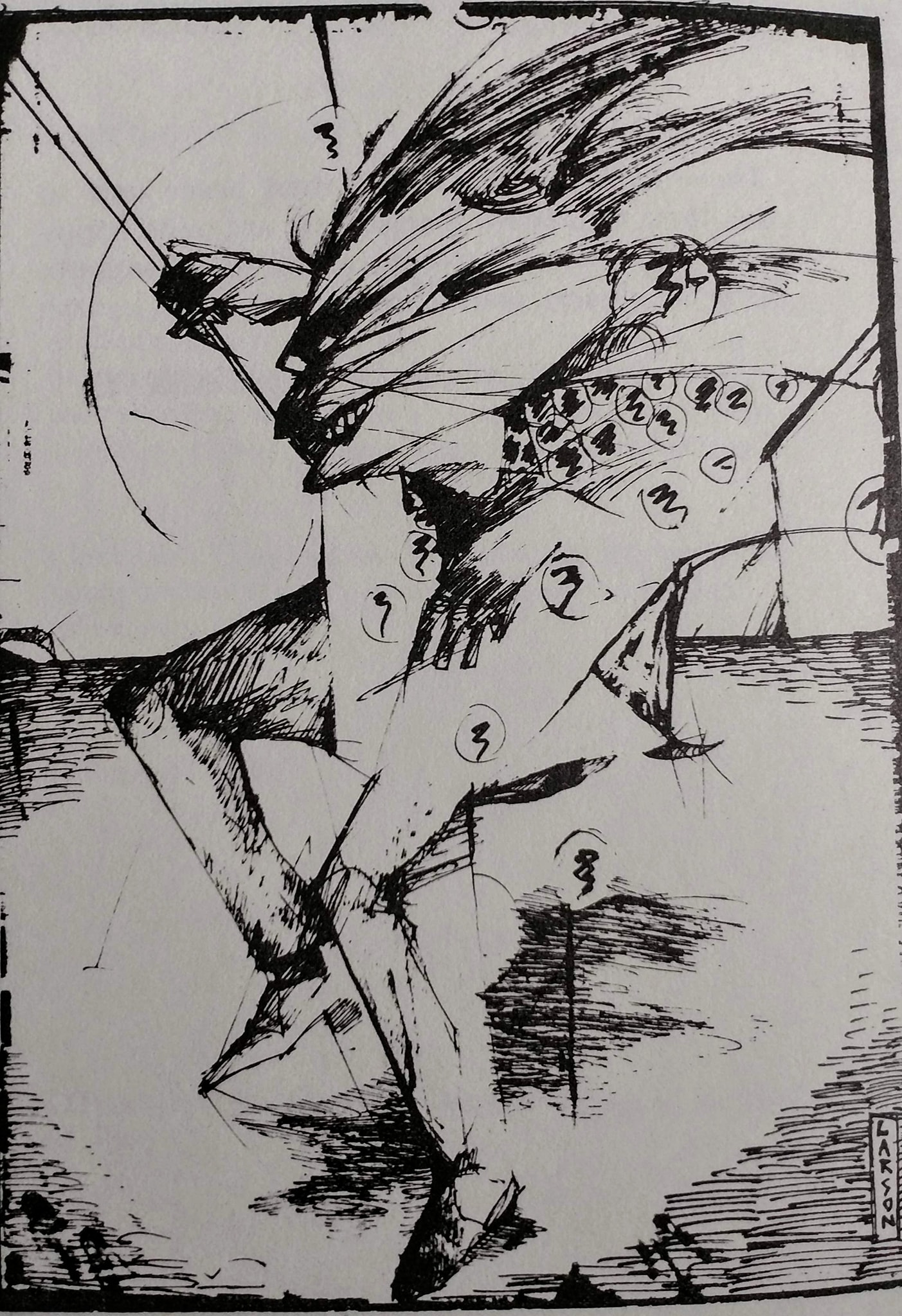
from Randy A
from Debbie B
from Britt Z East Coast Fashion
from Ginny W P
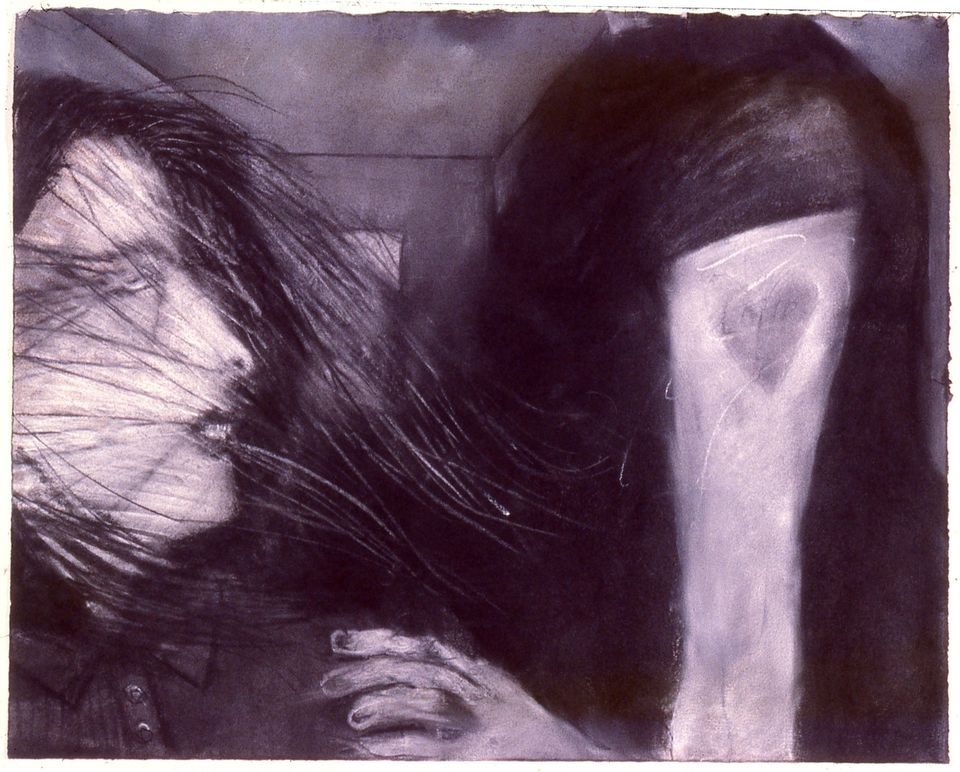
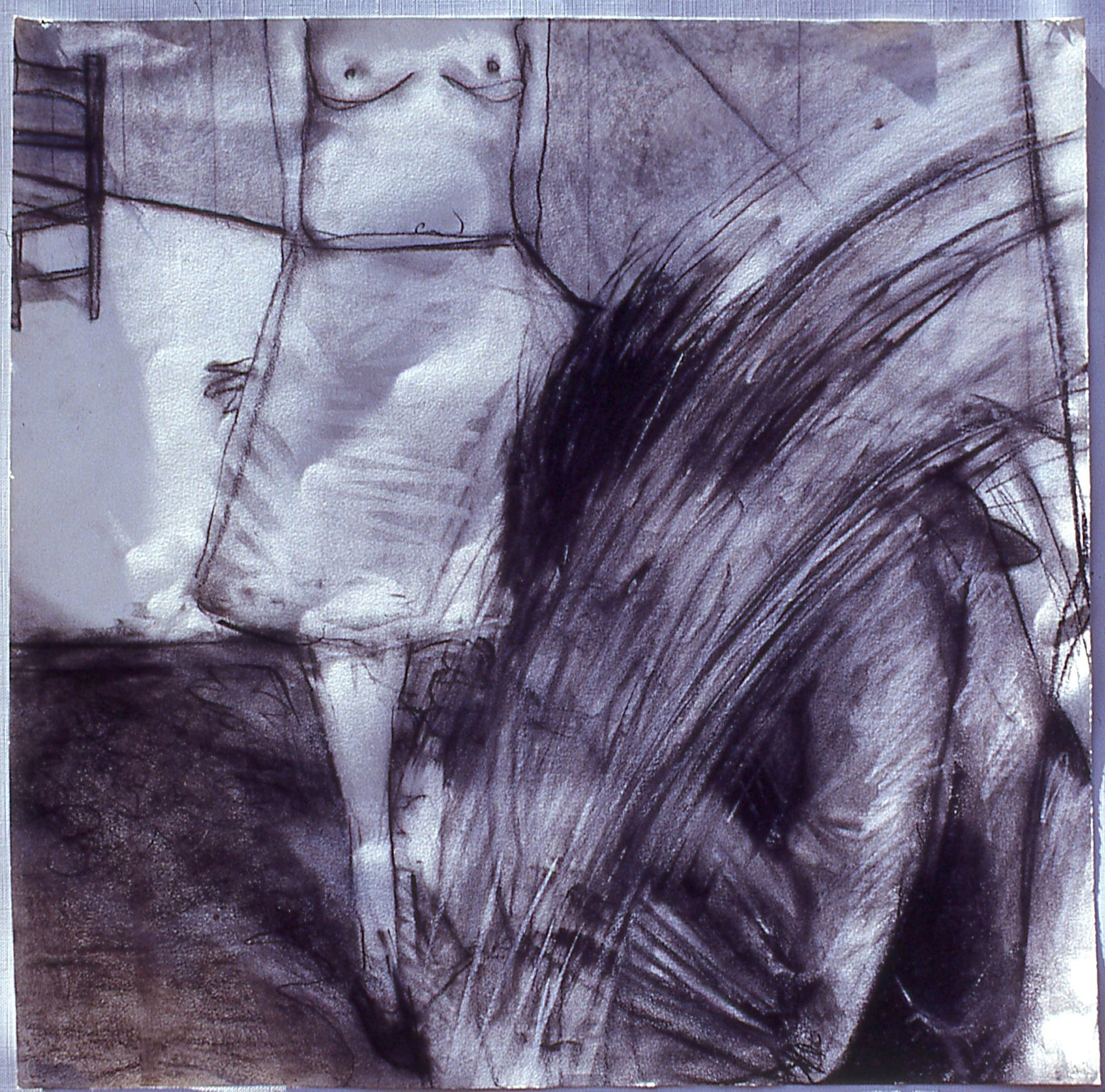
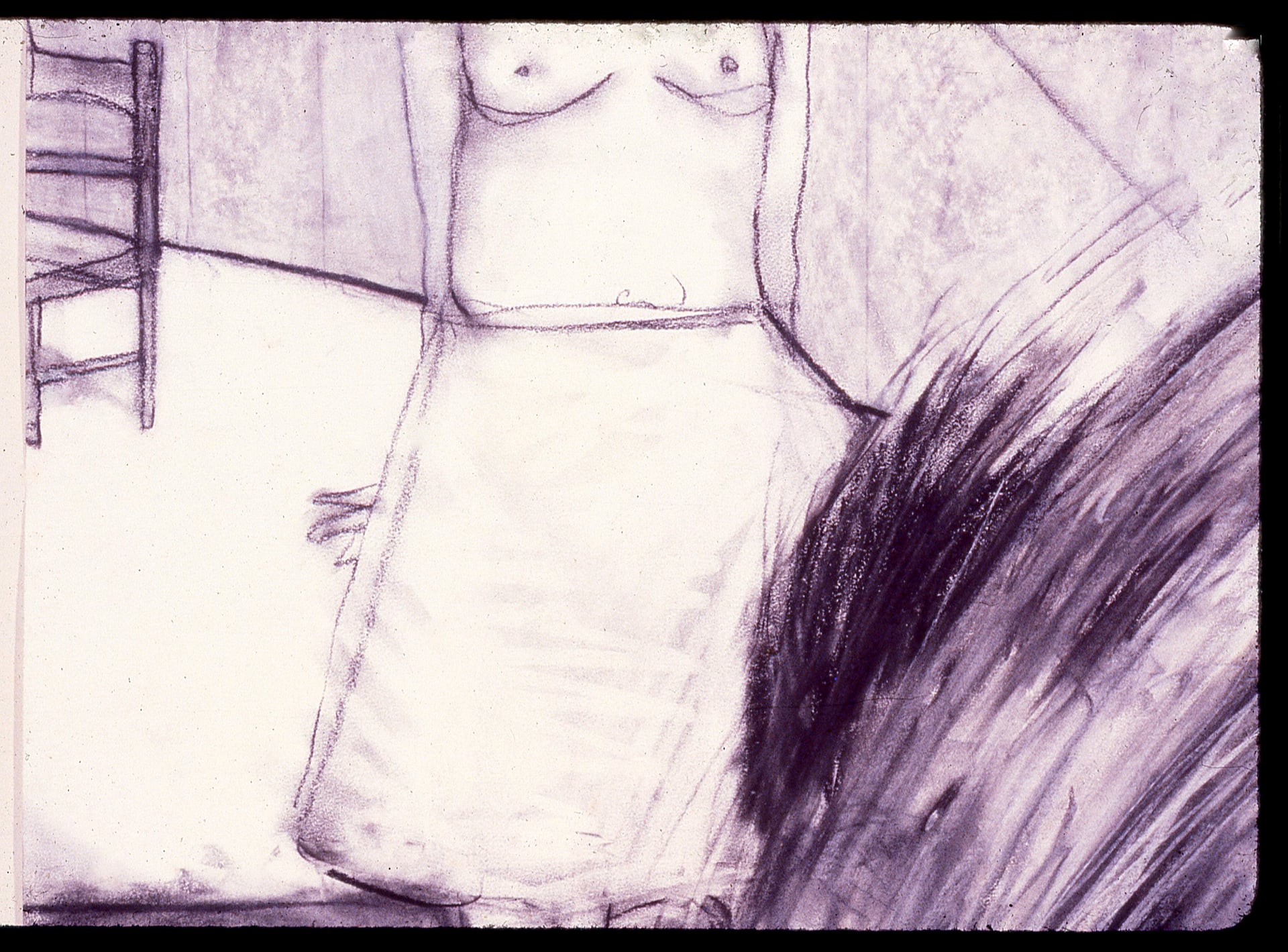
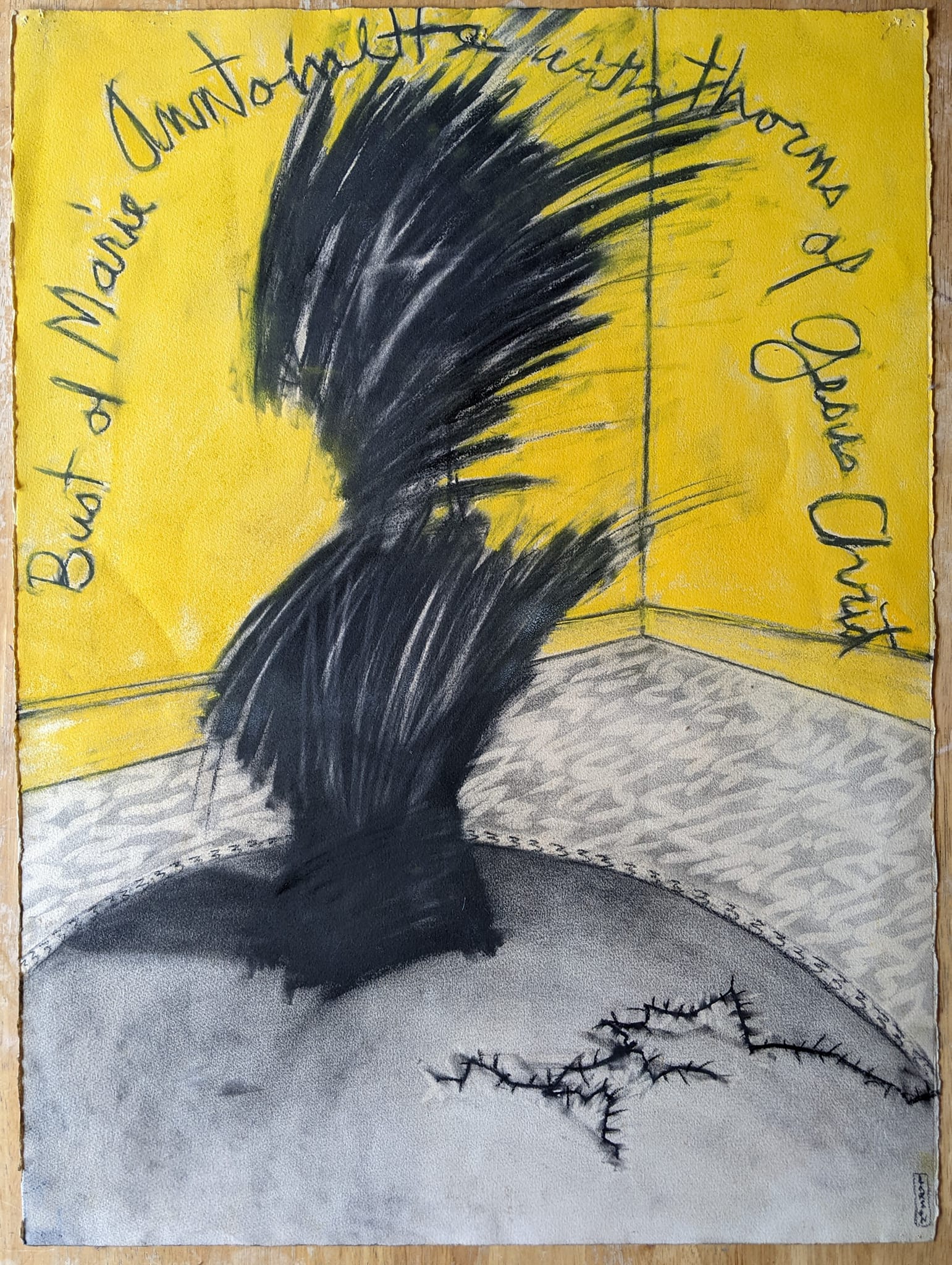
************
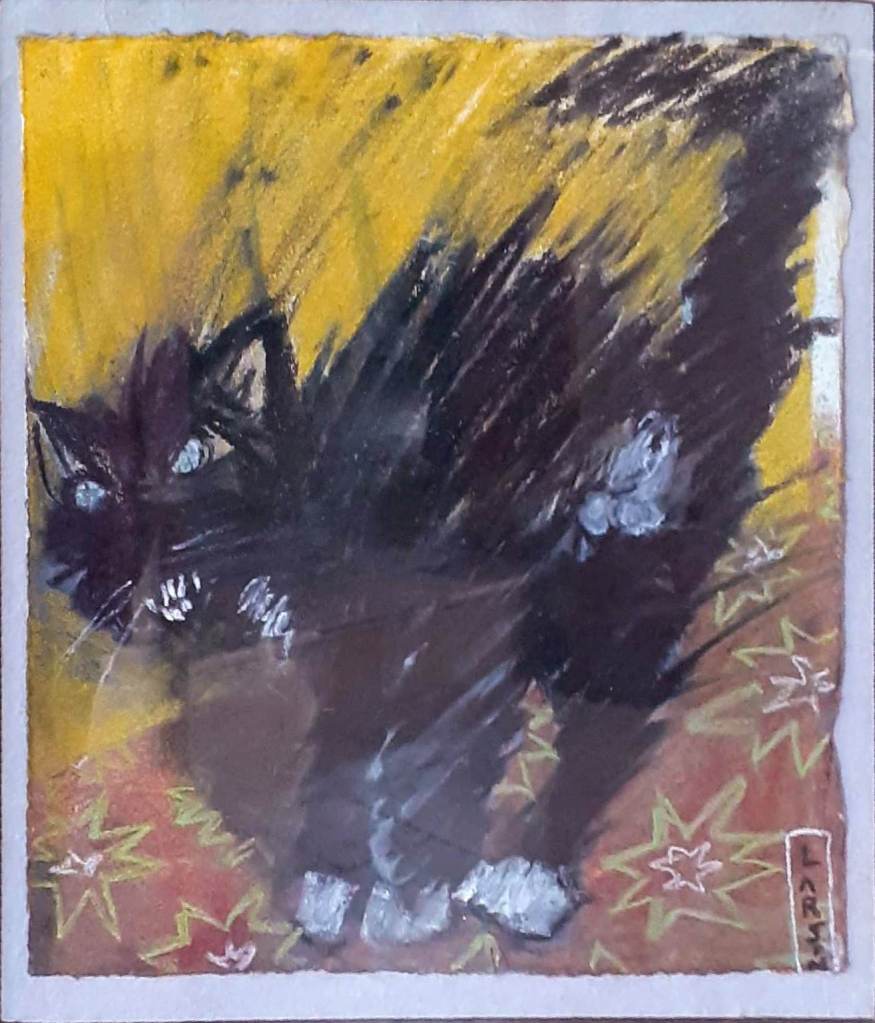
from Henry V and Britt Z
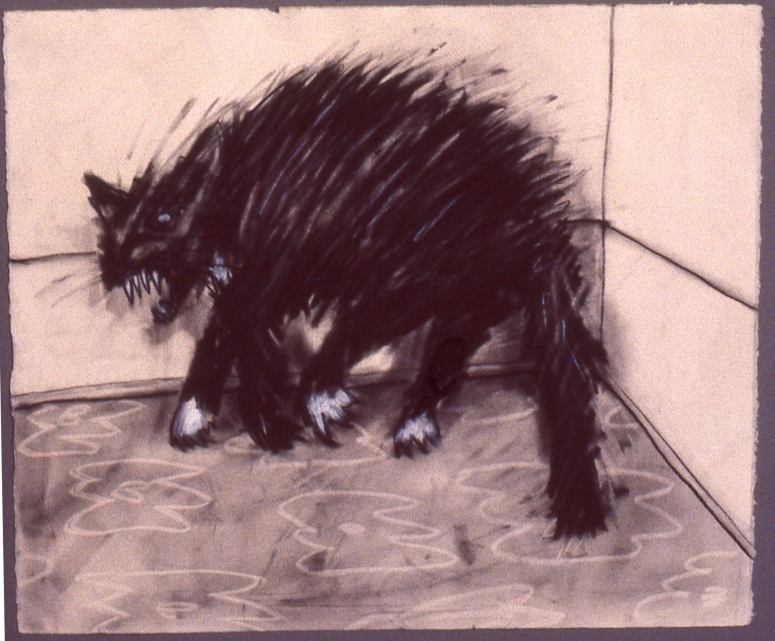
A last David Larson pastel from a slide that I missed posting. Kneaded erasure was used as a tool on the carpet pattern probably done in charcoal. It also puts this upset cornered cat in the smear series using it to accent the upturned fur in the moment of action. Alan Bowling, de facto executor of David’s art estate.
David Larson: Dead Dads, Lt Walsh & Karl
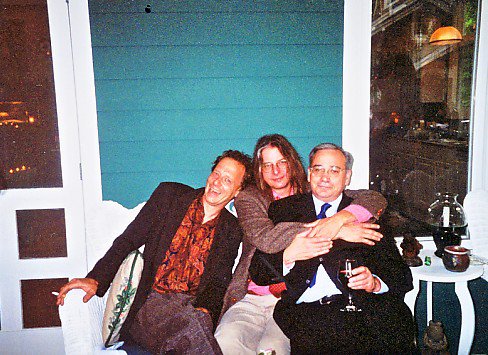
Peter Eichenberger, David and brother Karl at Viki B’s wedding
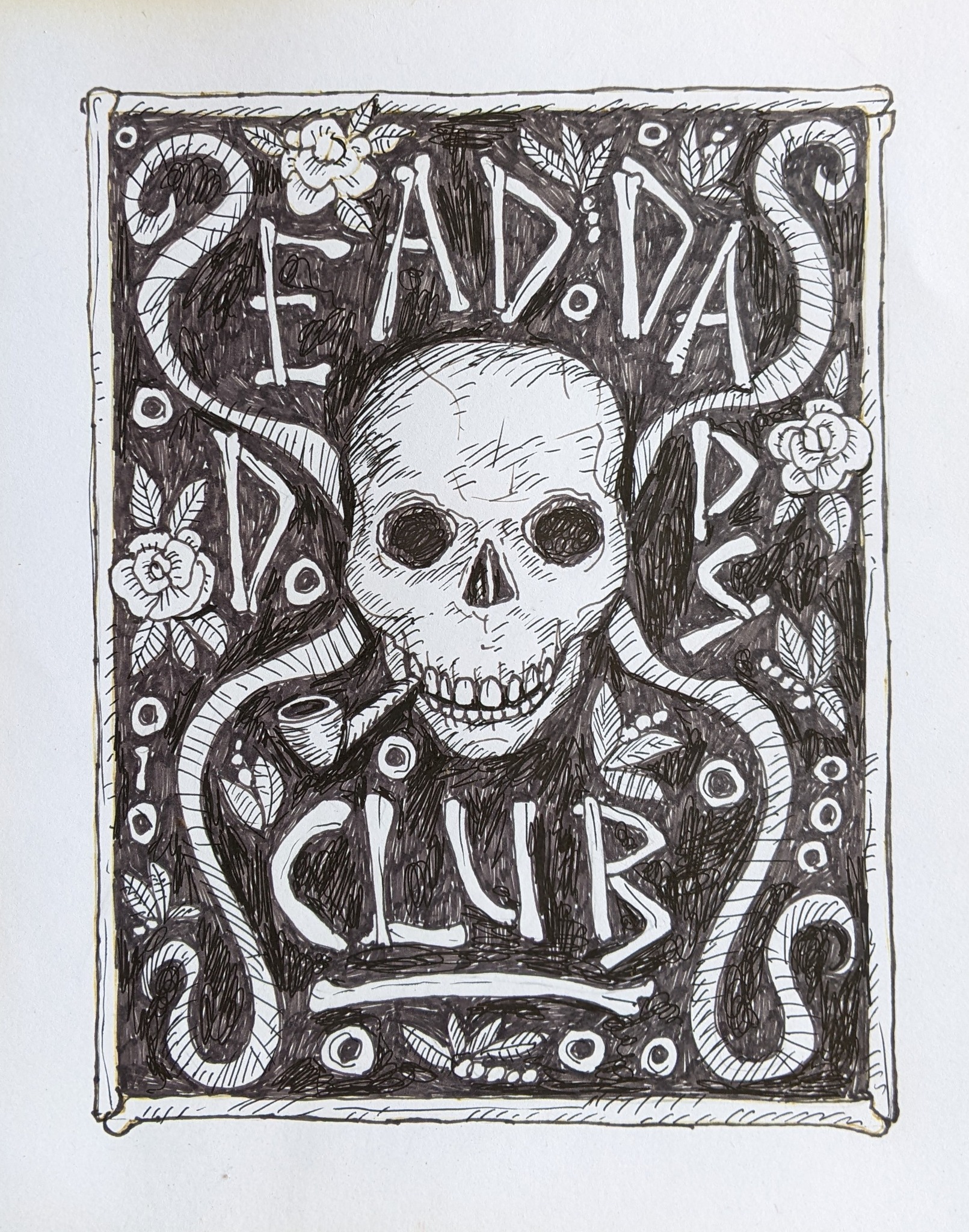
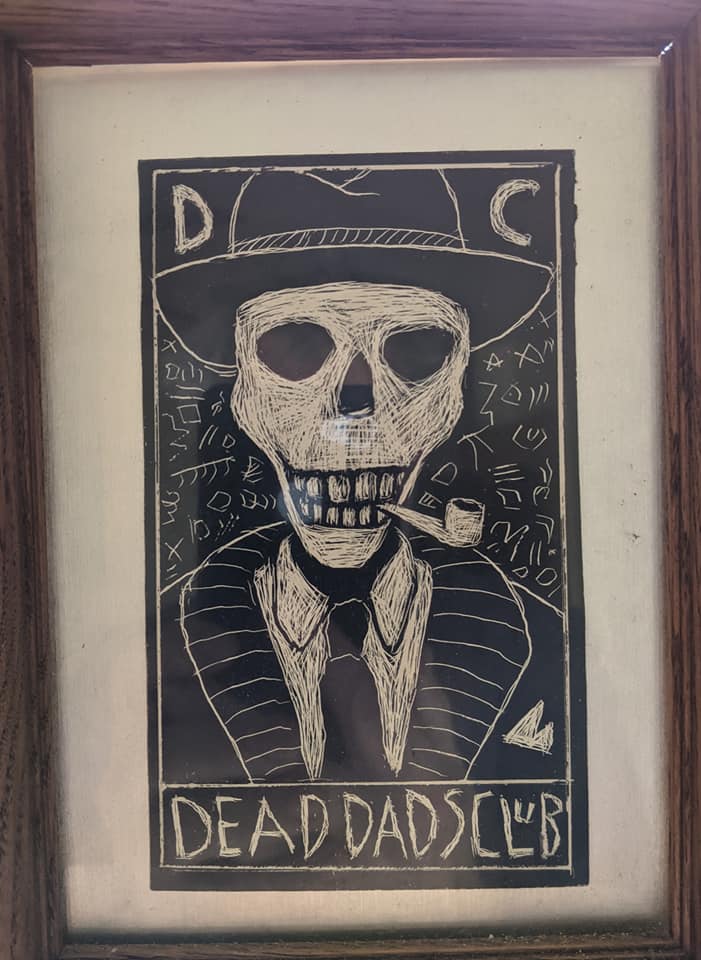
The Dead Dad’s Club, Lt Walsh Day, the Poker Game, the Kentucky Derby Mint Julep Party, all were a big part of David’s social life and the action often involved brother Karl and his house on Sasser Street in the Oakdale neighborhood of Raleigh. And David always celebrated not just with drinking but with art.
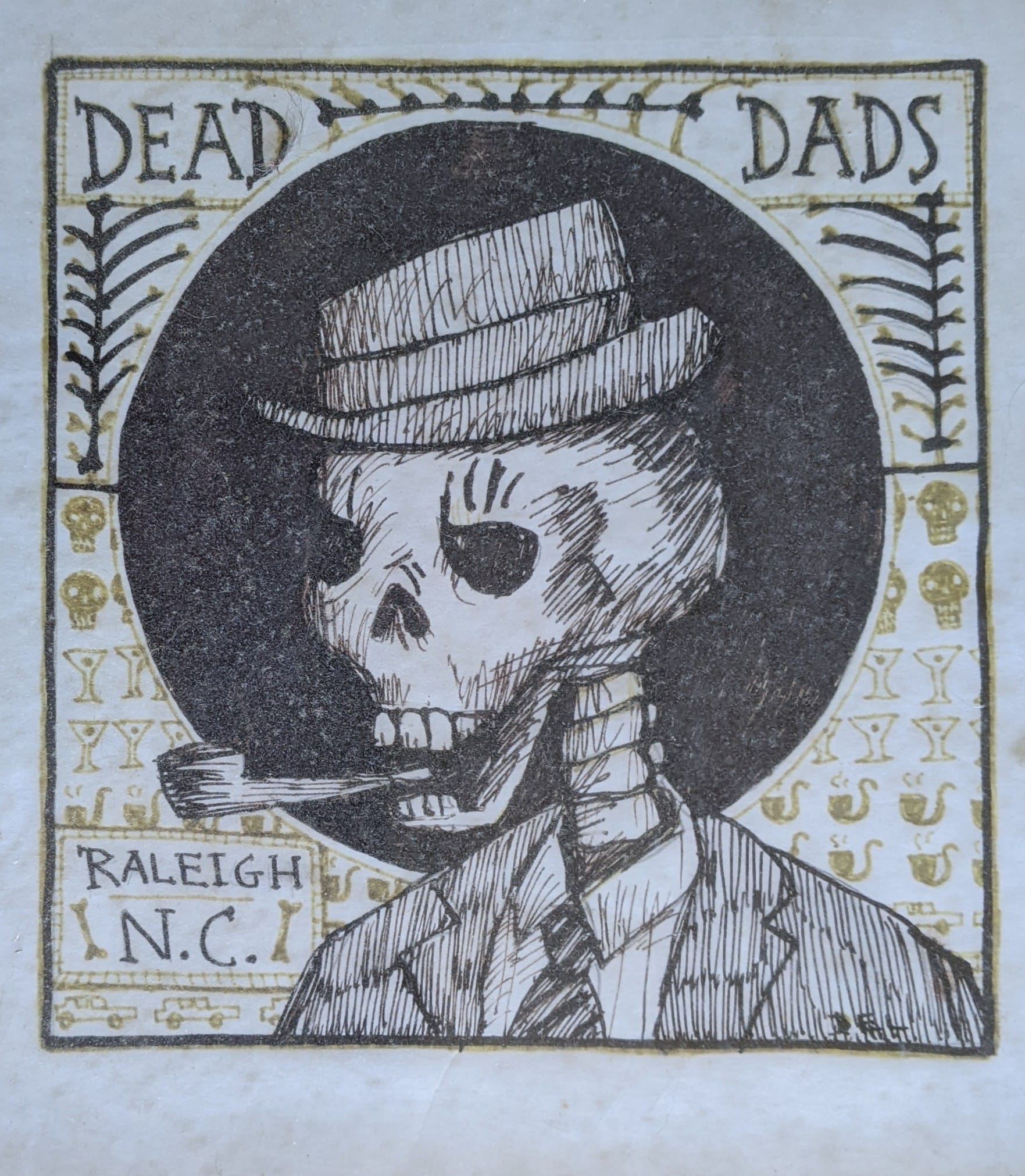
from Alan B
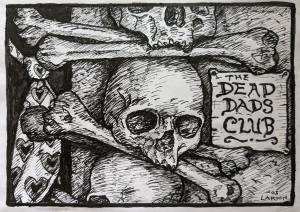
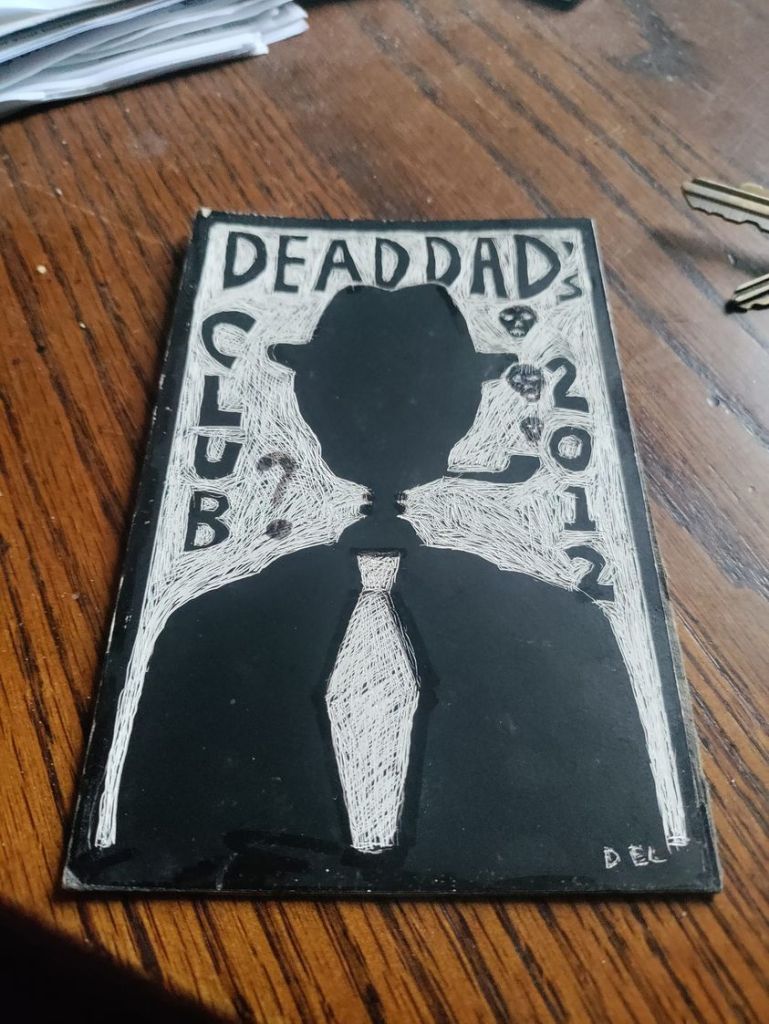
The Dead Dad’s Club was invented by Karl Larson. David went through training and qualified to make videos for broadcast on Channel 10, Raleigh’s public access station. His video starring Karl and others about the club was banned from broadcast for lewdness ( the urination of Peter E off camera during the filming) but represents an excellent history of the event. Alan B posted the video here.
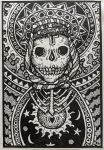
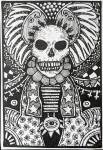
The annual party was attended only by people who had lost their Dad. David’s Dad died at age 50 (David told friends he thought he would die at the same age). David made a card for some of the occasions.
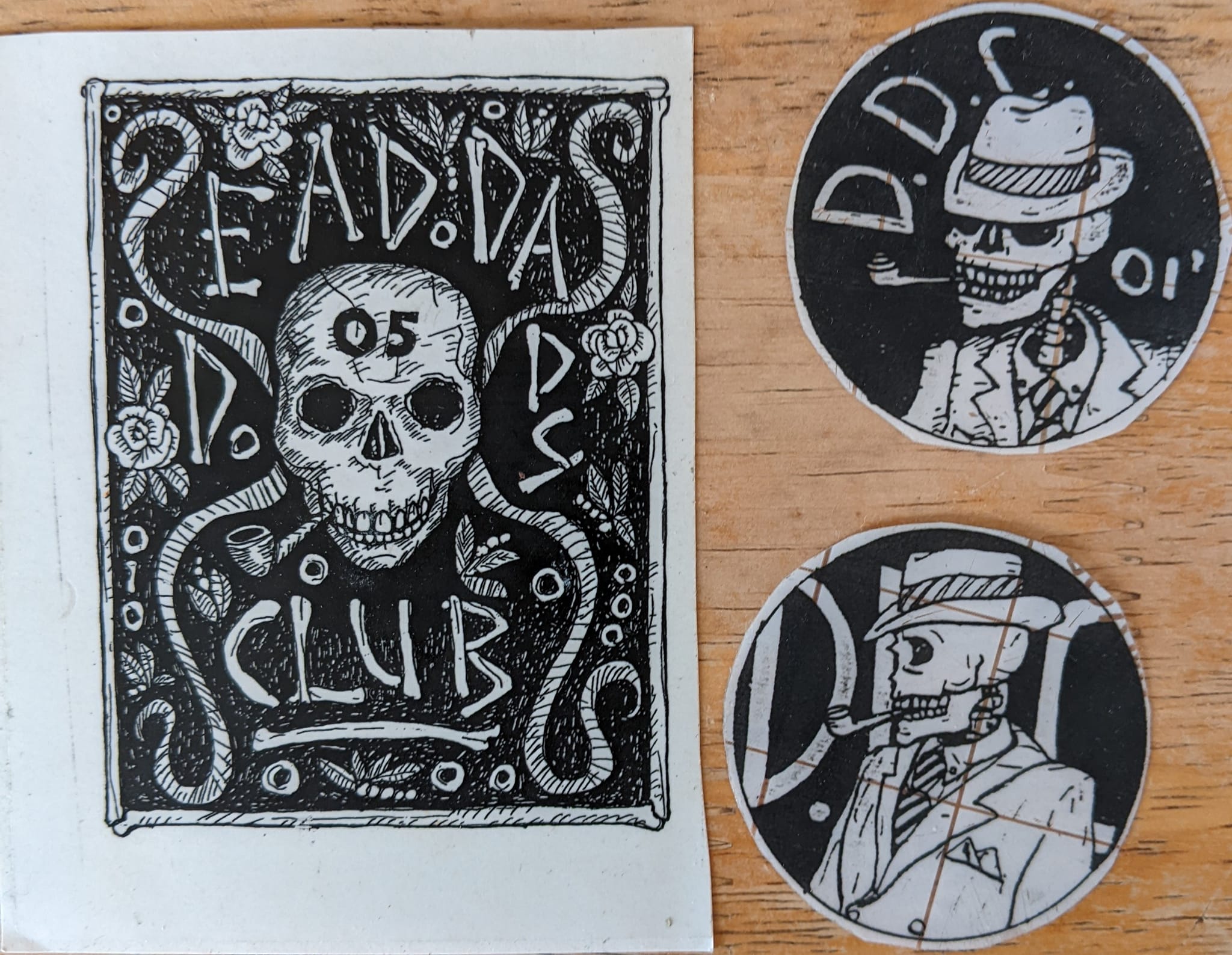
from Alan B DD stickers
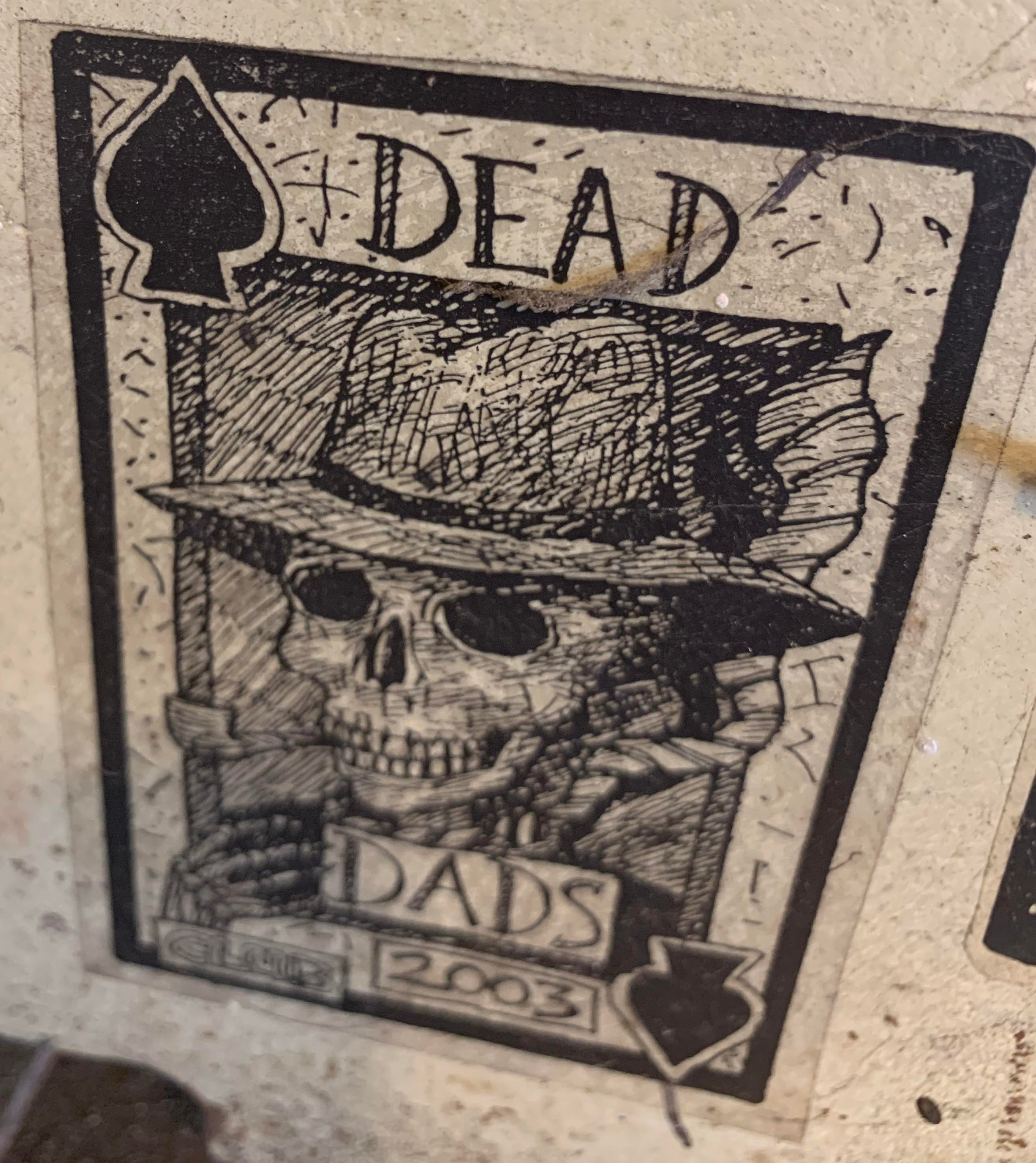
from Bill H
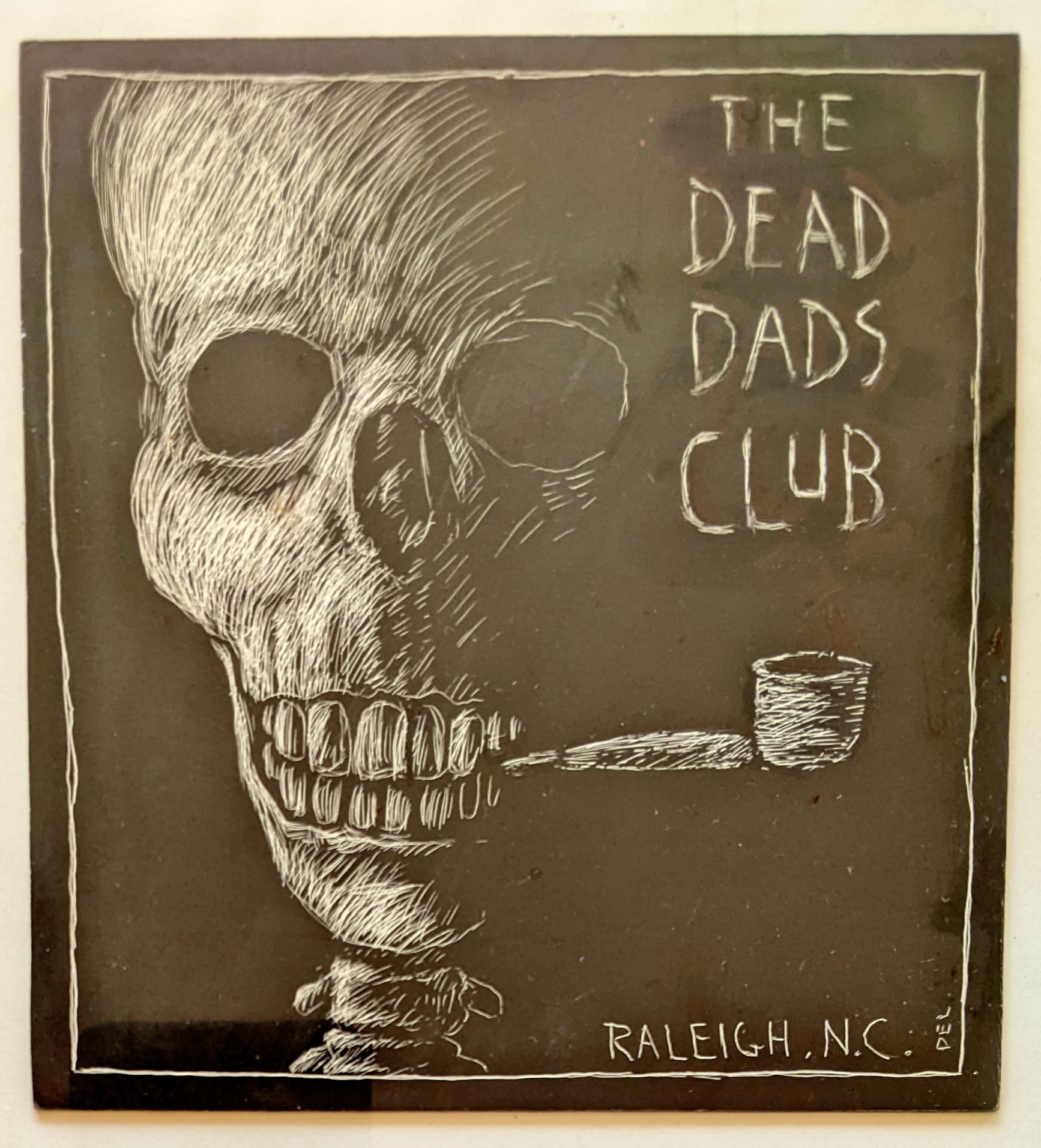
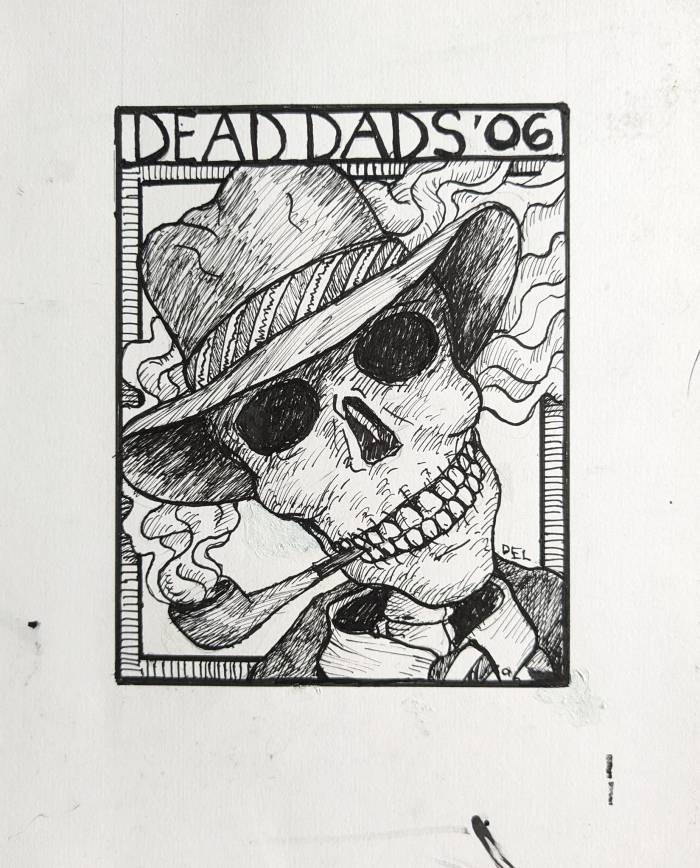
from Sasser Street
**************
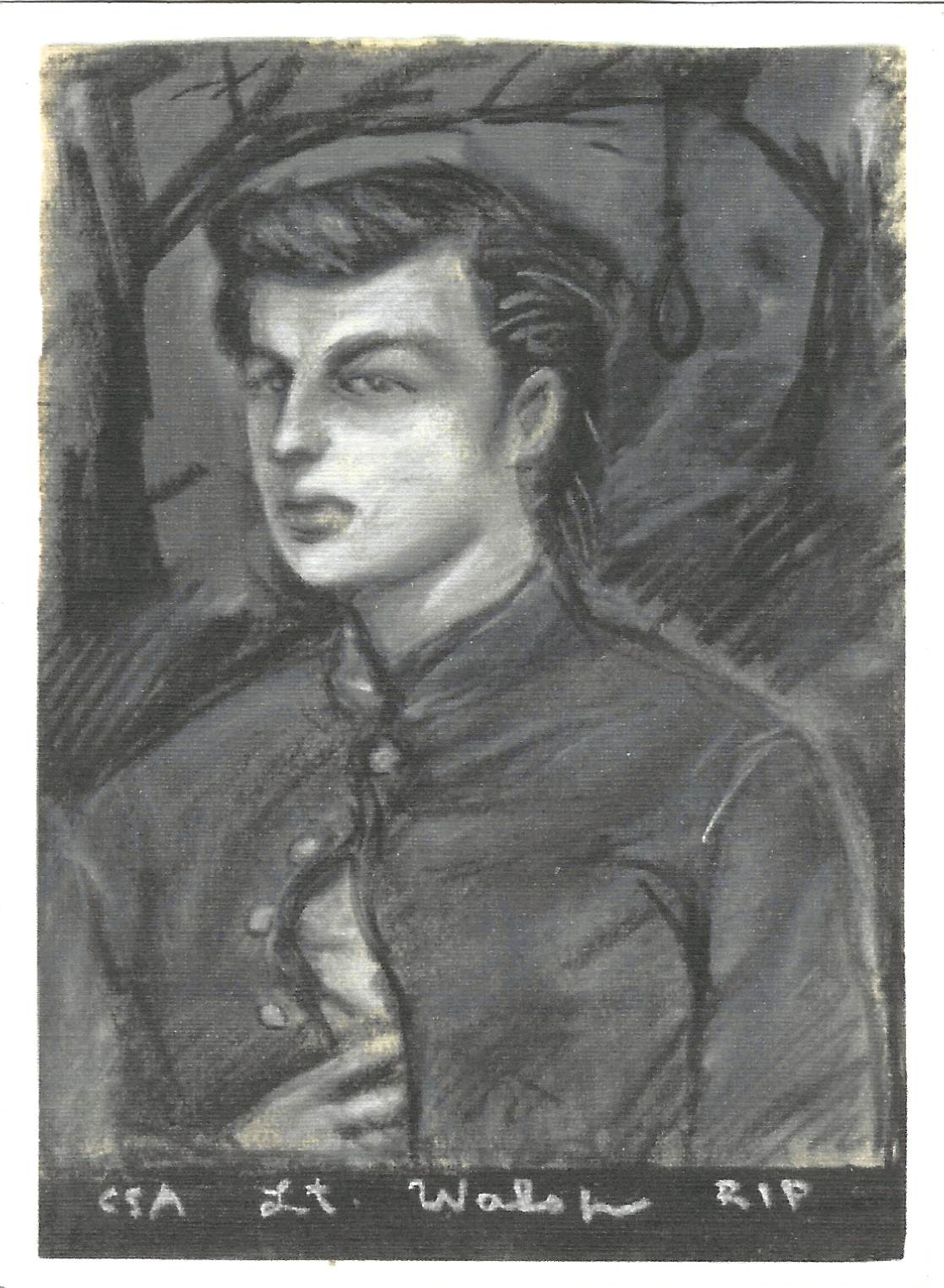
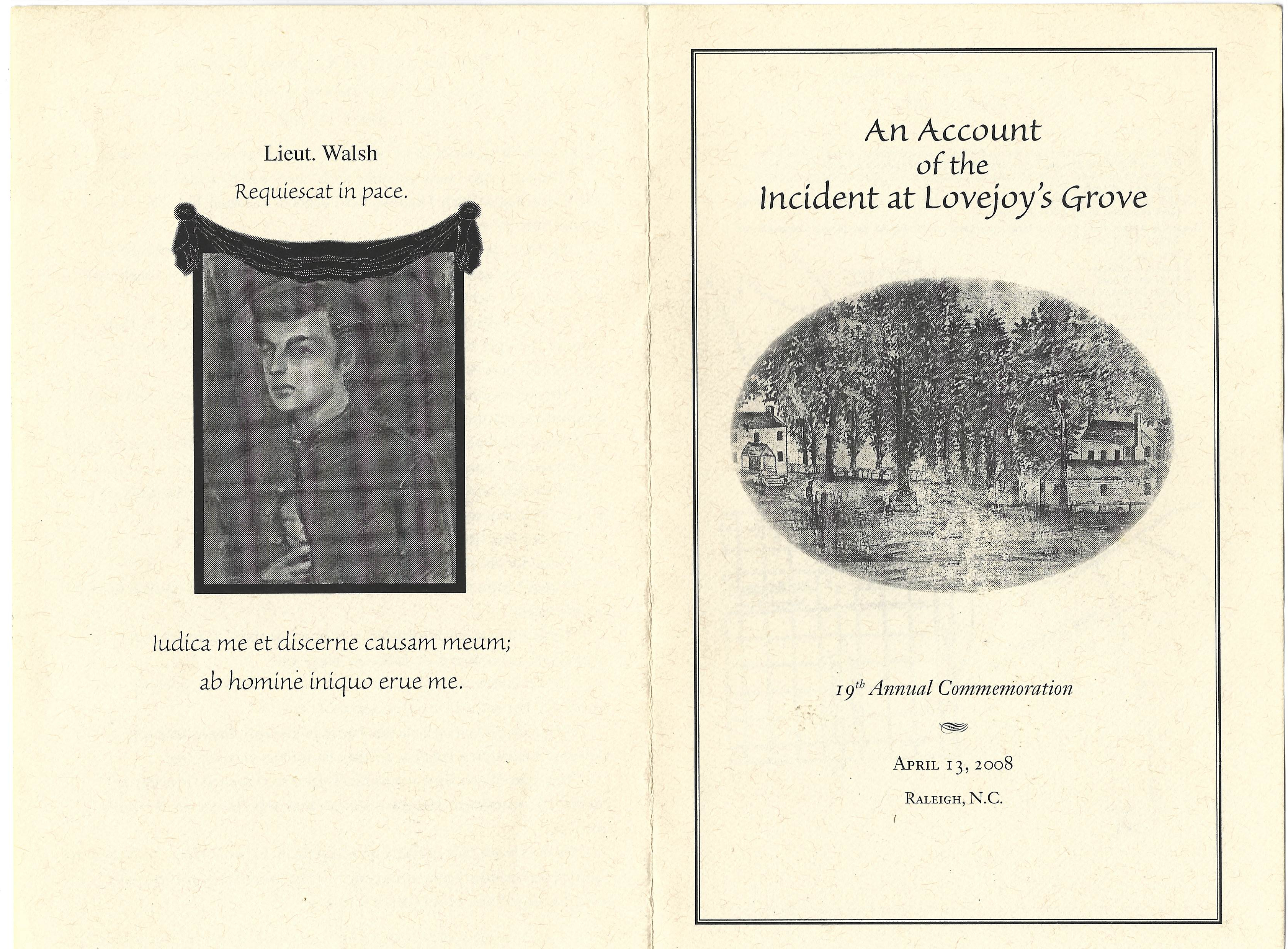
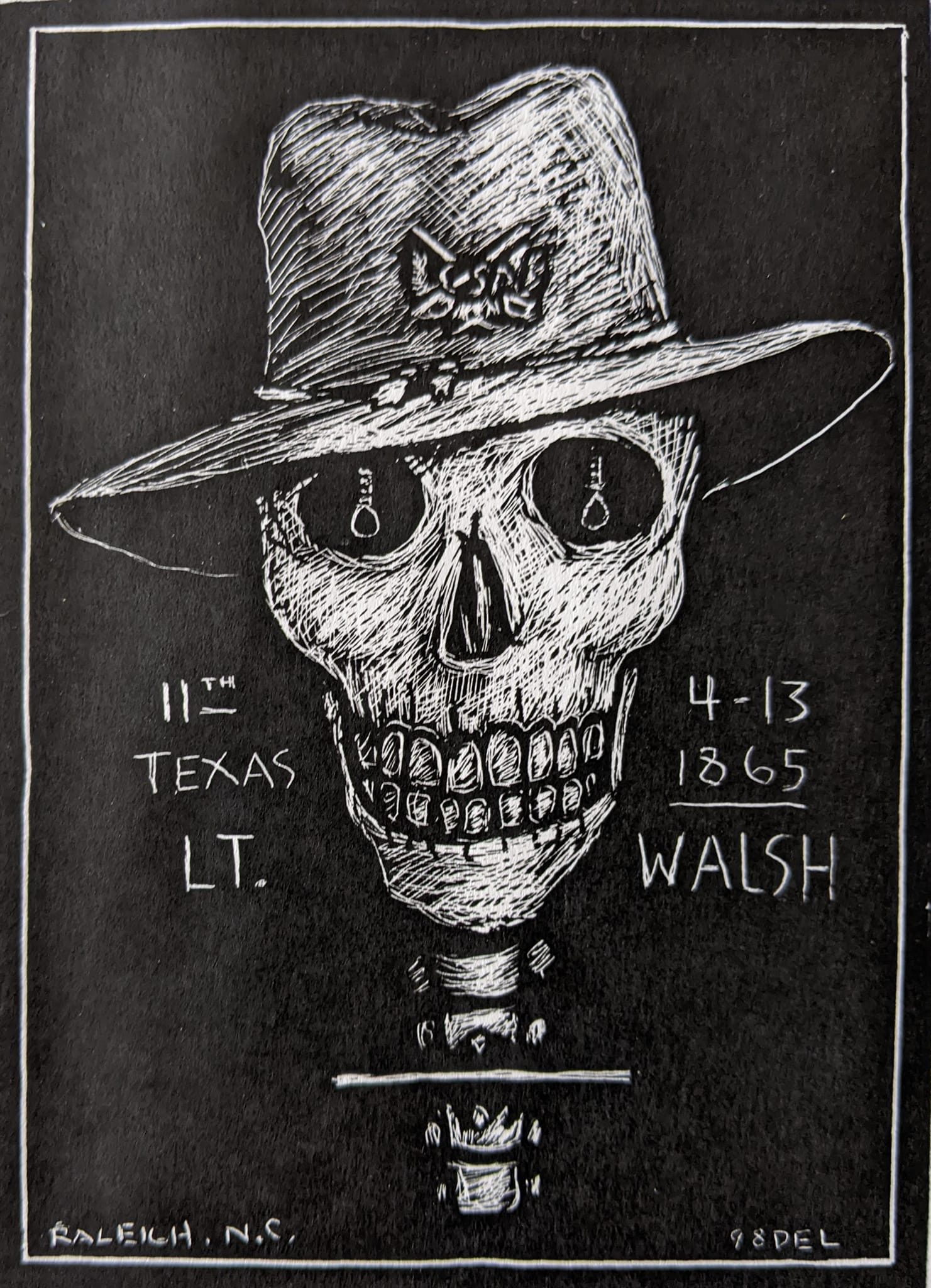
Lt Walsh was a Confederate soldier who, perhaps in a drunken angry mood, fired on the delegation of Union officers entering Raleigh to accept the city’s surrender. He was captured and hung at a spot in Oakwood near the Side Street Cafe. His grave is prominent in Oakwood Cemetery, and Karl Larson, a fervent local historian, made adorning his grave a special and sometimes large event every April 13th for over 25 years. David’s portrait was used in the elaborate brochure made for year nineteen.
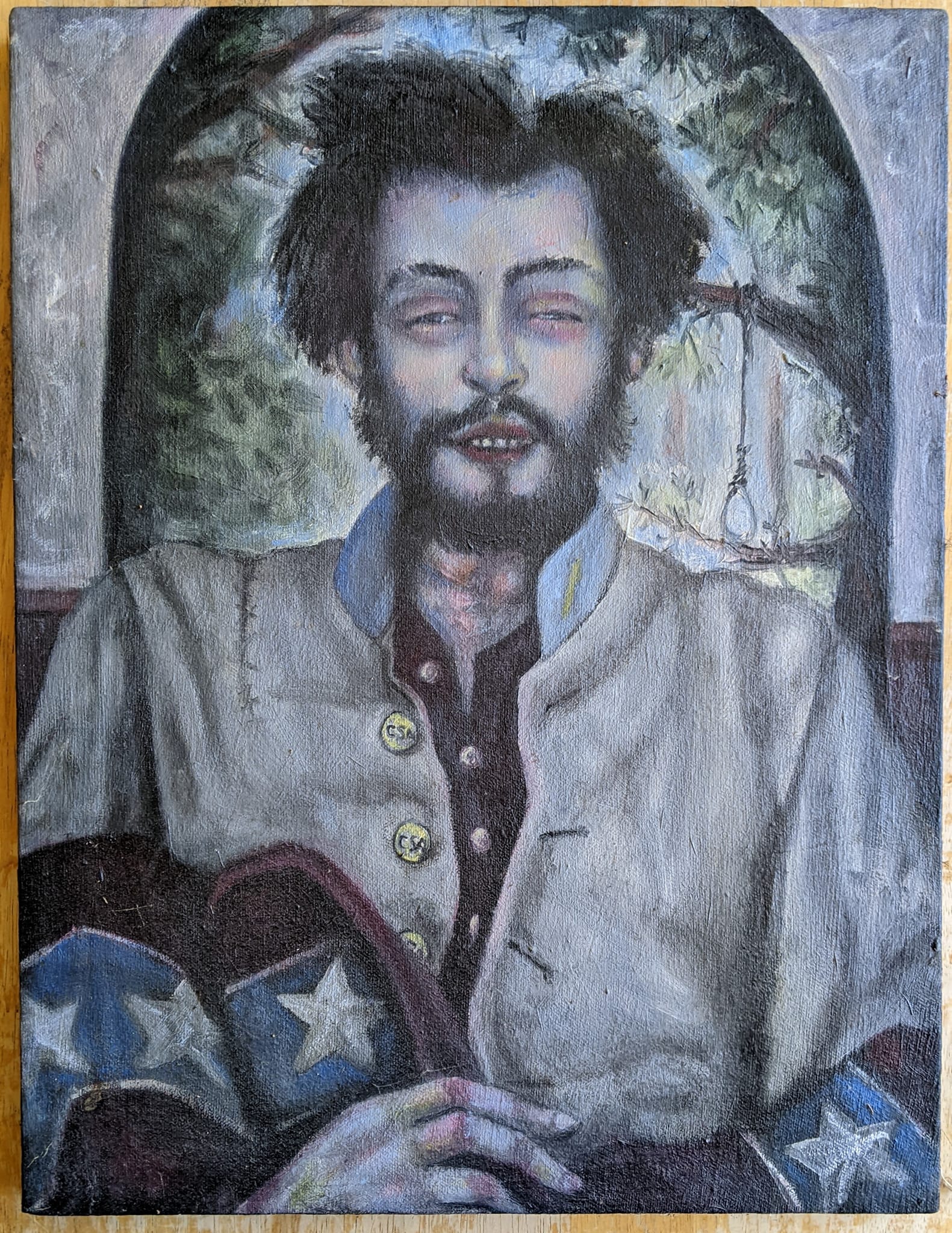
from Sasser St
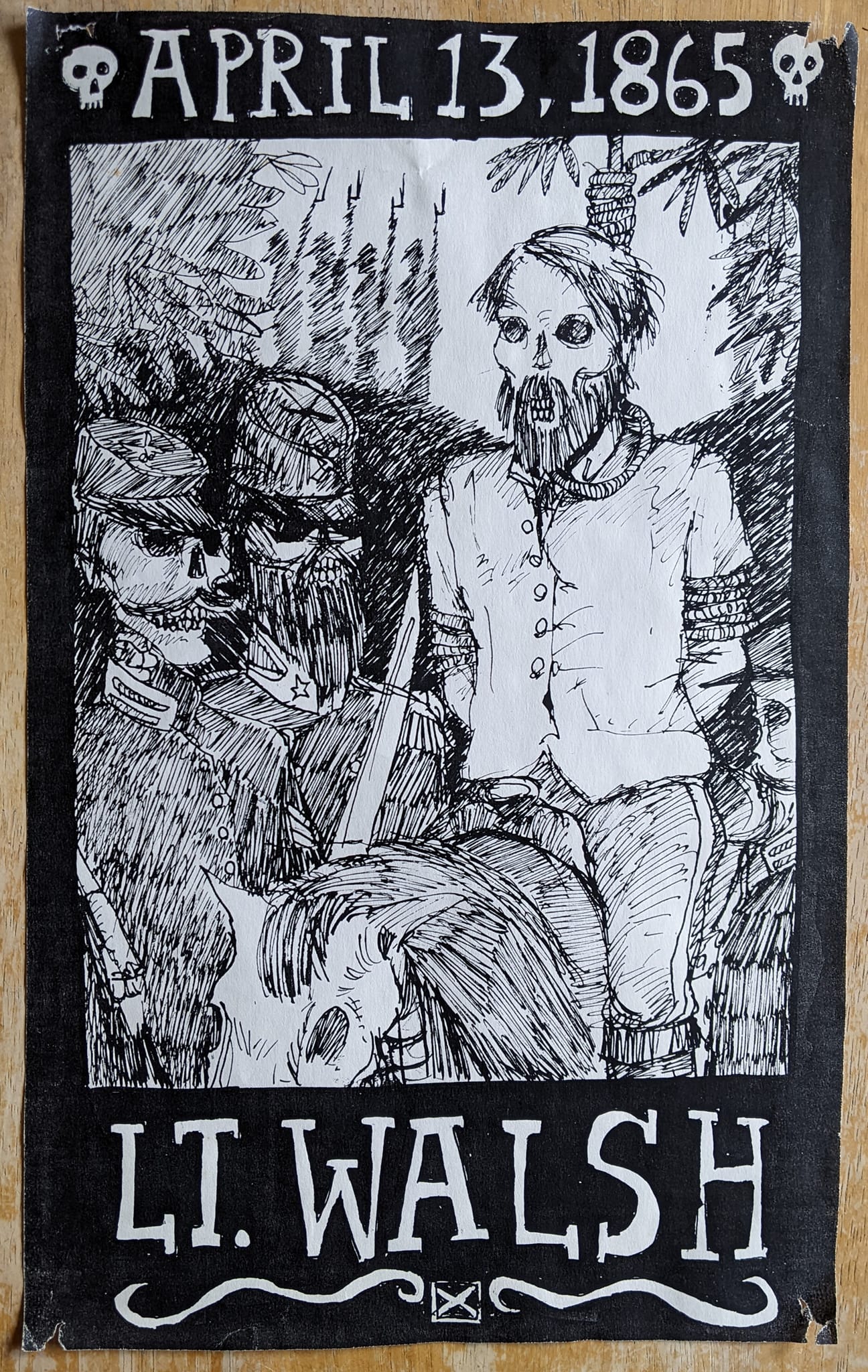
from Sasser St
***********
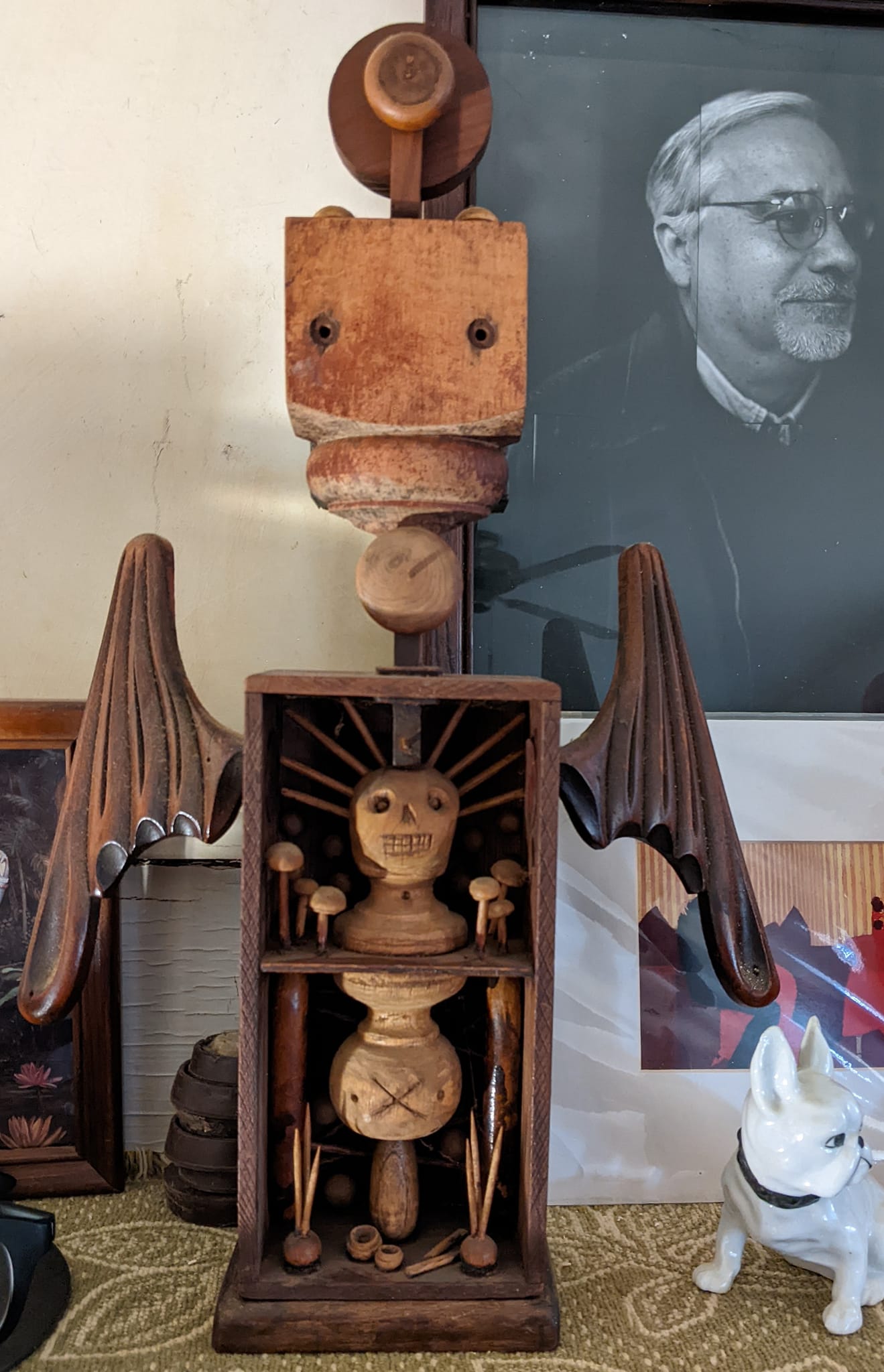
Karl Larson was a Raleigh legend in his own right and he as well as his hospitable house on Sasser were an important part of David’s life. Karl’s unique take on history was evidenced as far back as high school, when Steve, my classmate, would intimate stories of midnight readings of Poe in City Cemetery. A few years later, he made his claim to fame with an elaborate, well documented funeral for the original Boylan Avenue Bridge, which was torn down amid concerns for the continued existence of Boylan Heights as downtown and its throughways grew. He is seen below with Kathryn Myers at the ceremony.
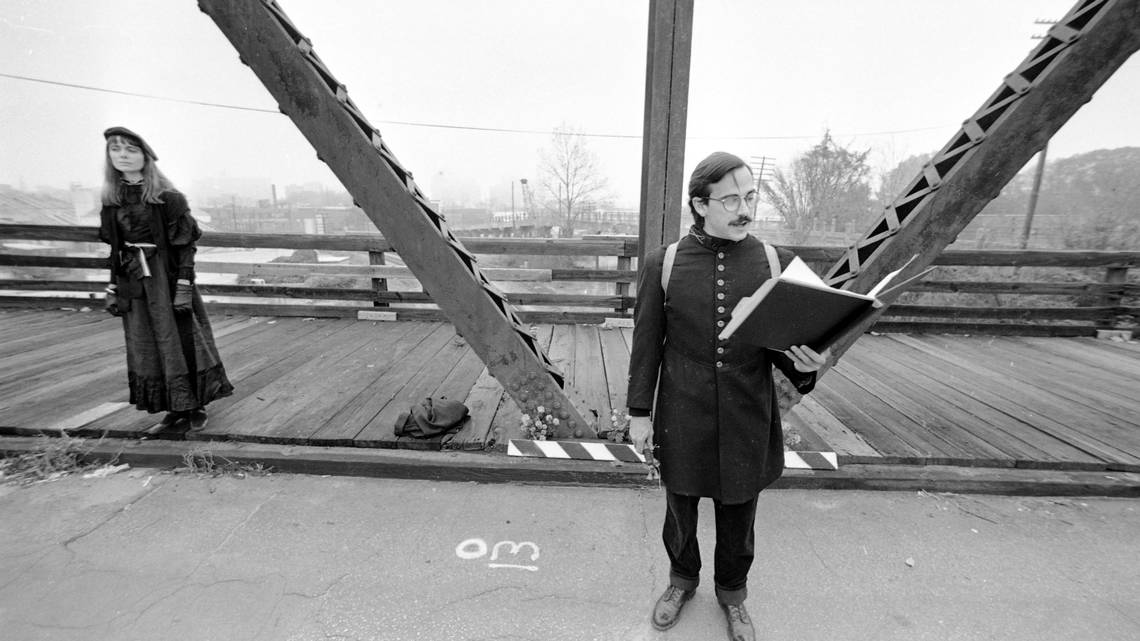
lovingly appropriated from the News & Observer
Karl had a fine career as graphic designer and publication manager at NCSU, but his reverence for local history blossomed late in life with a post-retirement job as archivist for the state and especially with his magnificent accomplishment in leading the effort to restore Joe Cox’s Light Wall on the side of the NCSU Library. He also became a beloved part of a local scene blog call Goodnight, Raleigh.
“Raleigh Boy” posts on Goodnight, Raleigh
Karl’s M.A. thesis on the history of Segregation in Raleigh
Remembering the Man Who Remembered Raleigh
BY NED BARNETT
************
David Larson survived Karl and his brother Steve, but not by much and now Phil Larson is left with the loss of all three brothers in a few short years. Steve’s dog Dup was a favorite subject for David, and below are some images contributed by some of the many people who have shared their art on these posts. Thanks to all, and love you some DEL!
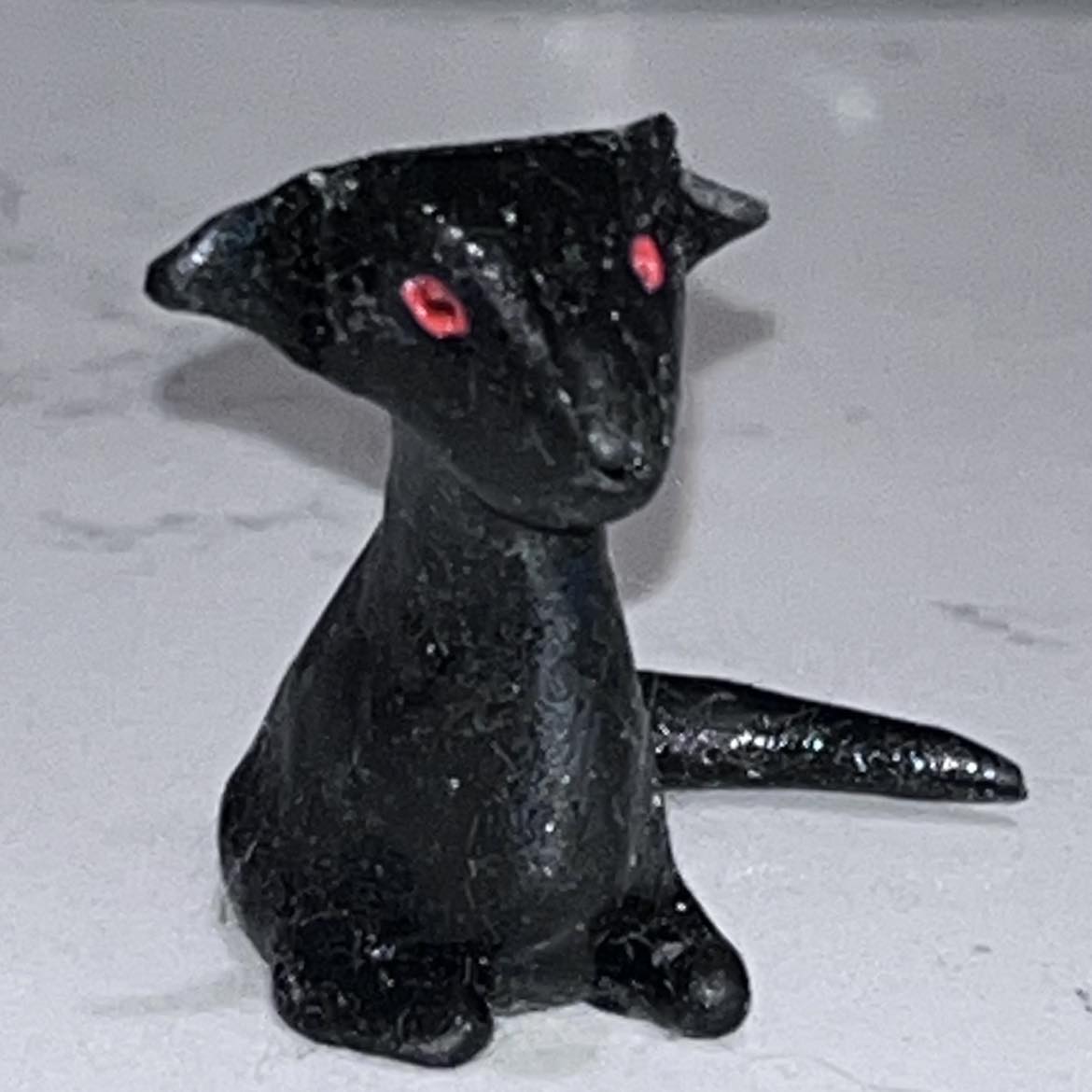
from Lura L.
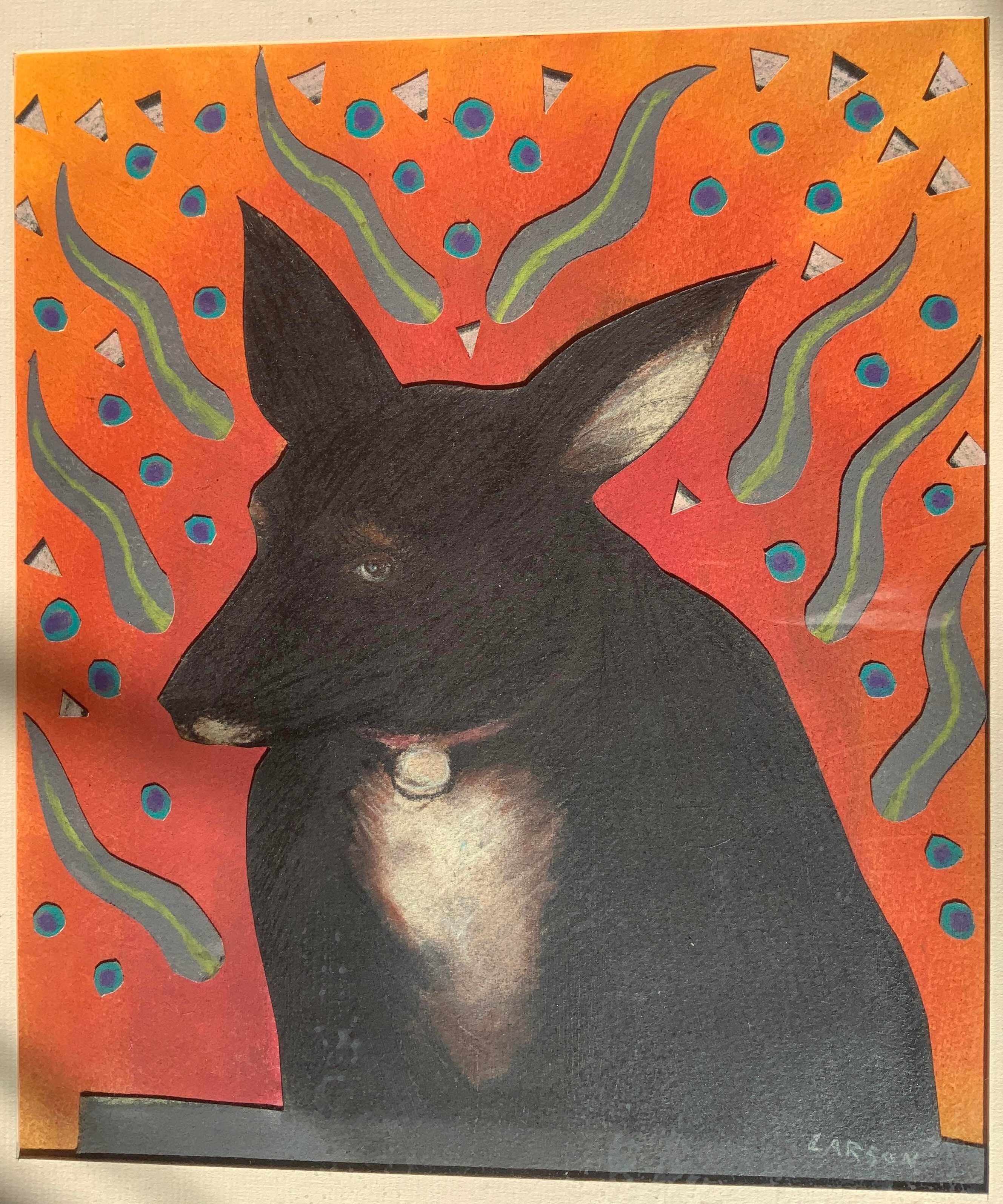
from Mary R (cut-out with collage)
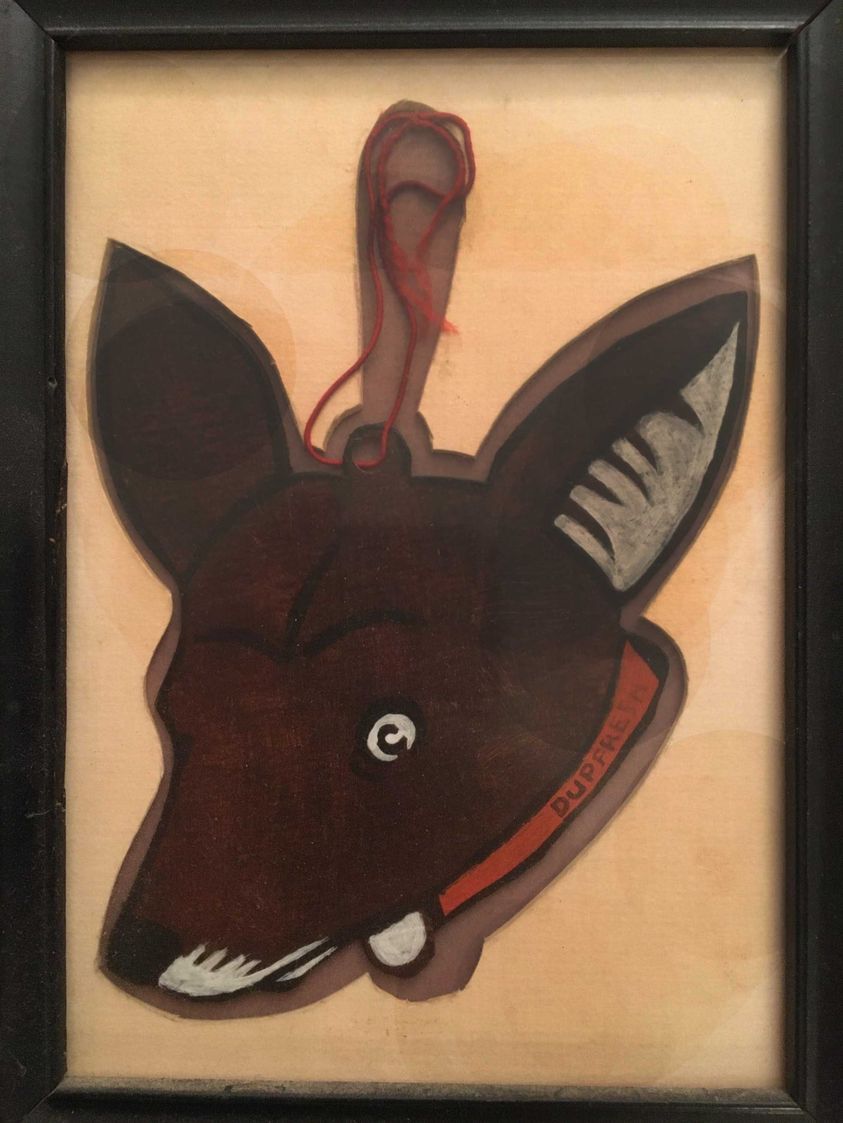
from Mark H
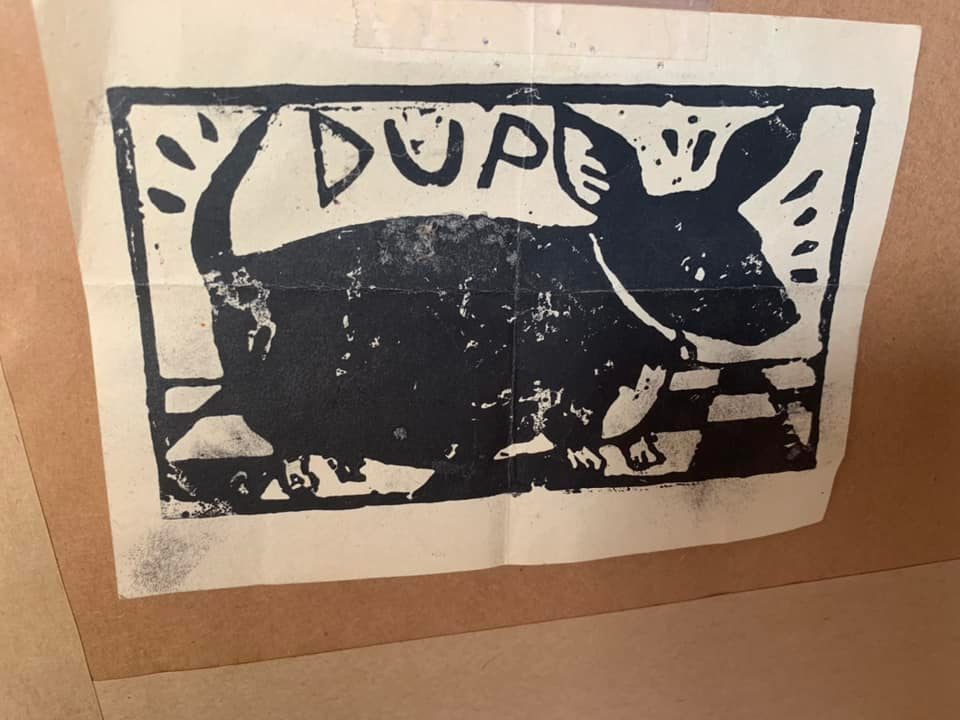
from Jim D (linoleum print)
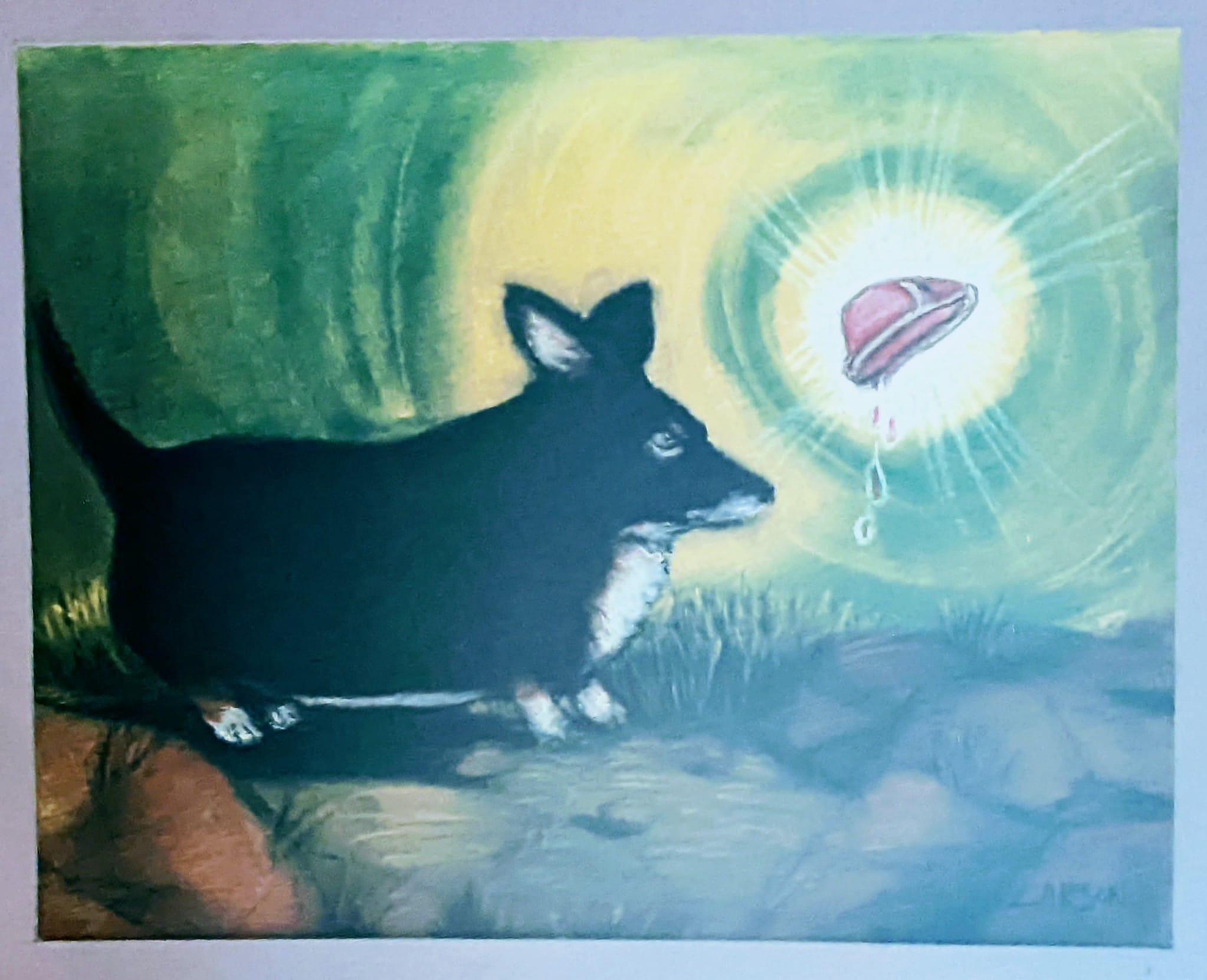
from the Sasser Street collection
David Larson 2000 Calendar & Bio Pics

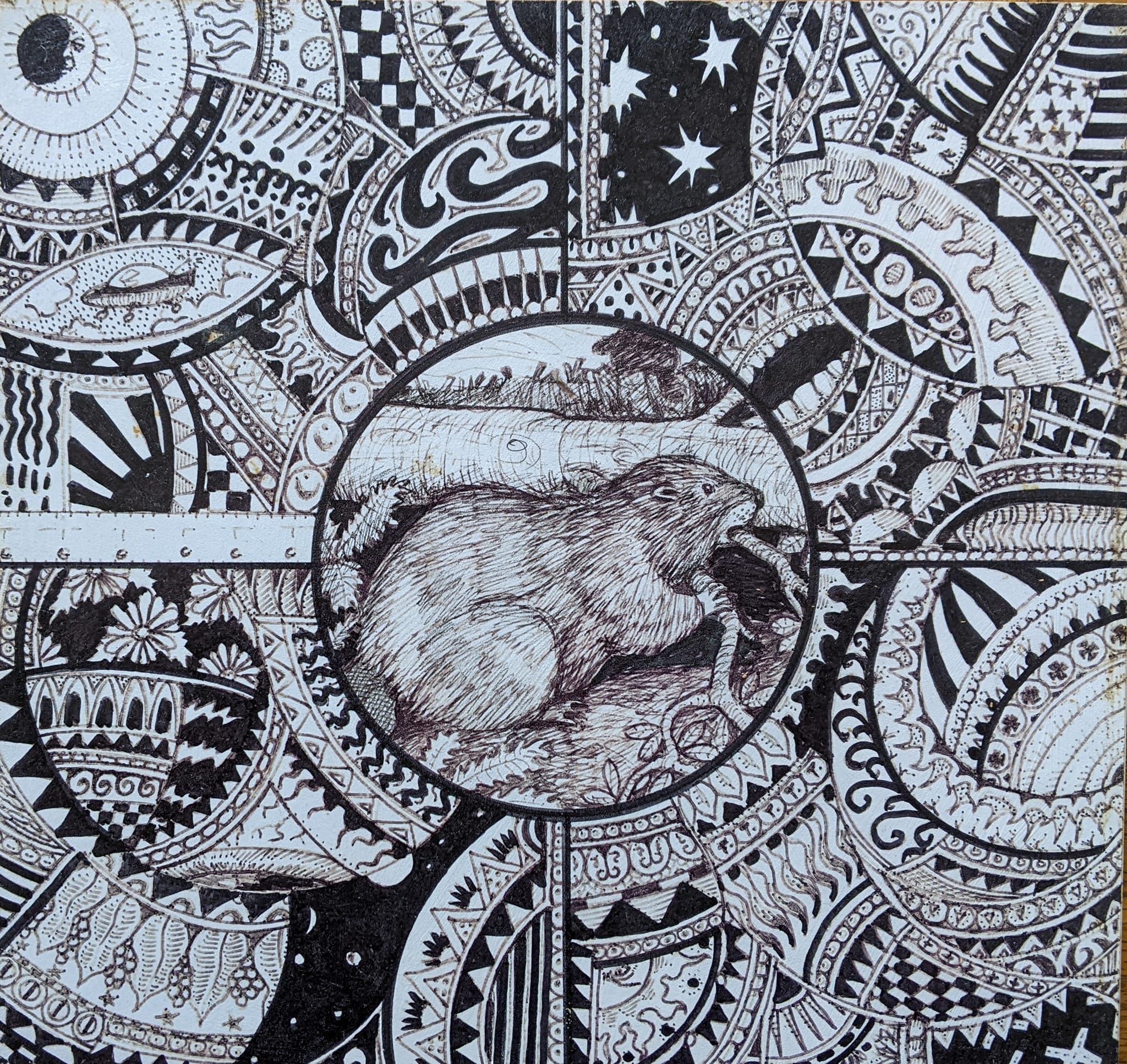
In 1999, David was working pretty fulltime at the Habitat Re-Store, and a stack of bright white 1 ft. square chipboard panels came in. David started designing images on them with Sharpie marker, a concentric frame of his art deco style with an interesting natural figure in the middle. After I had seen several of them, I told him if he finished 12 of them, we would publish a calendar. Everybody was going nuts over Y2K, from millennial prophecy to worldwide mainframe crashes from two missing digits, and I thought we could make something of that. The result was a monochrome calendar that sold very poorly with two exceptions: to friends at Paper Plant events and to customers at Habitat, who received a very deep discount. (and David got all the money). Nevertheless, the calendar has become a wonderful way to save and send a nice sample of David’s work.


I remember this as a wonderful and well-attended event at our house on Person Street. Many Larson laughs heard at this event!
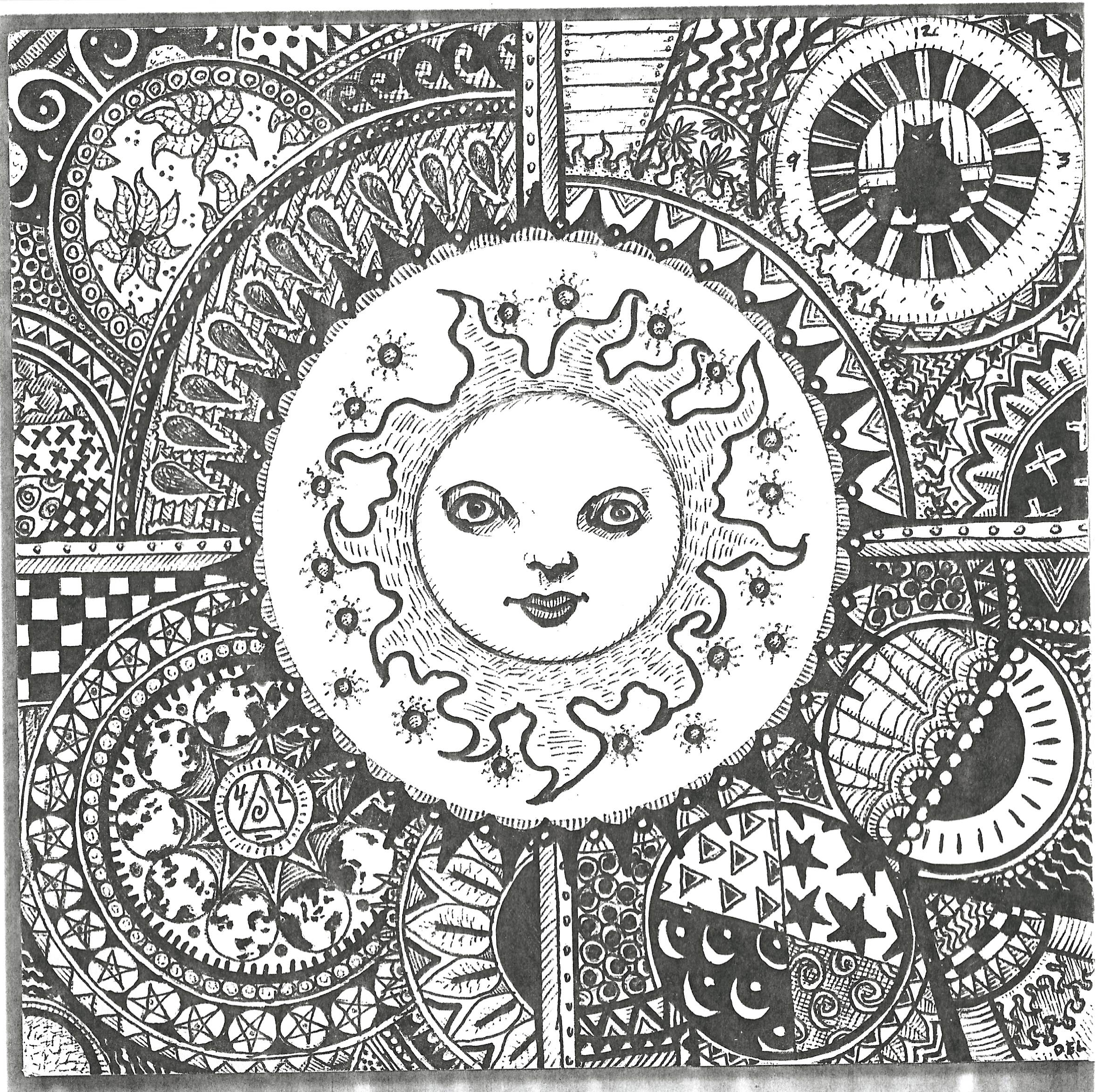
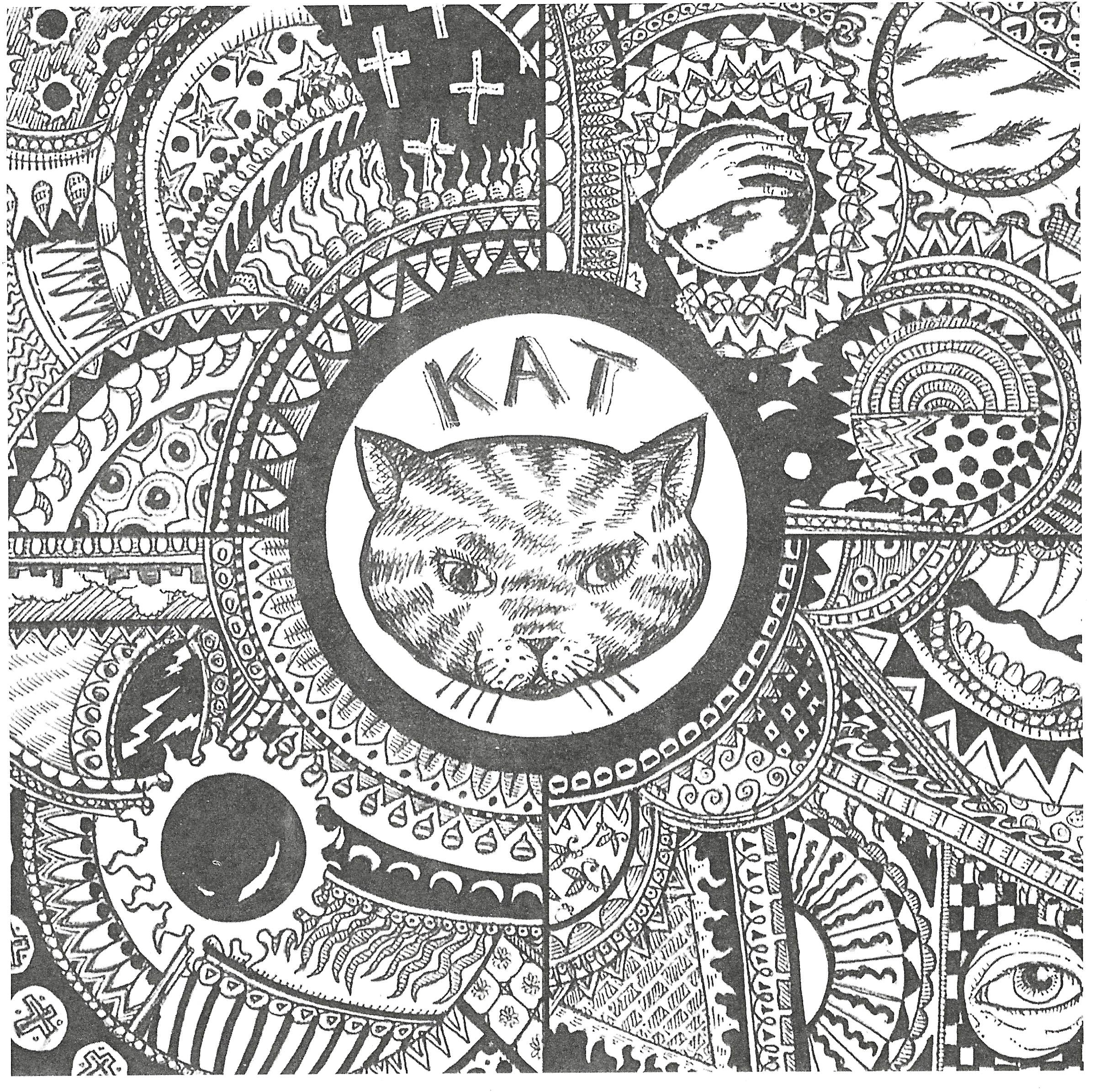
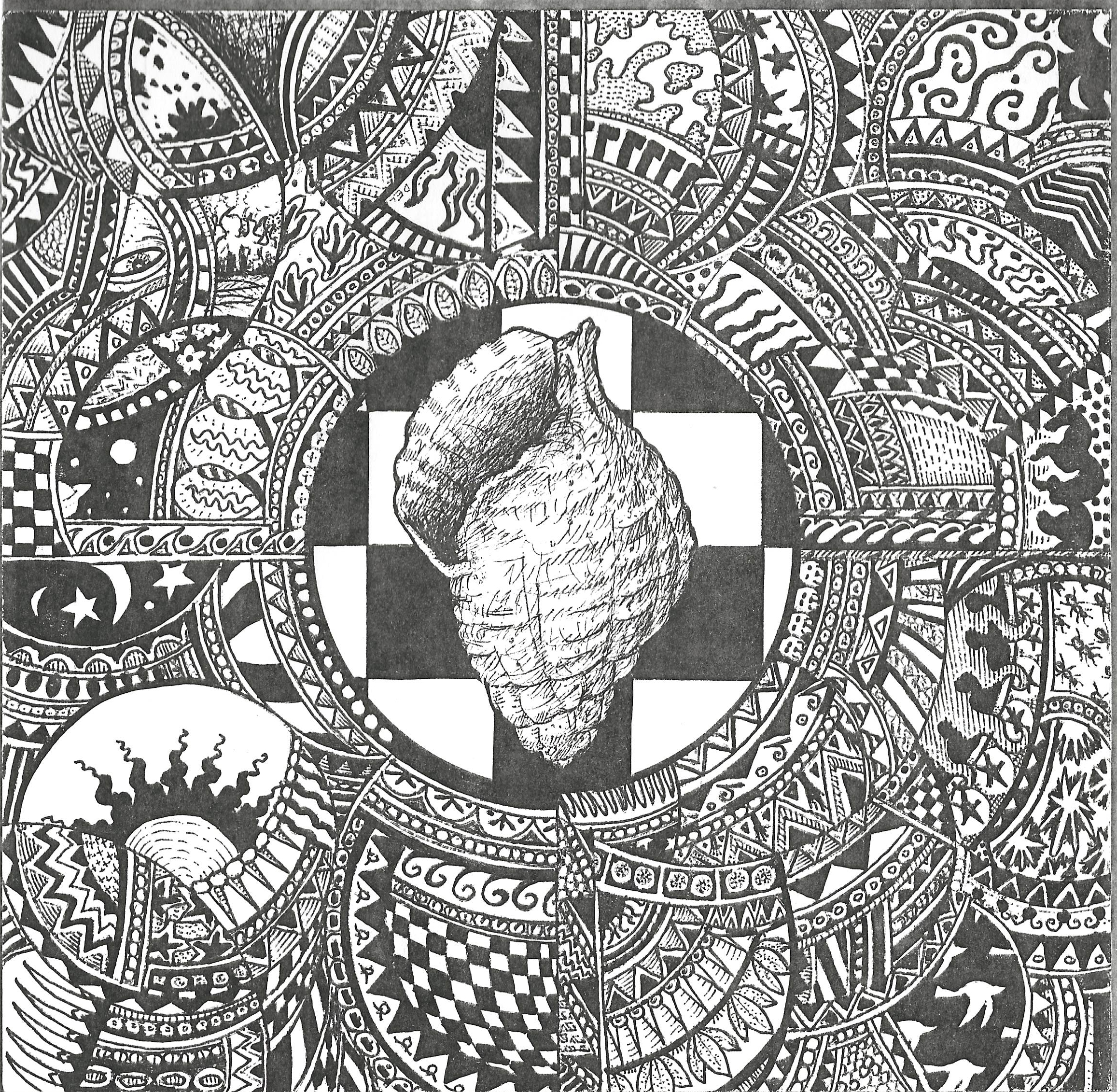
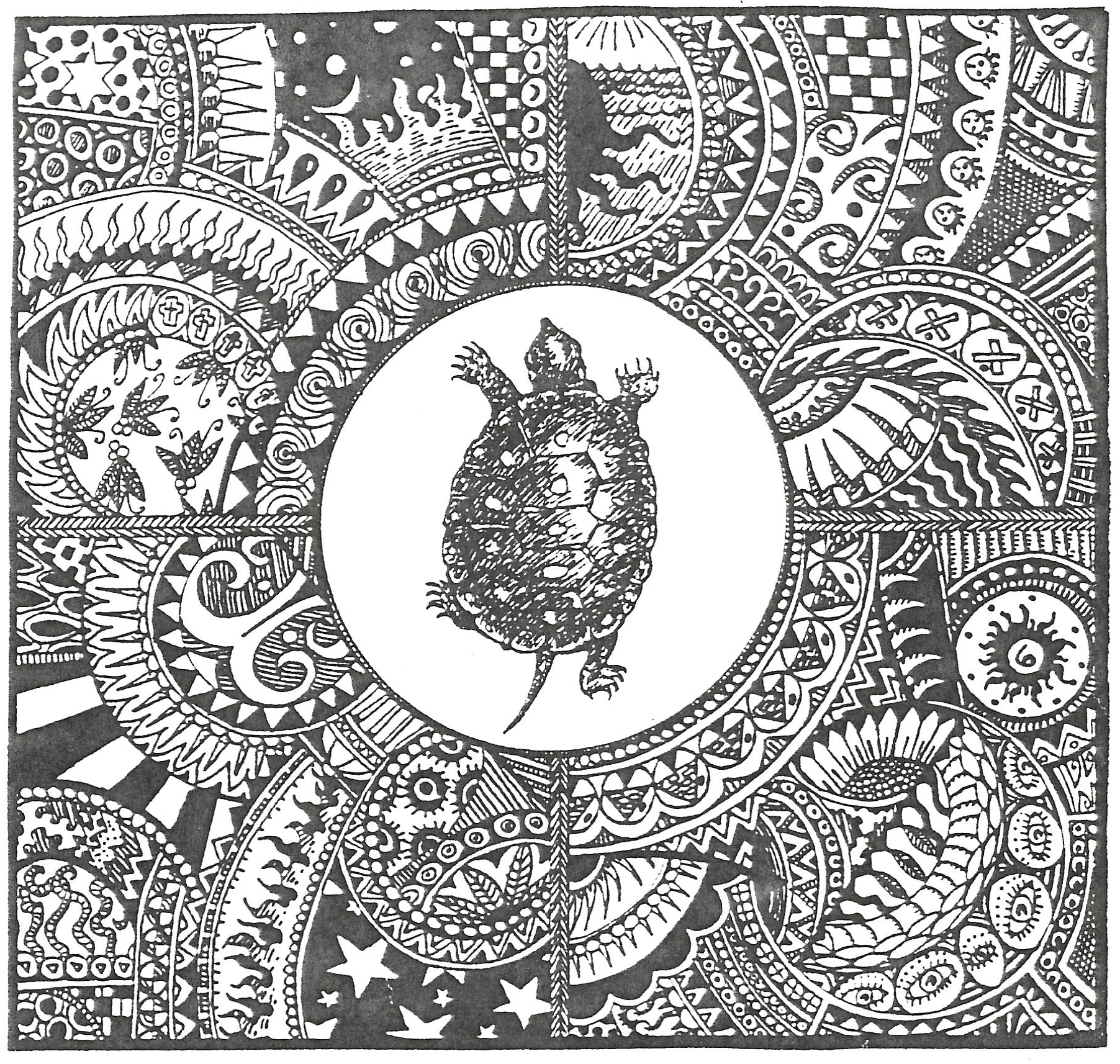
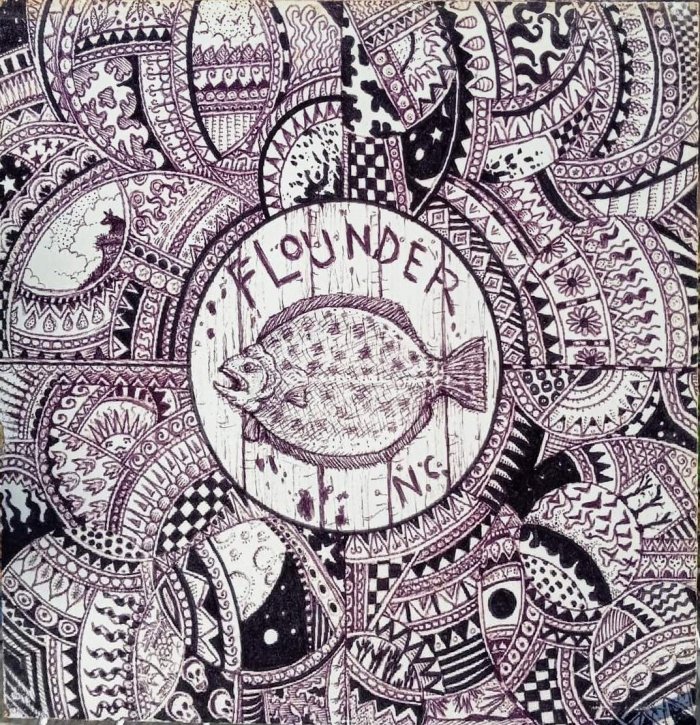

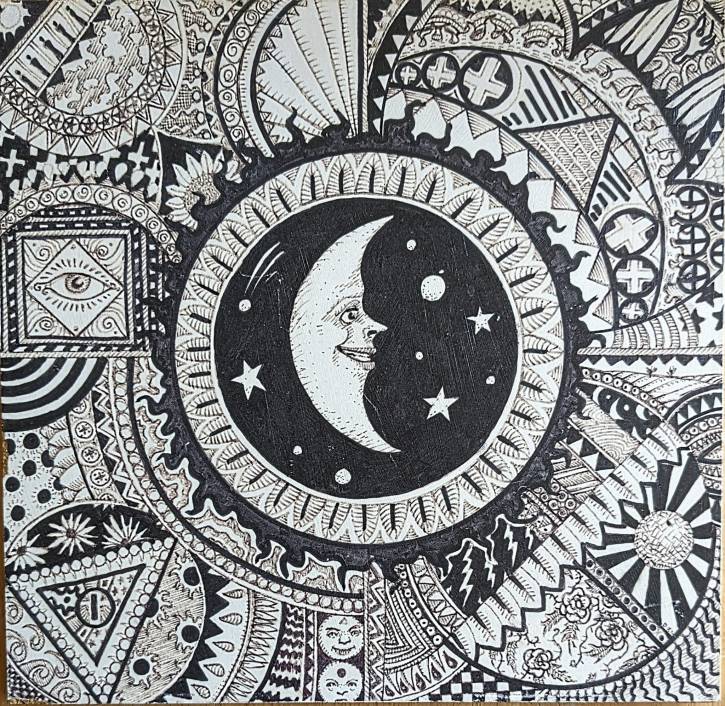
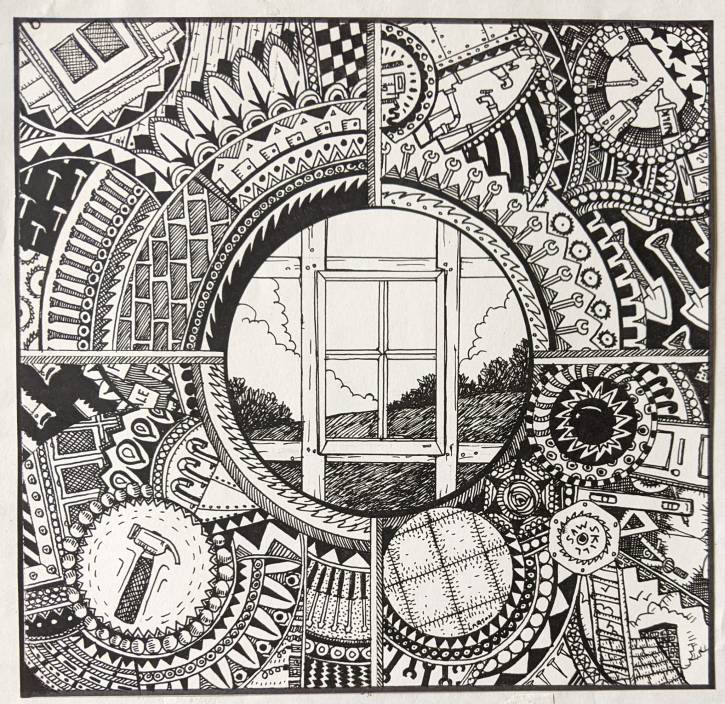
**********
My favorite feature of the project was the bio sketches that David did (or had already done) which we used to illustrate their noted birthdate in the calendar. David regularly did this kind of work, using a photo, and turned them into stickers which he shared with friends. A spread of calendar pics in followed by some of this work.
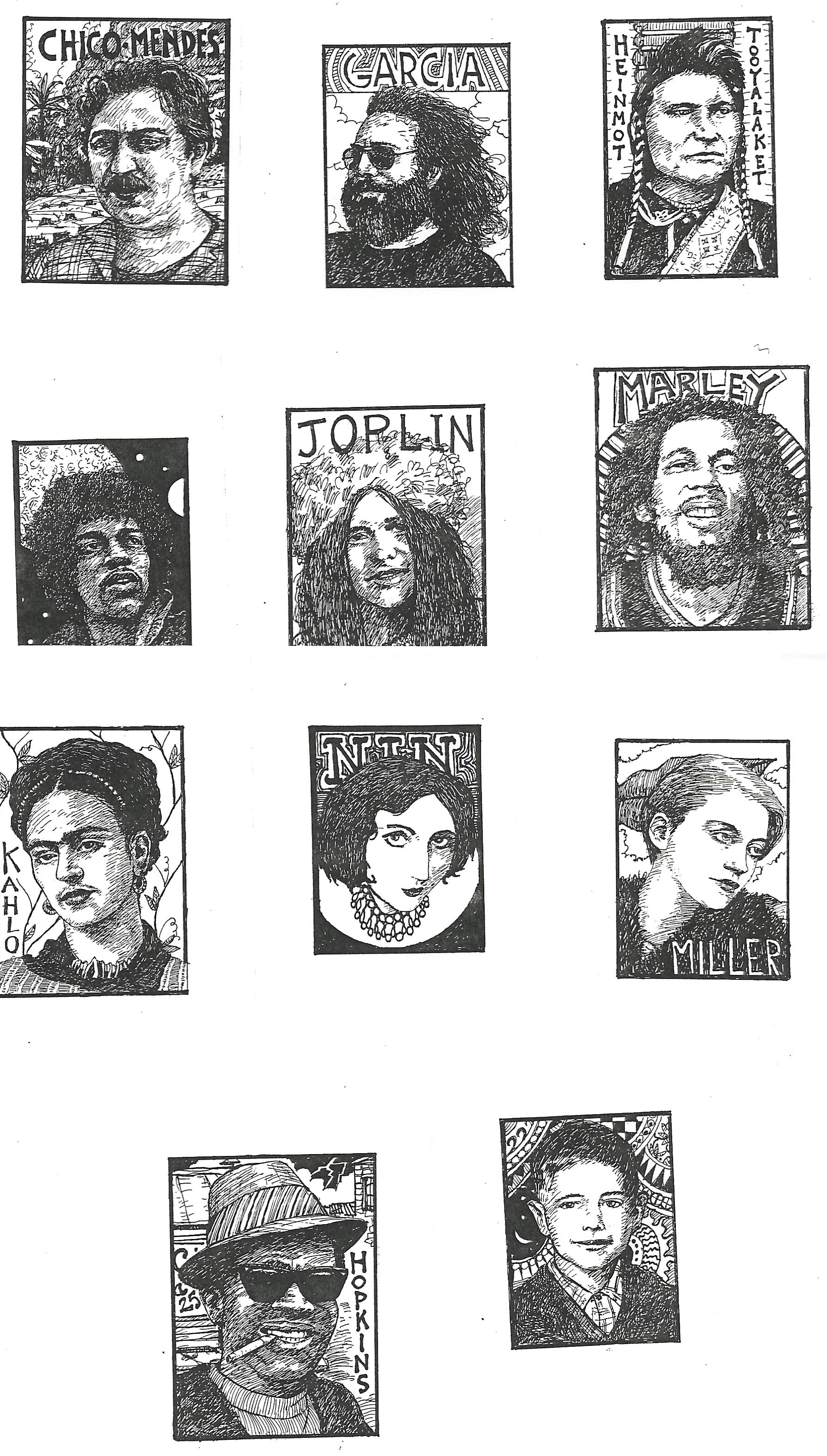
The final image is David Larson, born 12/3/55.
***********
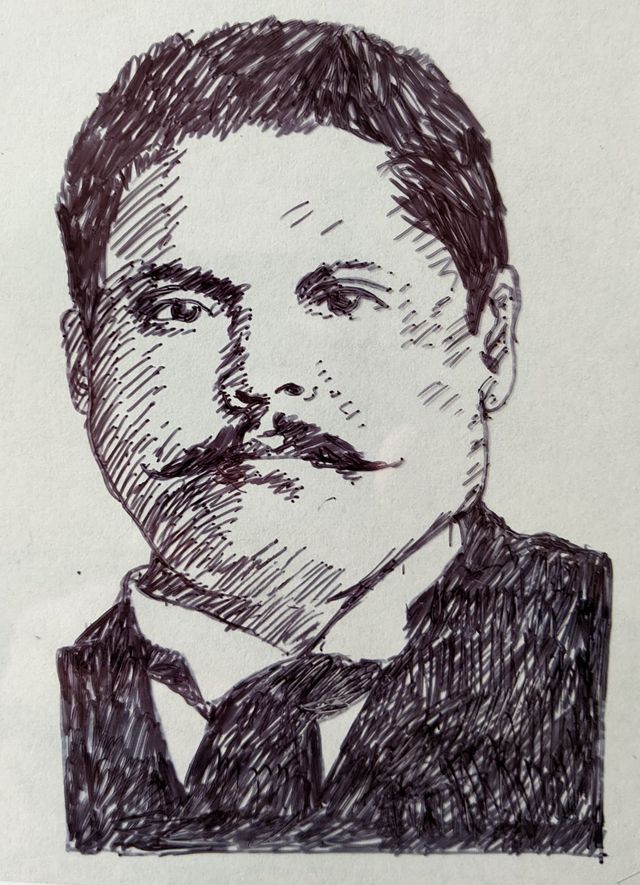
Posada prep
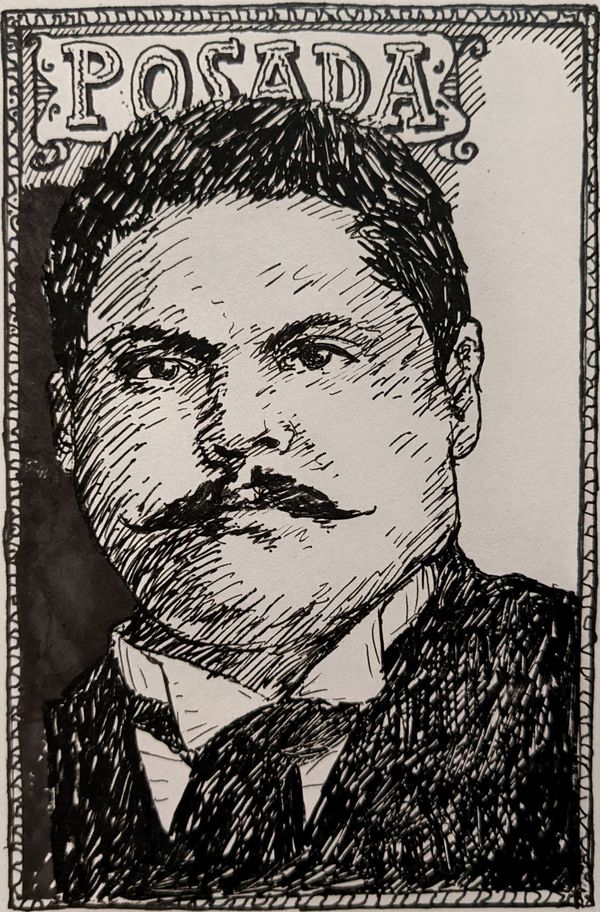 Posada finalPortrait of Jose Guadalupe Posada, Mexican political illustrator who used lithography to produce his works. A favorite of David’s, using skulls and skeletons in his figures, he influenced his Day Of The Dead pieces. Transparency and detailed image for the 2000 calendar.
Born in 1852, Posada was able to set up his own lithography workshop and became a teacher of the craft in 1883 after his success from periodicals and newspapers publishing his works. A flood had him relocate to Mexico City in 1888 where he worked for La Patria Ilustrada, then joined a publishing firm where he created book covers, cartoons, and illustrations depicting various current events, using satire. From the beginning of the Mexican revolution in 1910 until his death in 1913, he worked tirelessly in the press honing his printmaking craft with features in the magazine El Jicote.
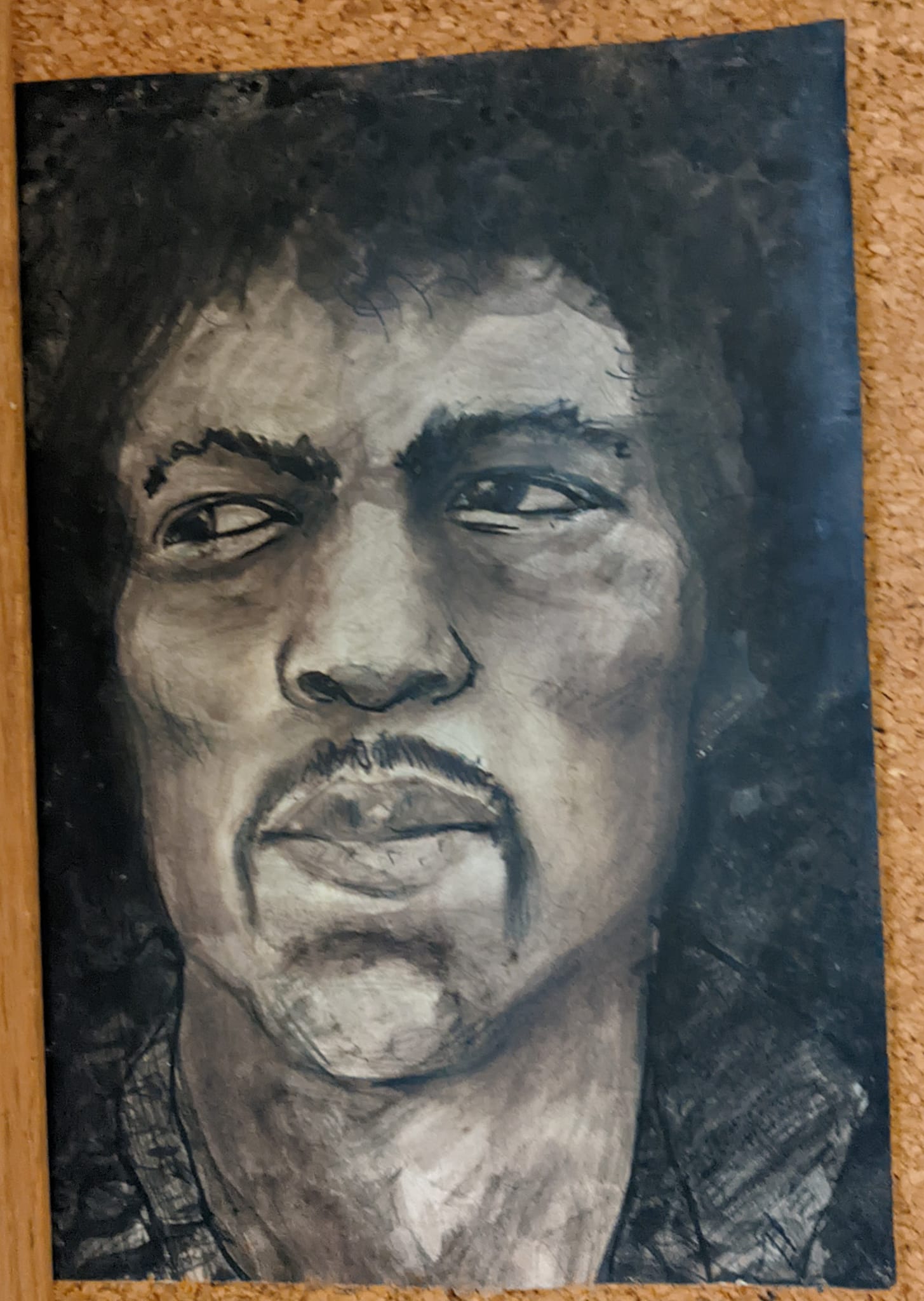
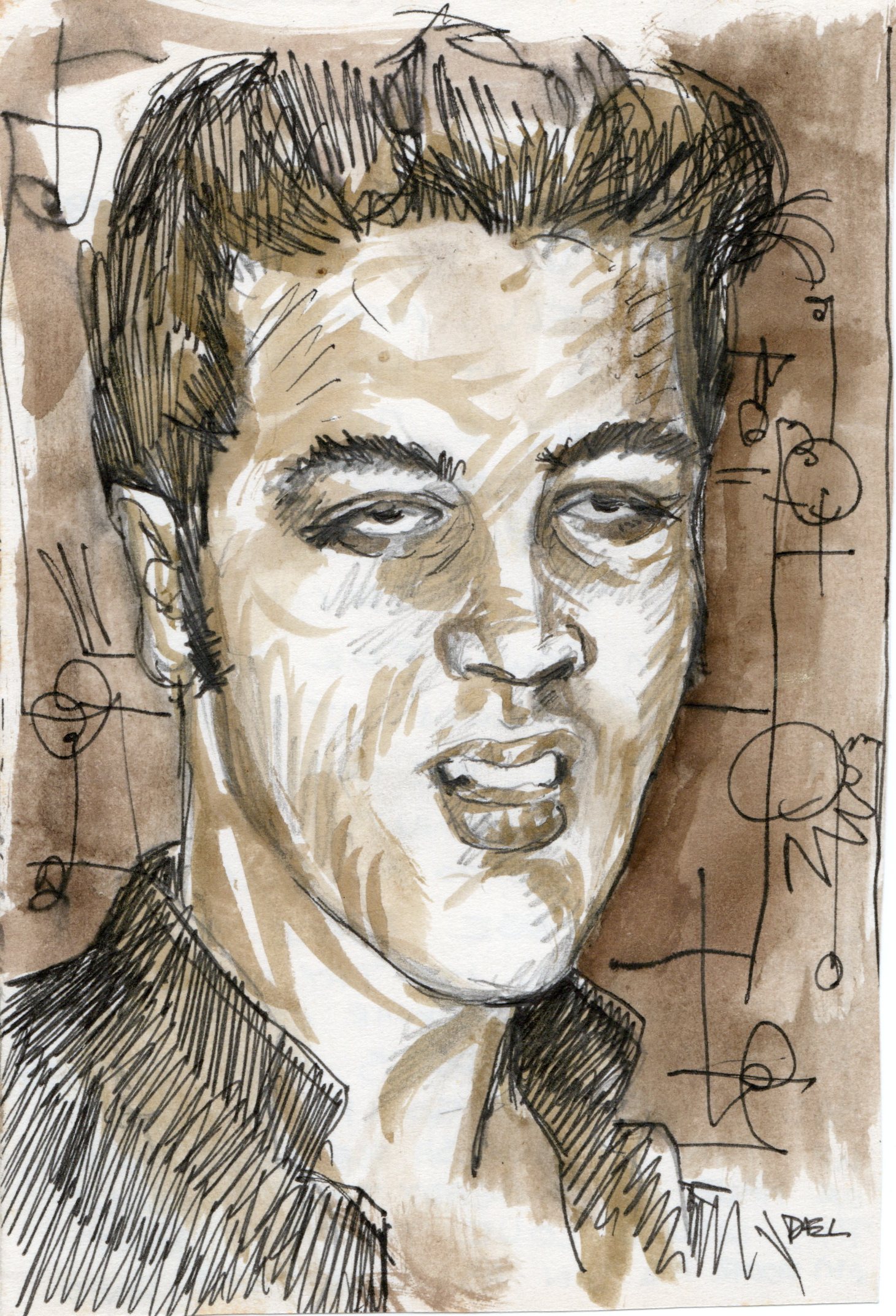
from David N
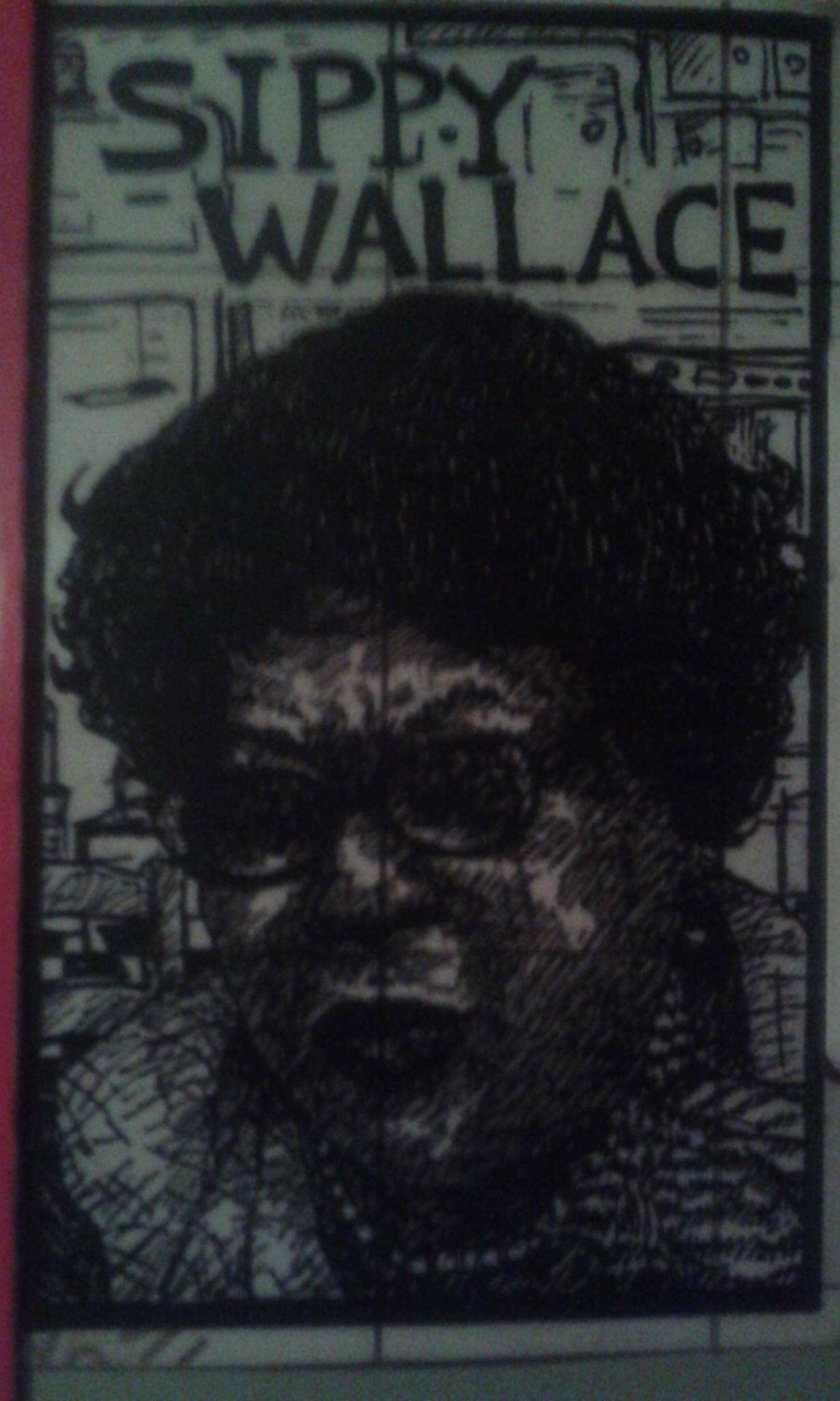
from Evan W
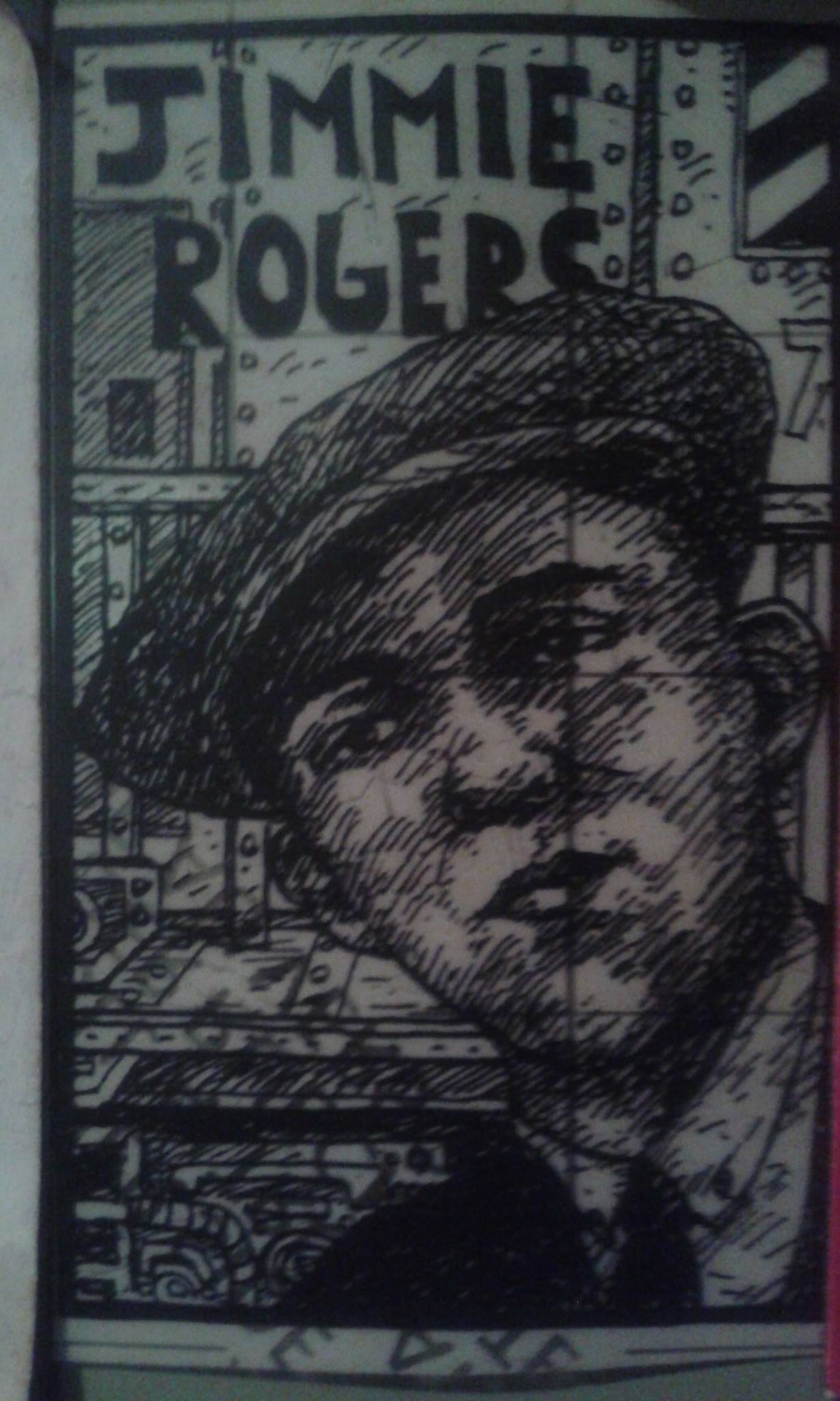
from Evan W
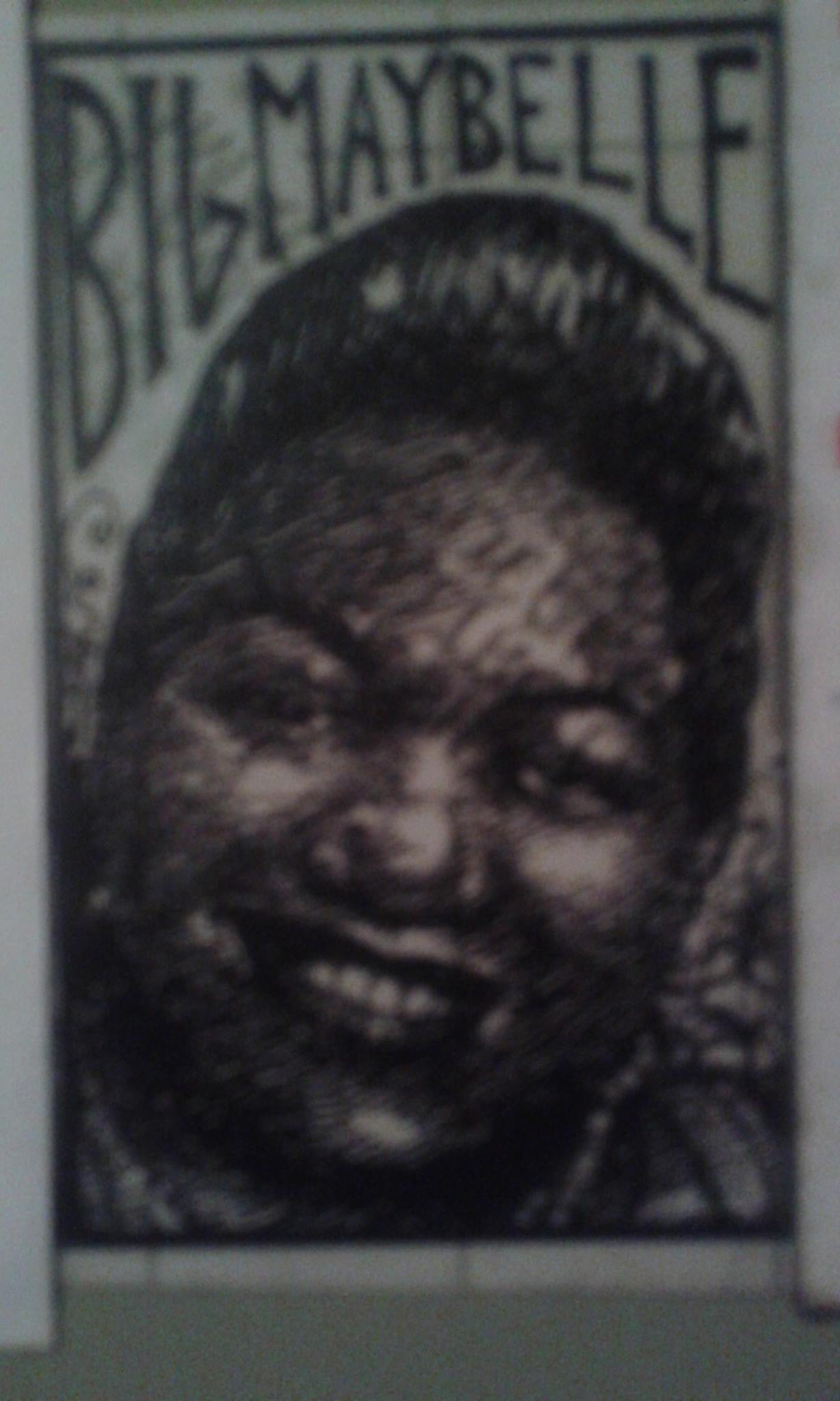
from Evan W

from Art D

from Mary R – Tolouse Lautrec
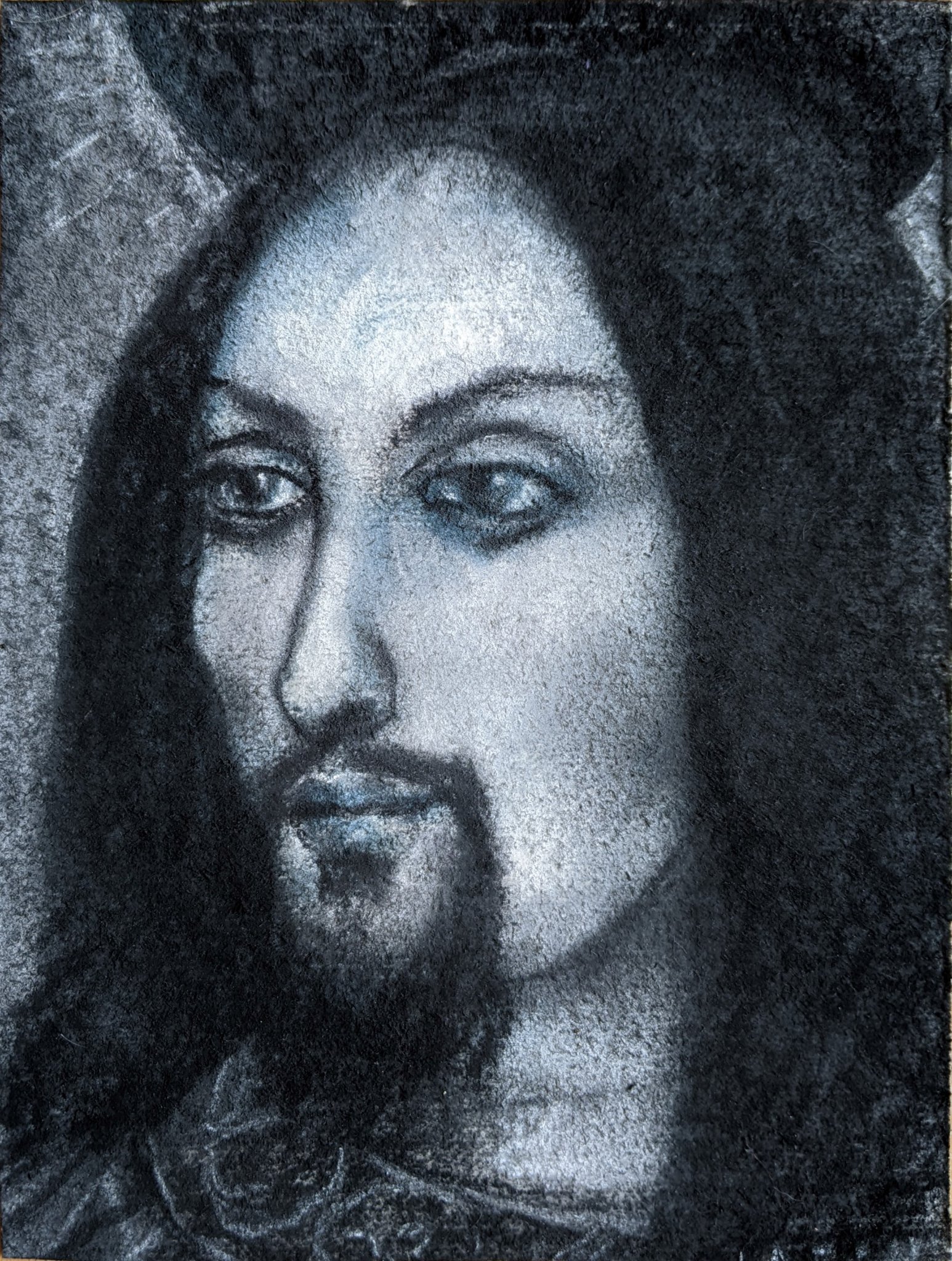
Sasser Street charcoal
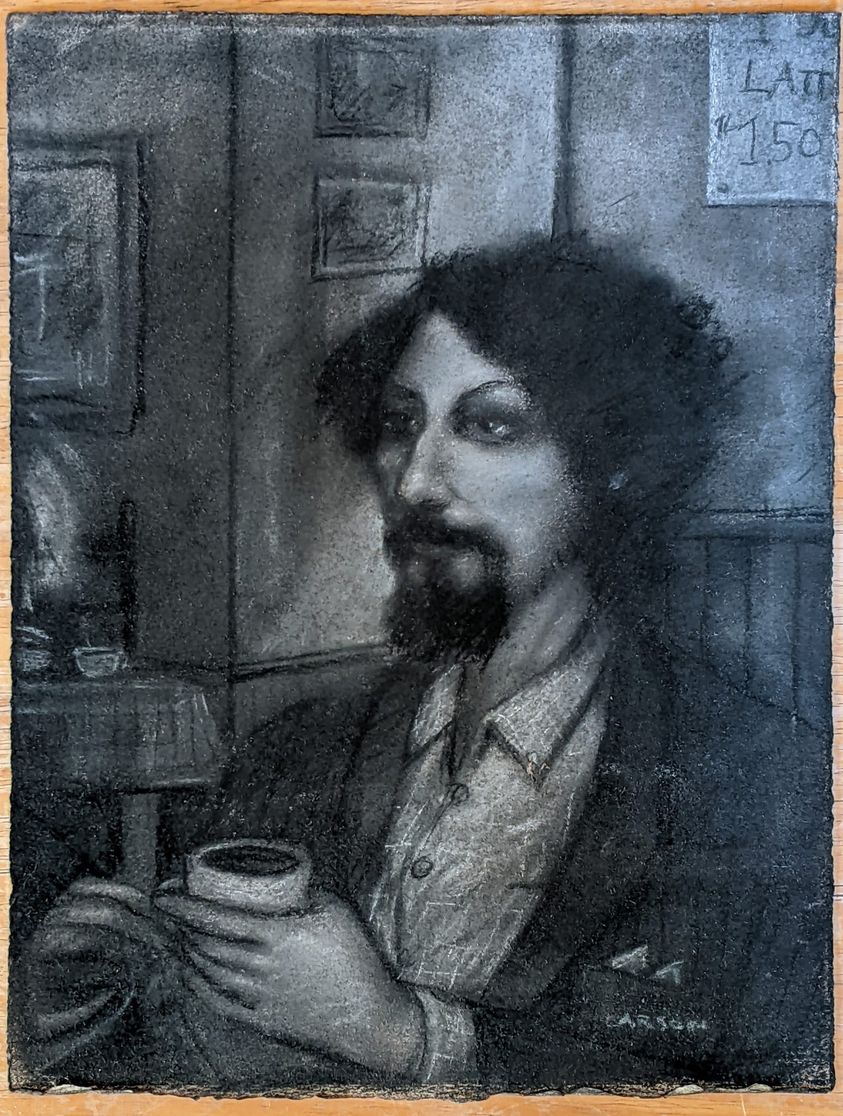
from Alan Bowling, de facto executor of David’s art.
raleighrambles.com
portrait by Guillermo Velasco


