
Bain Project – Day 1 Photos
- Bain Project Opens
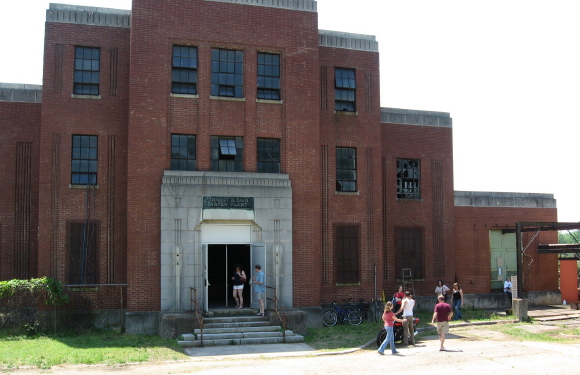
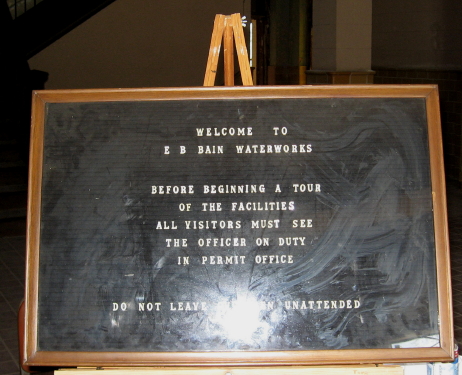
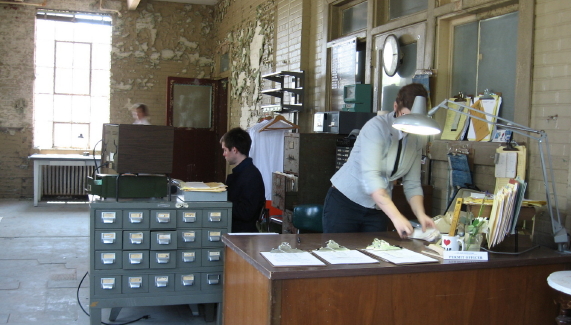
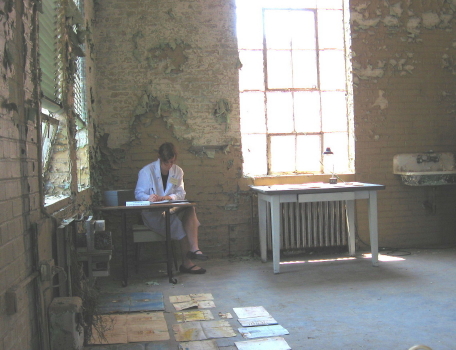
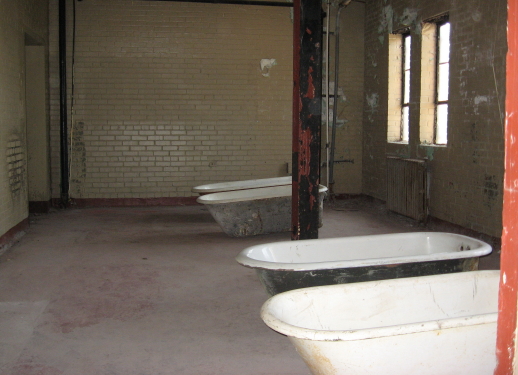
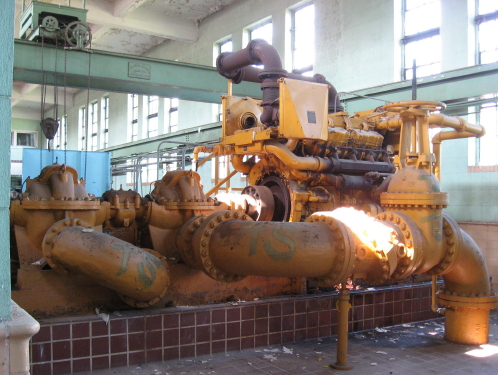
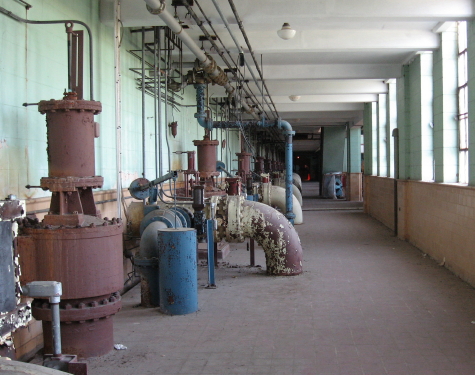
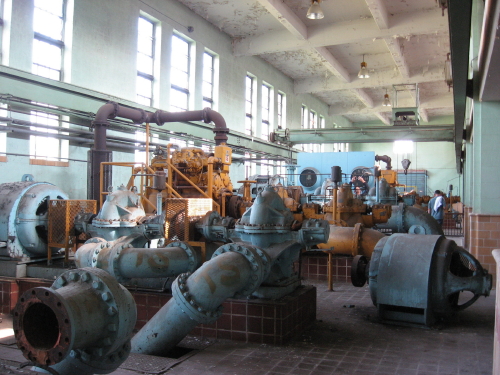
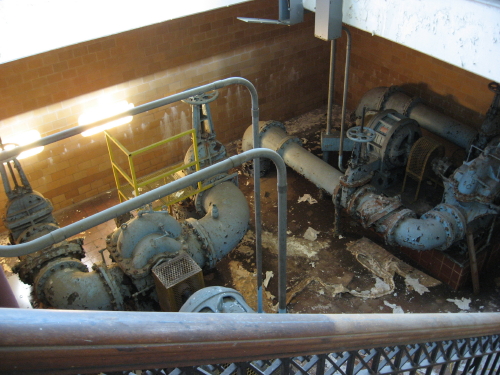
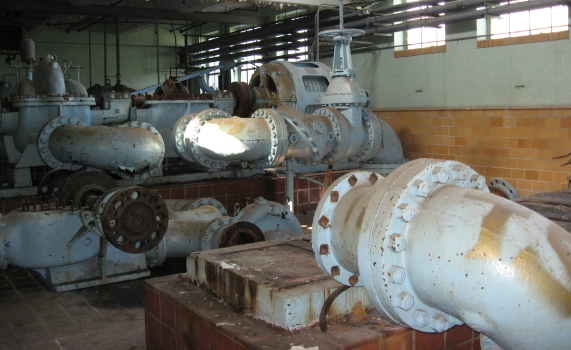
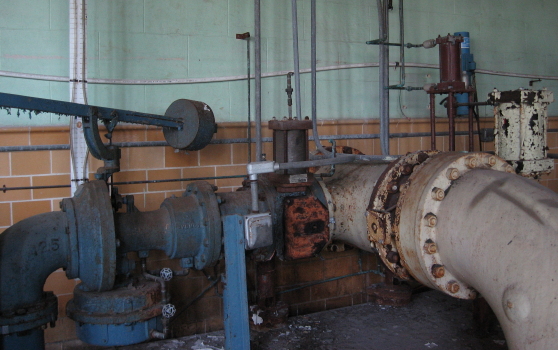
The Bain Project opened on Saturday, May 9, to large crowds and great success. The traditional tea presented by Triangle Chanoyu was well attended and ably interpreted by a narrator. Inside, visitors were asked to fill out an entry permit which assigned them to one of the city watersheds. They were then free to explore unguided throughout the structure. I will write more about my experiences when the dust settles, but for now, here is a selection of photos. Each will click to enlarge, while hovering gives you the title.
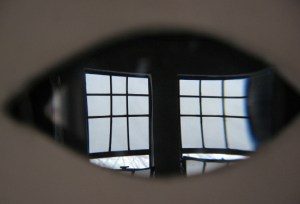
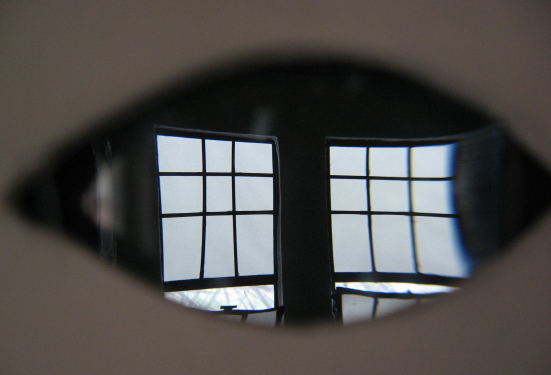
- eyehole with magnifying glass
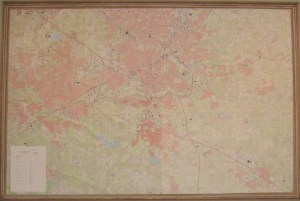
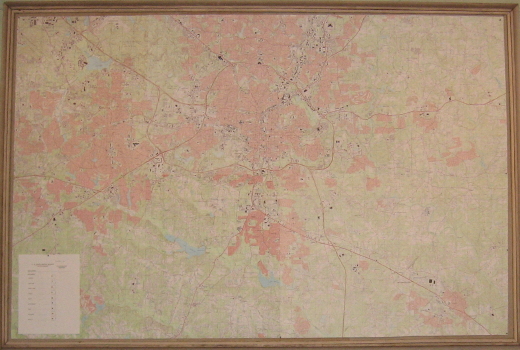
- Watershed Map Day 1
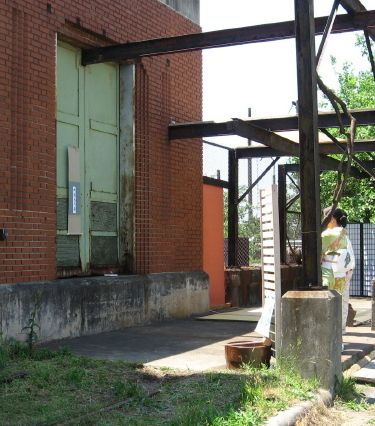
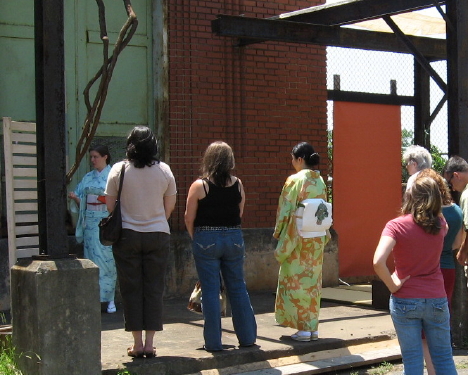
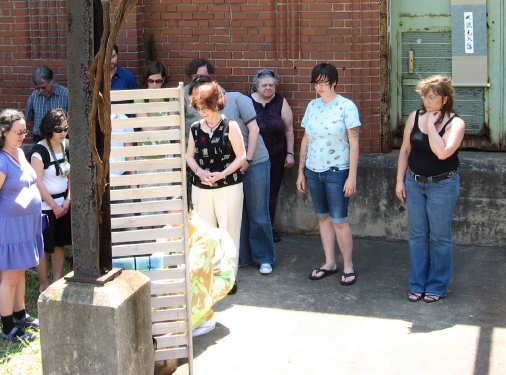
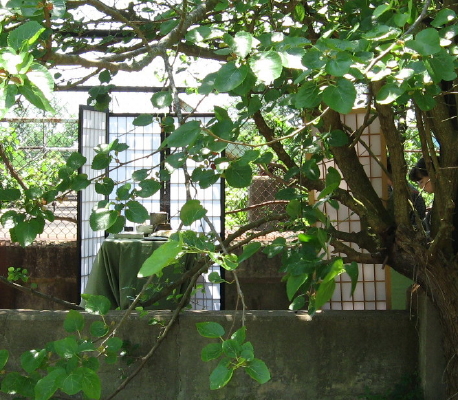
- Tea Preparation Area
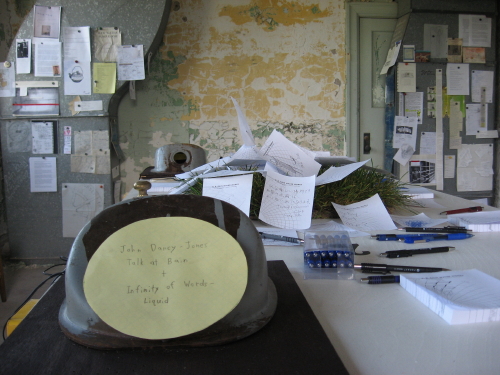
Jen Coon’s description of tea installation
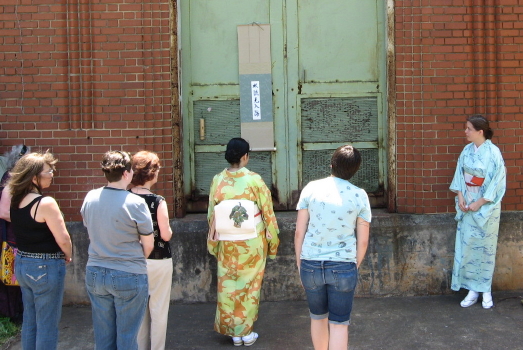
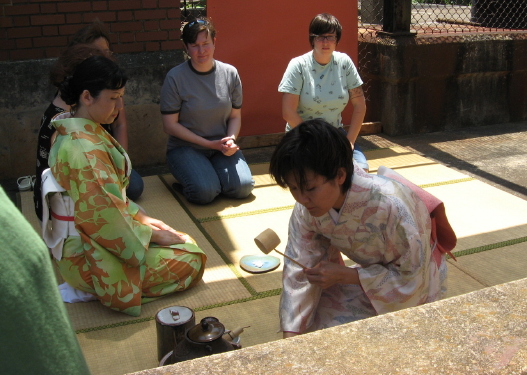
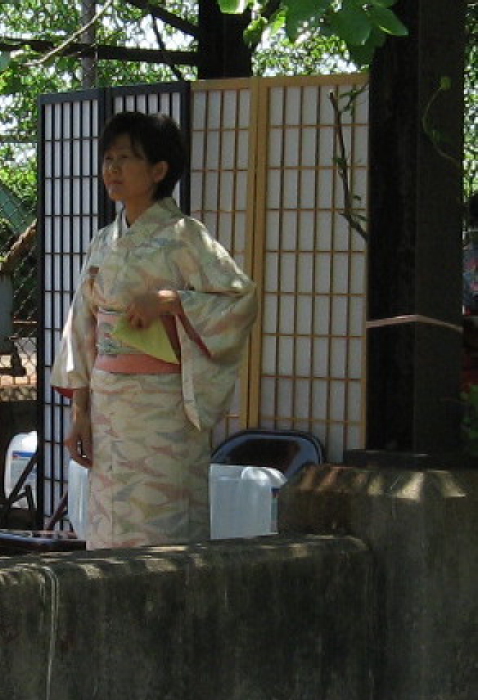
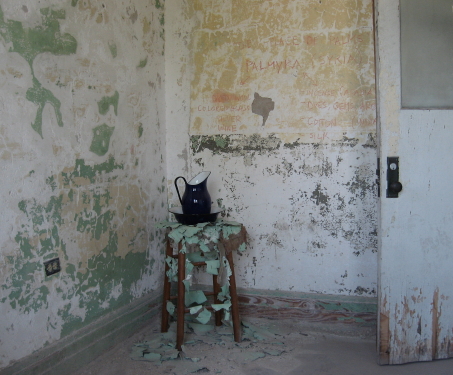
Several participants from the crowd were invited to take part in the tea. The device used for the purification came from the Bain complex. Recessed green doors served as the alcove, where objects and a carefully selected phrase set the tone for the tea.
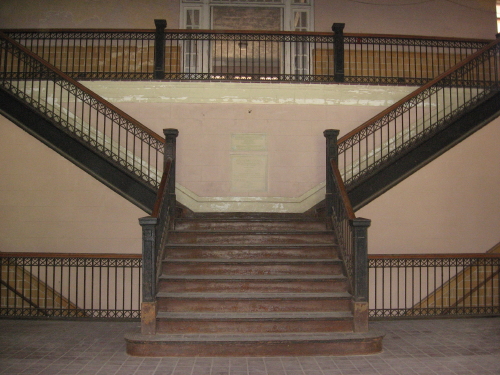
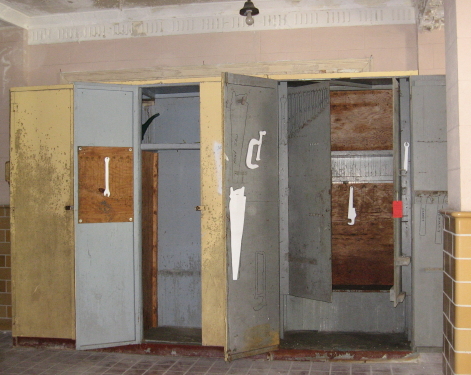
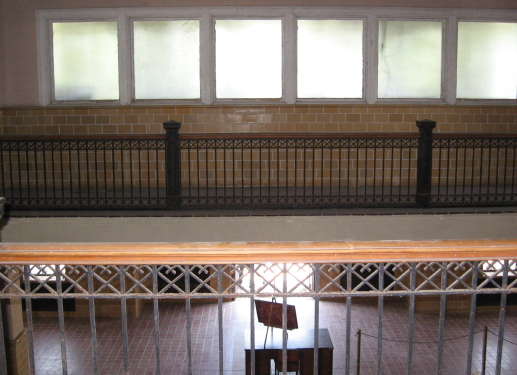
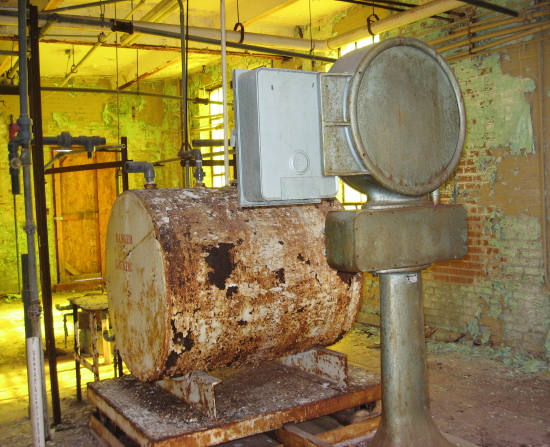
- Chlorine Tank and Scale
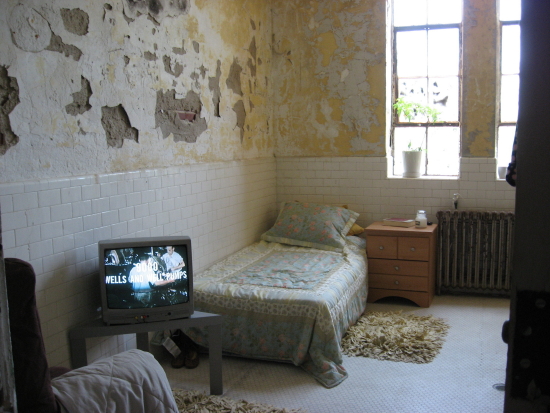
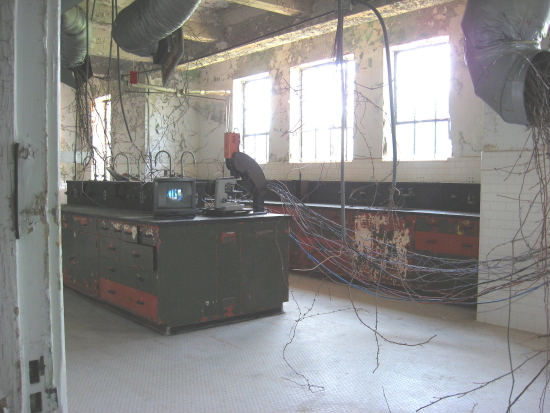
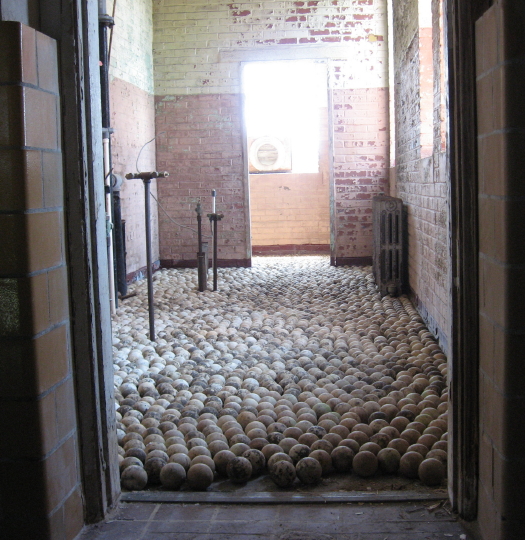
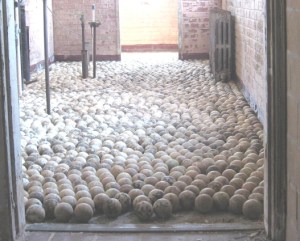
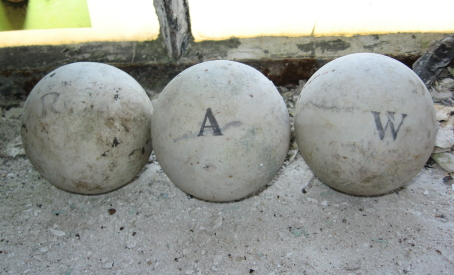
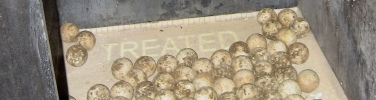
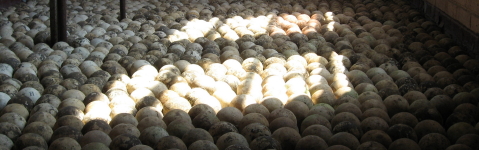
- Porcelain Filter Ball Installation
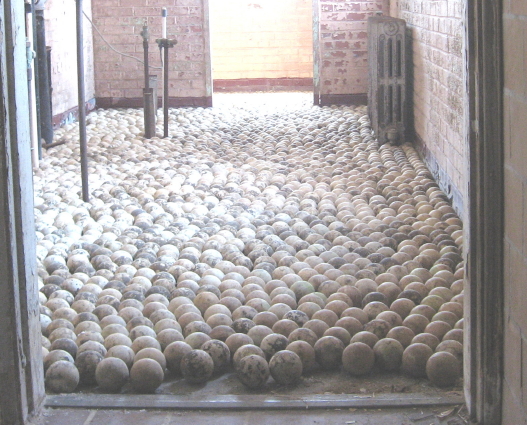

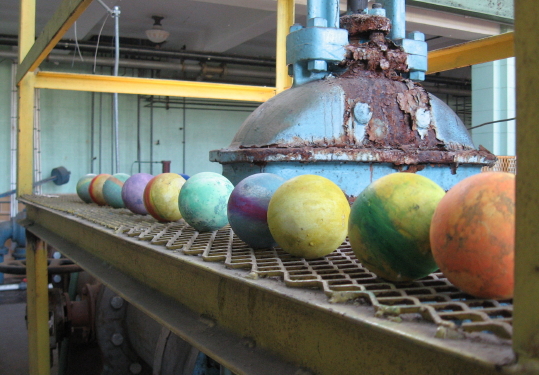
- Painted Balls on Mechanism

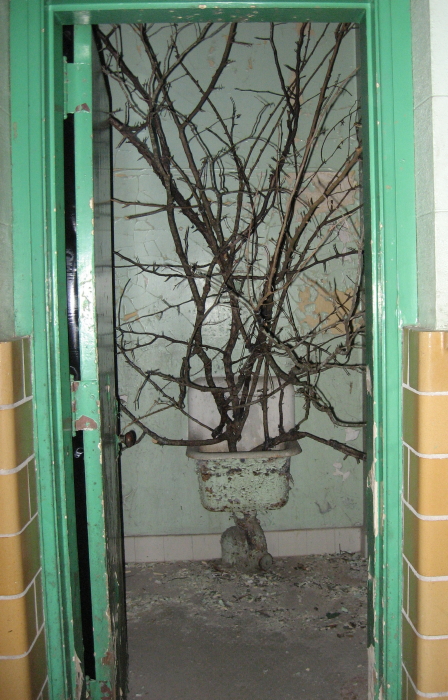
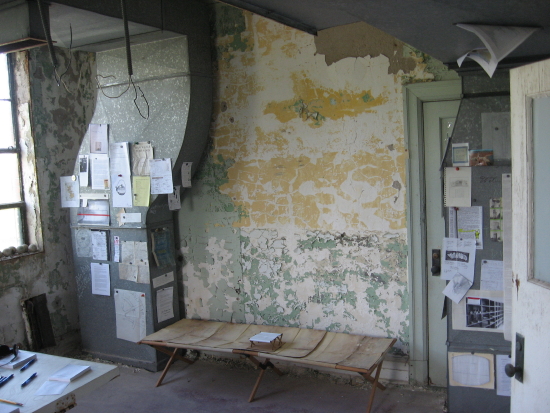
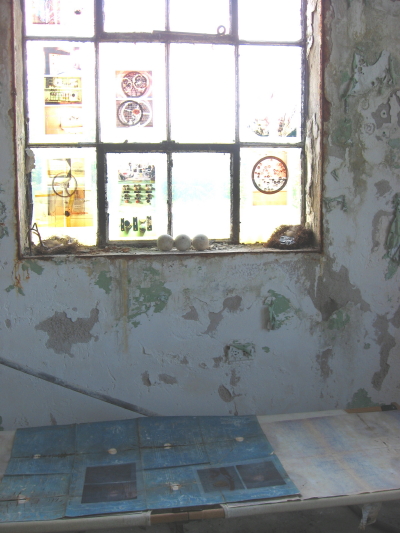
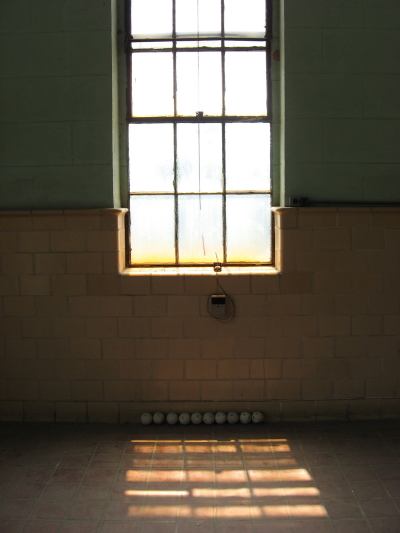
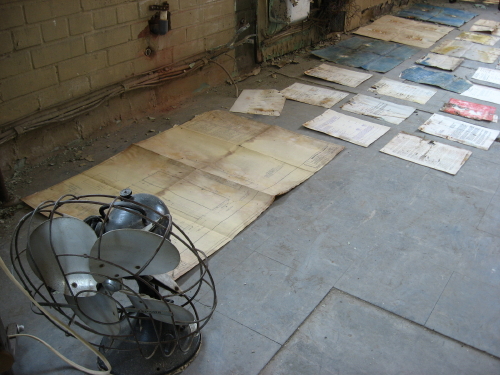
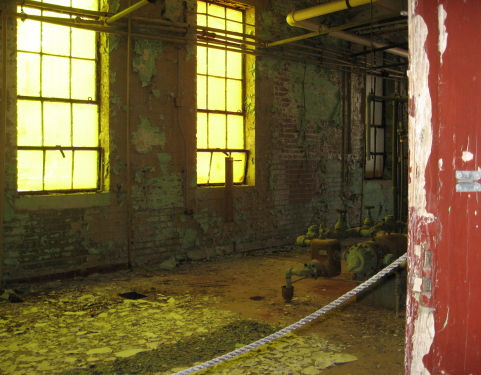
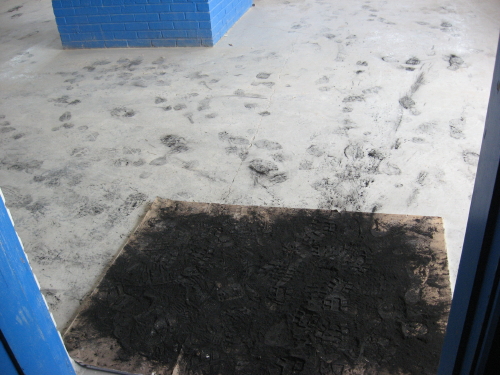
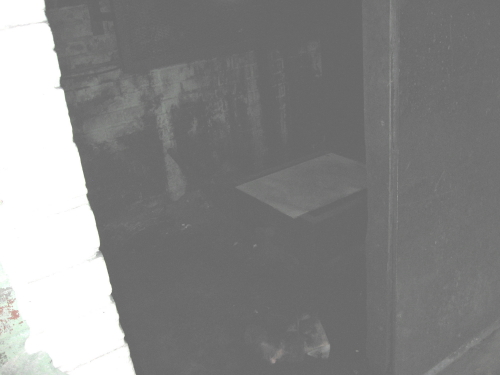
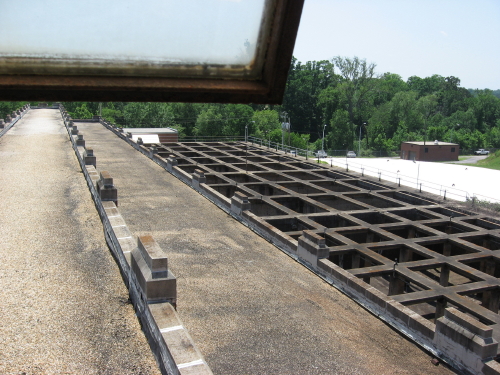
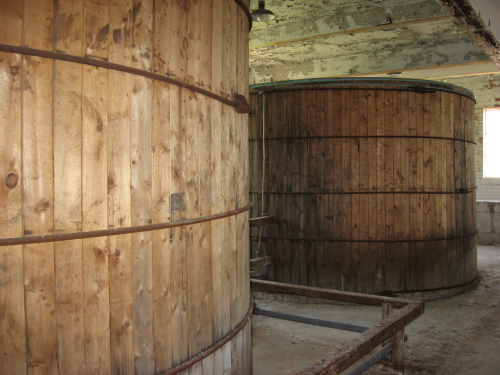
- Top Floor Cisterns
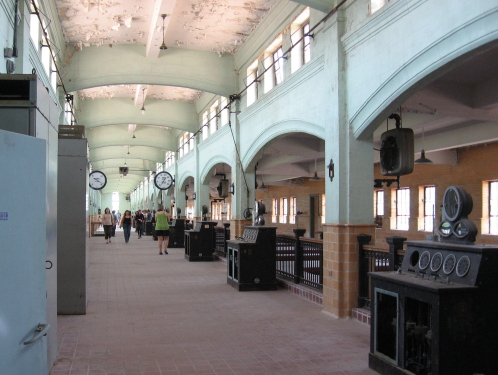
-
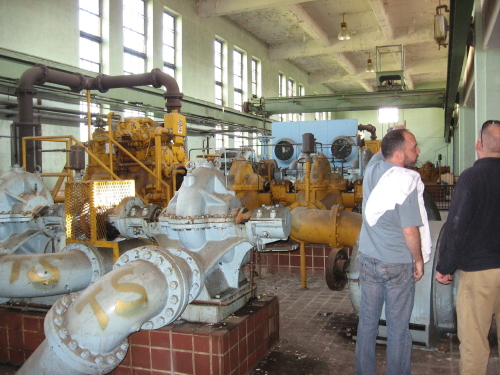
Bain Water Plant Main Hall
The show runs through May 17. Go check it out!
Bain Preview Signals Documentary Style
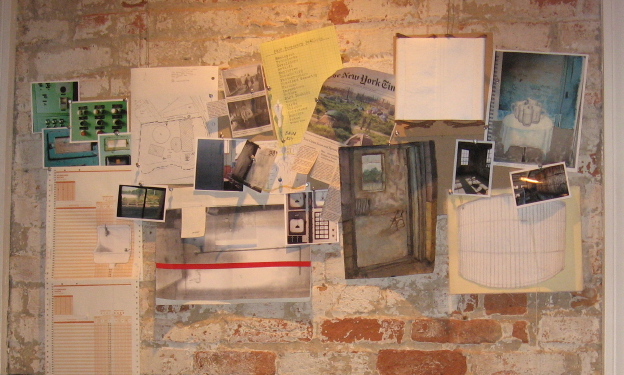
Bain Water Project source materials on display
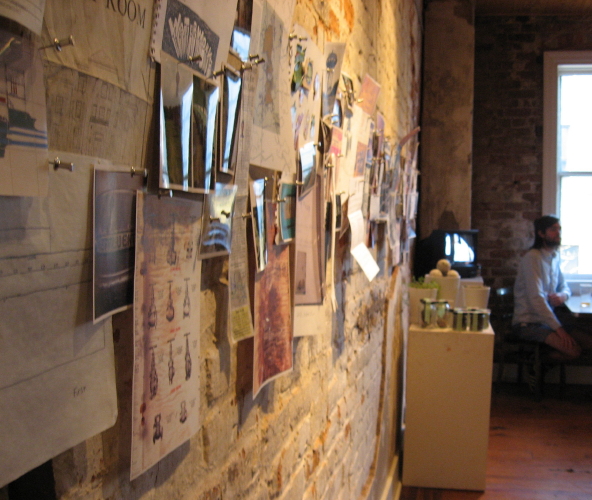
The preview show for The Bain Water Project, which opened at The Morning Times on First Friday, offered some glimpses of what we can hope to see at the full on-site installation in May. The show also displayed a documentary, self-reflective style which is permeating the group’s work overall, I think in an excellent way. From the large scale photo and video displays seen at the music event, to the “open access” range of information available on some of the artist’s websites, this massive accretion of work is not least interesting for the shape of the artistic process itself, made visible in the large display of notes, drafts, and source materials on display upstairs on Hargett Street.
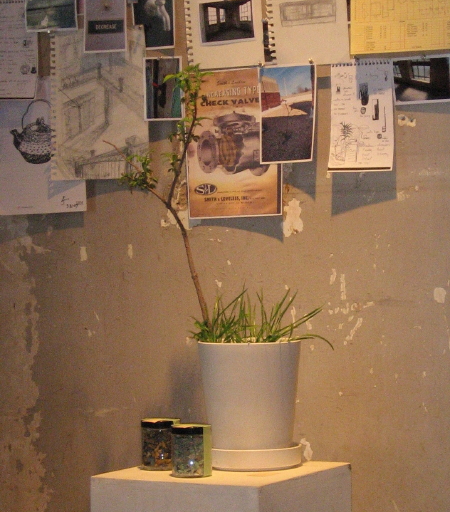
The artists meet most Saturday mornings at the Bain site to collaborate and consult, then spend many more hours creating art work in response to their experiences. For the preview show, they attempted to evoke a sense of the place, including bringing plants from on site, jars with samples of the debris and filter material, as seen above. The stripped masonry and ancient brick walls of the upper Morning Times are an ideal setting for the work.
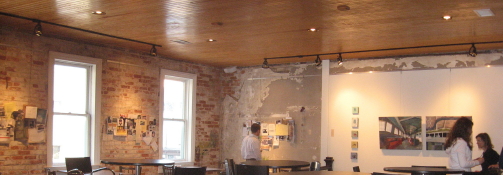
The range of media and subjects derived from the Bain site remains quite varied, and if I imagine a conventional show of all the finished artworks I have seen, the unifying thread might be hard to describe. Luke Buchanan Miller’s large traditional paintings have a wonderfully loose sense of perspective and give a successful Impressionist view of an industrial space. But it can be difficult to shift gears and then find a totally different response in the layered, heavily sealed and almost subliminal images in the tiles by Marty Baird right next to these paintings. And this show will need to find room for conceptual art, correspondence art, digital graphics, perhaps some kinetic art, and no doubt some performance art before those weekends in May are over. The preview show gives some very encouraging signs that the individual art is also being couched in a group effort to re-present, artistically, the Bain space itself, and to evoke the artistic experiences being undergone by the group. I’m not complaining about the wide diversity of media emerging in the Bain Project. I think it’s all great. Seeing the imagery from so many artistic perspectives is intrinsically interesting. I’m also fascinated to see the project finding ways to exist outside of and between the individual artworks. One favorite part of this show is where you can see a photo, charcoal sketch, and painting of the same scene. You really get a feel for the artistic experience. The catalog pages, technical sheets, and other tatters of beauracracy offer a sense of the human history and the technical complexities of the place.
The Bain Water Treatment Plant represents a massive subject. The Art Deco exterior and lobby, the huge myriad of pipes, valves, pumps and holding tanks, and the stark abandoned and long neglected human workspaces, all comprise a complex portrait of early twentieth century Raleigh. As this group of artists pulsates in rythym, collaborating and privately creating, I look forward to an amazing show in May. And I hope the documentary style of the preview show, which illuminates the process-as-product, is a big part of the final event.
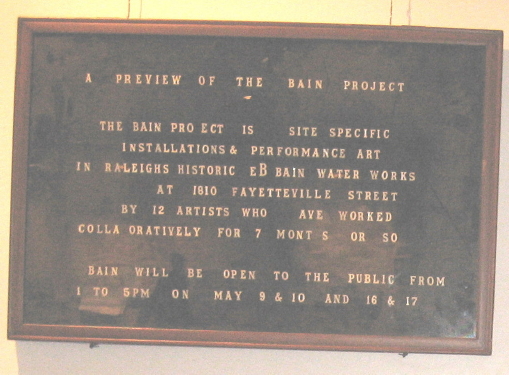
*************
my photo album of the Bain site
Raleigh Rambles Bain page
Bain Water Project home page
The Bain Water Project – Post 1

One of the most exciting prospects of the coming year for me is following and responding to The Bain Water Project. The E.B. Bain Water Treatment plant is a designated Raleigh Historic Landmark, though it has been neglected for many years. Now a new art project is developing dialogues about the structure and its place in Raleigh’s culture as a new development of the property is planned.
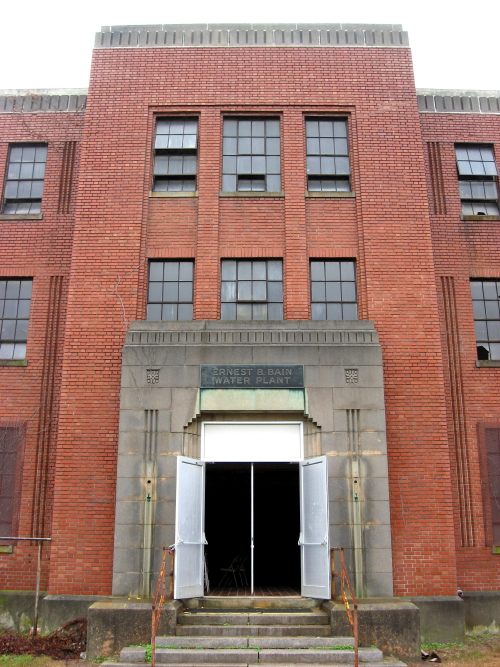
The top picture is filter rocks made of unpolished porcelain that were used to filter the water at Bain. Above is the entrance to this art deco masterpiece. Raleigh’s website states:
While strictly utilitarian in concept, the Bain plant, as built, is perhaps the foremost Art Deco style building in Raleigh.
The Bain facility is in a terrible state of debris-filled shambles in the areas used for storage in the 1990’s. But the industrial plant itself is like a museum. I had a chance to visit the site when I presented to the project artists about Walnut Creek and the watersheds associated with the plant and Raleigh water history.
The artists are a wonderful mix of highly qualified individuals who work across a wide spectrum of media. At the Boylan Artswalk, they displayed some wonderful preliminary work, including prints, paintings, and photographs. It will be fun to follow this project and I have designated a permanent page about it on Raleigh Rambles. Check back for more!
Art is where you find it.
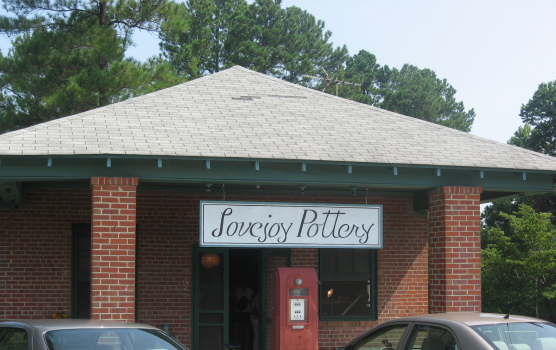
With a heads-up from Ron at Sadlacks, though I got my postcard (but mislaid it), I was off to Wendell Saturday morning. Time for another show at Lovejoy Pottery. Dan and Nancy have become old friends, but they were old guard and I was new when I first met them in the mid eighties. Dan was a big part of the Raleigh Artists Community, a late seventies art entity that I wrote a feature article about in FARCE!, the newsletter of The Paper Plant. RAC was a huge part of the development of the arts community in Raleigh, and provided some interesting memories along the way. Quoting that piece:
The house at 908 West Morgan Street [just across from Irregardless] served as gallery, studio, hang-out and apartment house to various NCSU and Raleigh artists. The atmosphere was informal, very informal by all accounts. Lovejoy, who lived in the house, described the atmosphere as “totally chaotic but a lot of fun.”
Copper Rain, Joy Haymore, Jeff Emma, Willis Williams, and Jeannie Thompson were all founding members. Later current Raleigh artists such as Sharron Parker and Madonna Phillips joined. The group organized art festivals on Fayetteville Street Mall and at Pullen Park, proposed the art center that eventually became Artspace, and in 1979 joined with the new Raleigh Arts Commission to sponsor “Downtown September,” which now goes by the name Artsplosure.
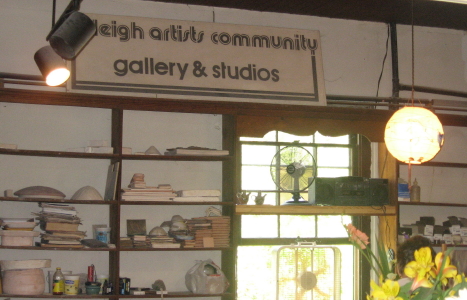
The Lovejoys proudly display this sign and continue to do their pottery. Dan paints his huge, mythical figurative acrylics. Nancy has made most of the bowls and ceramic cups in my house. They have these shows, with an open studio feel, and 6 to 8 local artisans, all well established pros, come in and display their work. Besides the Lovejoys, Marsha Owen, Nancy Redman, John Garland & Mary Paul, and Alan Tingen all participated this year. Cara and I have shown there several times in the past and probably will again.
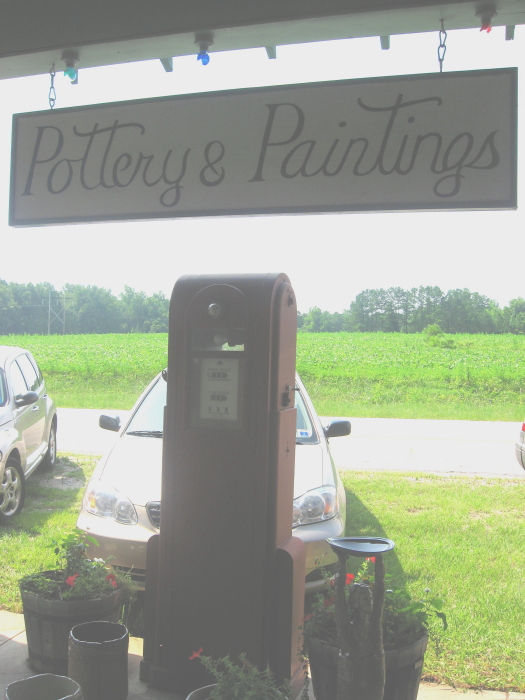
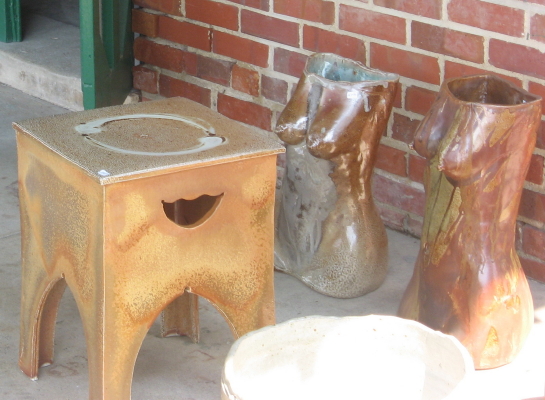
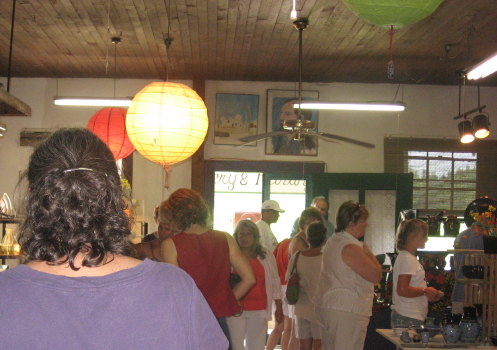
Lovejoy Pottery is on Watkins Road, just off Rolesville Highway, off 70 East out of Raleigh. It was fun to mix purveying art and visiting with some country driving. I always take the back way home – Watkins to old Milburnie and past the Milburnie Dam. The rural scenes were nifty!
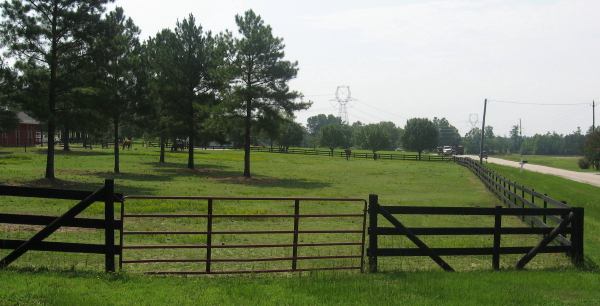
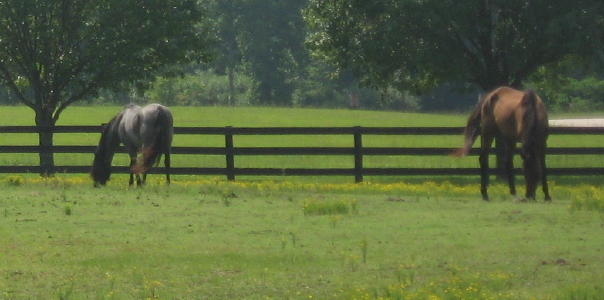
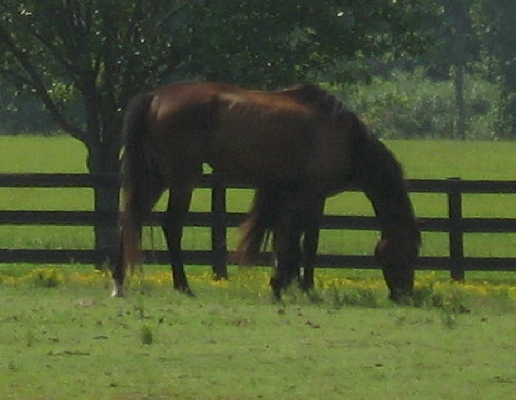
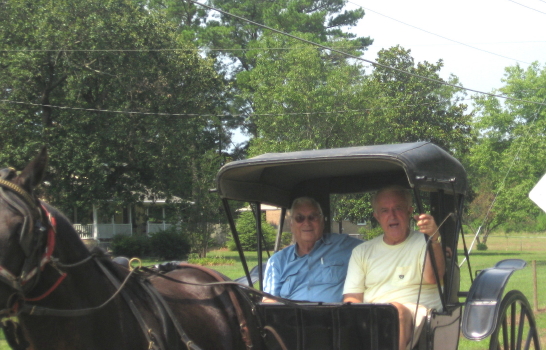
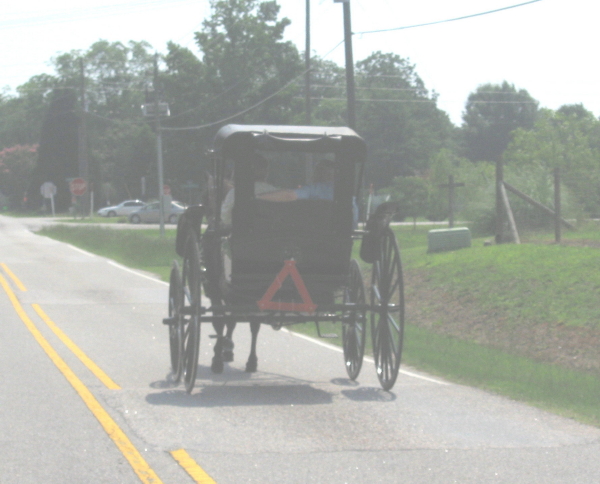
And then to cap it off, here come these young fellows, barreling along in their buggy!
raleighrambles.com
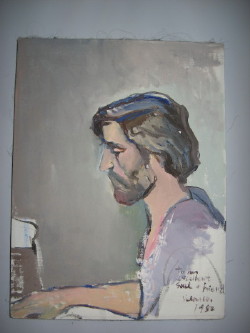
portrait by Guillermo Velasco


 Raleigh Rambles